It is an anomalous moment to be sitting in the United States, listening to the familiar rhetoric of freedom and democracy while the Trump administration strains to avoid the very accountability those ideals demand.
Questions surrounding the Epstein files linger unresolved, immigration policy has hardened into an apparatus of internal coercion through Immigration and Customs Enforcement (ICE) and external unrest is expanding through the U.S.–Israel war against Iran. At the same time, Nepal is confronting its own democratic reckoning.
In September, nationwide protests left 77 Nepalis dead and more than 2,000 injured, almost all under the age of 35.
Yet from that violence emerged an unexpected political turning point. Interim Prime Minister Sushila Karki oversaw an election widely regarded as fair, transparent and just, thereby asserting democratic legitimacy in the aftermath of state repression. It is inevitable for me to compare the Nepali and American democracies.
Democracy is fragile. It must be constantly maintained, reformed and deliberated. I find myself observing both systems from a conflicted position — a citizen of one country and a resident of another, yet unable to vote in either. In Nepal, logistical and digital barriers keep me from participating. In the United States, I am simply an alien in the eyes of the state.
The irony is difficult to ignore. Democracy, an entirely socially constructed political system, has long been debated yet widely accepted as one of the most effective frameworks for human development. The United States presents itself as democracy’s most powerful defender, a country that has gone as far as invading frontiers in the name of regime change. And then there is Nepal — a country often mentioned only in relation to its massive neighbors, China and India, now suddenly recognized for a revolutionary Gen-Z protest movement.
Nepal’s protest movement emerged from growing public frustration with Prime Minister KP Oli’s government.
The tipping point came when the administration banned 26 social media platforms for failing to comply with arbitrary registration requirements.
For many Nepalis, the ban was the final straw.
Online discourse had already been saturated with criticism of political corruption, popularized through the viral #NepoBaby trend highlighting the entrenched networks of political exclusions. When the government attempted to shut down the very platforms through which this criticism circulated, it triggered widespread anger. The move was widely interpreted as an attack on freedom of expression.
Social media discourse operates according to its own logic. It facilitates productive discussion while simultaneously enabling misinformation, polarization and information overconsumption. But it also generates awareness and mobilization. In many ways, it has become a de facto space for shaping political consciousness. Nepal’s Gen-Z movement was not isolated. Similar digital protest cultures have appeared across Indonesia, the Philippines and Bangladesh.
The government justified the restrictions through the Social Media Management Directive 2080 Bikram Sambat (B.S), issued under the Electronic Transaction Act 2063 B.S. The directive required digital platforms to register locally, establish a physical presence in Nepal and appoint grievance and compliance officers to monitor content.
According to the Oli administration, unregulated social media platforms had become breeding grounds for misinformation, online harassment and incitement to violence. But many citizens saw the directive not as a regulation, but as censorship.
Nepal’s crisis reached its peak during the September protests.
A documentary investigation by the British Broadcasting Corporation examined internal police documents to determine who authorized the lethal force used against protesters. Responsibility remains disputed. The Inspector General of Police denied issuing an order to shoot, yet police officials insisted that live fire could only have occurred with official authorization.
Video evidence paints a stark picture — protesters were unarmed.
Among the victims was 17-year-old Shreeyam Chalaugain, the youngest person killed during the demonstrations. Meanwhile, the United States has been experiencing its own democratic tensions.
The Trump administration has increasingly embraced intimidation as a political strategy, starting with targeting media institutions and protest movements.
The framing of internal dissent as a “threat” has become a recurring justification for intervention, both domestically and internationally. Recent actions have included crackdowns on student protesters, lawyers and journalists, particularly those supporting Palestinian rights or participating in anti-ICE demonstrations.
A National Security Presidential Memorandum from the Trump administration alleges the existence of “sophisticated, organized campaigns of targeted intimidation, radicalization, threats and violence designed to silence opposing speech.” By this logic, joint terrorism task forces have been directed to investigate forms of political speech framed as “dehumanizing” or potentially violent. The result is a troubling paradox — political expression is increasingly treated as a justification for surveillance and state aggression, even when it is constitutionally protected.
The atmosphere escalated further after an ICE agent fatally shot a civilian, Renée Good. Within a week, Trump announced his willingness to invoke the Insurrection Act, which allows the president to deploy the military domestically to restore law and order. In 2025, there were 31 deaths in total committed by ICE. As of March 2026, 14 people have died in ICE custody.
Is there hope?
Public outrage ultimately forced Prime Minister Khadga Prasad Oli to resign, leaving an interim government under Sushila Karki to confront a country shaken by grief, anger and institutional uncertainty. Karki pledged a full investigation into the violence of Sept. 8 and 9 and committed to restoring democratic legitimacy through elections — an ambitious promise under such conditions. Remarkably, she delivered.
Nepal went to the polls exactly six months after the protests, a rapid political reset in a moment when the state itself appeared fragile. The election, however, reflected the complexities of a society in transition. Turnout fell to roughly 60 percent, among the lowest in recent cycles. Part of the decline reflected the erosion of entrenched patronage networks that have long mobilized voters.
At the same time, due to internal migrations, urban residents remaining registered in rural constituencies struggled to vote, further suppressing turnout. Yet those who did vote arrived with a palpable sense of resolve, determined to alter the trajectory of Nepali politics, which led to the Rastra Swatantra Party’s sweeping victory.
This is where the ironies and ambiguities of democracy become difficult to ignore. Nepal is a relatively young democracy compared to the United States, yet its recent election demonstrated greater institutional capacity to conduct political competition under pressure. In contrast, President Trump appears increasingly preoccupied with regime change abroad, particularly in Iran, while displaying deep insecurity about the possibility of political change at home through the midterm elections.
The speculation that the administration might lean on prolonged external conflict to justify expansive emergency authority over domestic governance no longer feels far-fetched, given the erratic decision-making that has characterized Trump’s second term. The uncertainty surrounding this administration is unsettling, but it also exposes an important lesson — democratic societies cannot treat obedience to political authority as the default. Resistance and internal contestation remain vital safeguards.
Signs of that resistance are already visible within the Republican Party itself. The once-solid coalition behind Trump has fractured, giving rise to prominent “Never Trump” factions, with figures such as George Conway III and Jeff Duncan abandoning the party altogether.
Even within the MAGA base, dissent has begun to surface, with supporters openly questioning the escalation of the U.S.–Israel war with Iran and expressing frustration that it is not what they voted for.
Democracy as a constant struggle
Balen Shah’s victory signaled a dramatic shift in Nepal’s political landscape.
Running as a political outsider, Shah received 68,348 votes, while Oli secured only 18,734 votes in Oli’s own constituency. The result sent an unmistakable message — voters were deeply dissatisfied with the long-standing dominance of Nepal’s three major political parties.
Shah’s support emerged largely from a younger electorate frustrated by unemployment, corruption and decades of political stagnation. At just 35 years old, Shah represents a new generation of political leadership. His tenure as mayor of Kathmandu has been controversial. Supporters praise his bold and unconventional approaches to urban planning, while critics argue that his methods often bypass institutional processes. What remains clear, however, is that Shah’s rise reflects a broader generational impatience with Nepal’s political establishment.
Yet skepticism remains. Nepal, a federal democracy with a multiparty system, has just delivered another sweeping electoral mandate, with Balen Shah’s Rastriya Swatantra Party (RSP) securing more than 100 of the 165 parliamentary seats.
Nepal has seen such decisive victories before. In the 1991 elections, held after the 1990 People’s Movement, the Nepali Congress won 110 seats. In 2008, following the civil war and the collapse of the monarchy, the Maoists emerged as the dominant force with roughly 220 seats in the Constituent Assembly. These moments of political rupture have repeatedly produced overwhelming parliamentary majorities, often concentrating power within a single party.
Over time, Nepal’s experience has shown that democracy can weaken within parties themselves, where authority often consolidates around a single figure — frequently the party president — rather than being distributed through internal democratic processes.
The question now is whether history will repeat itself with the RSP. If democracy is to endure, it must exist not only in elections but within the institutions and organizations that exercise power after those elections are won.
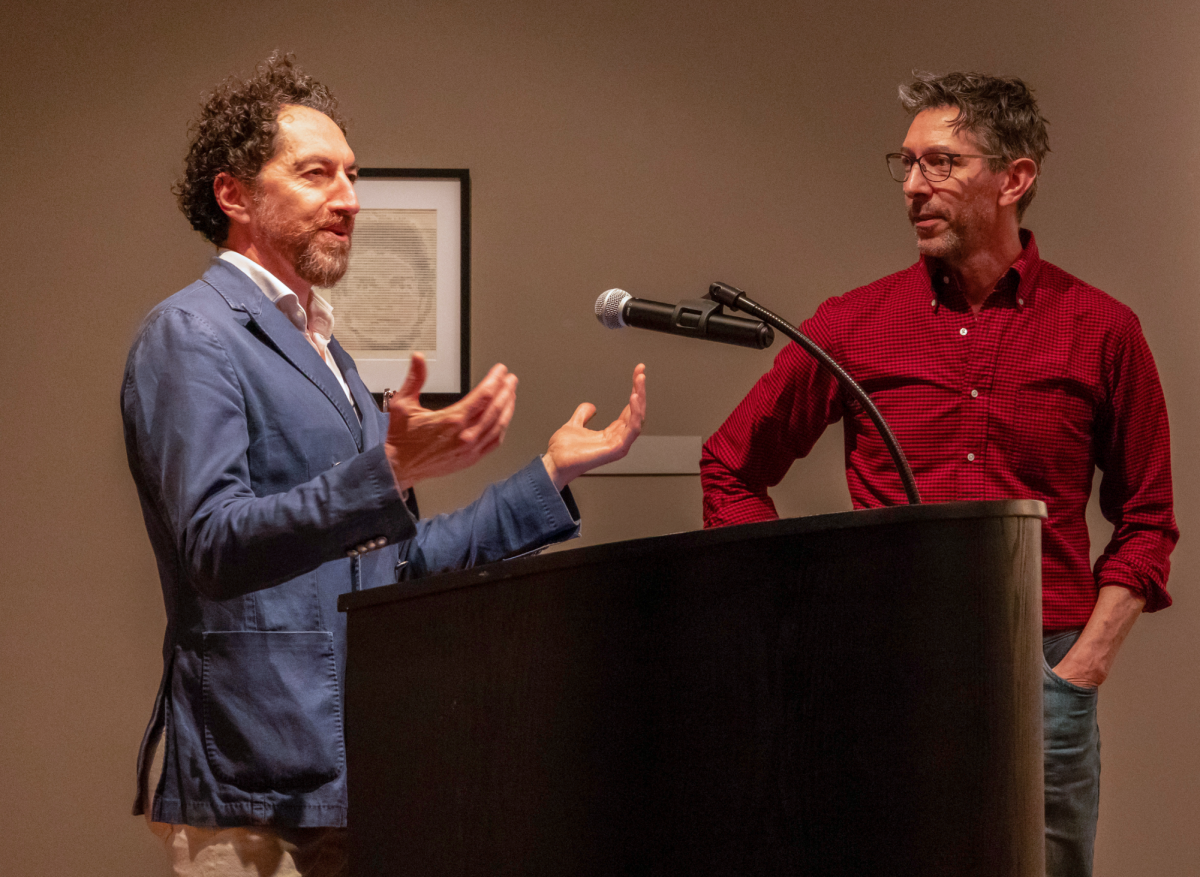
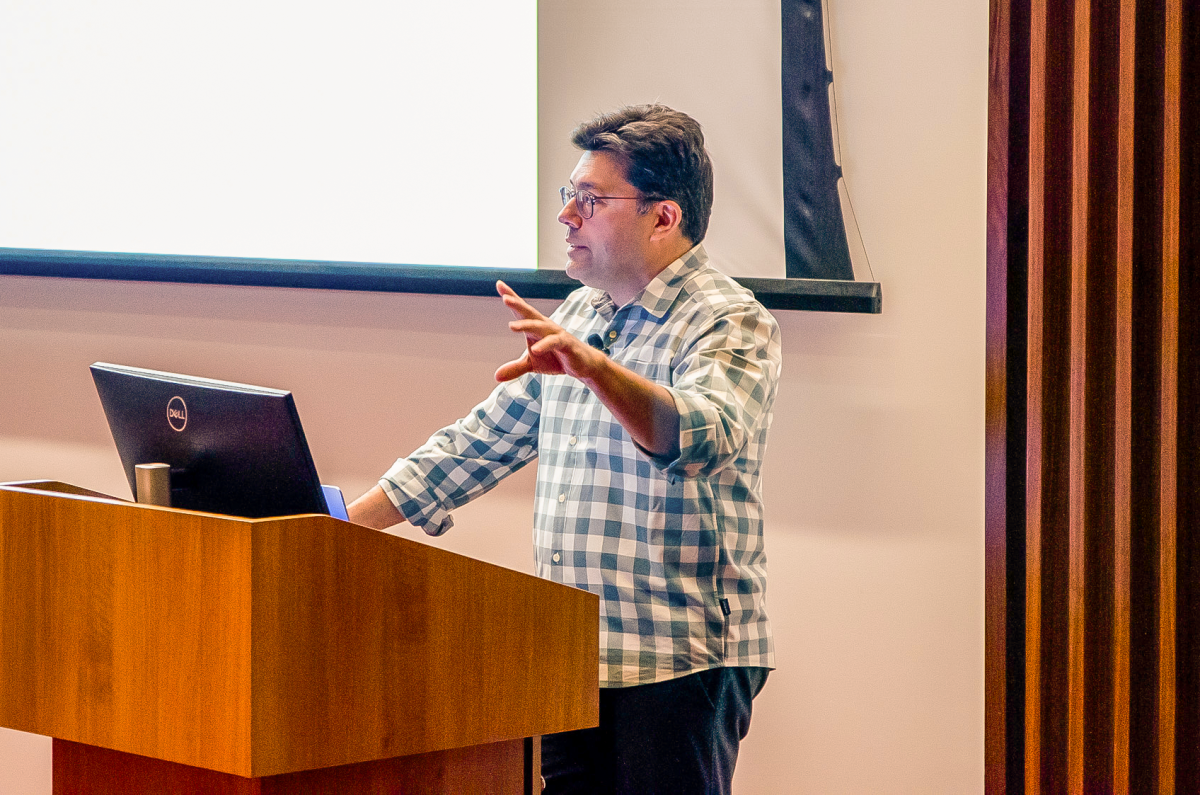
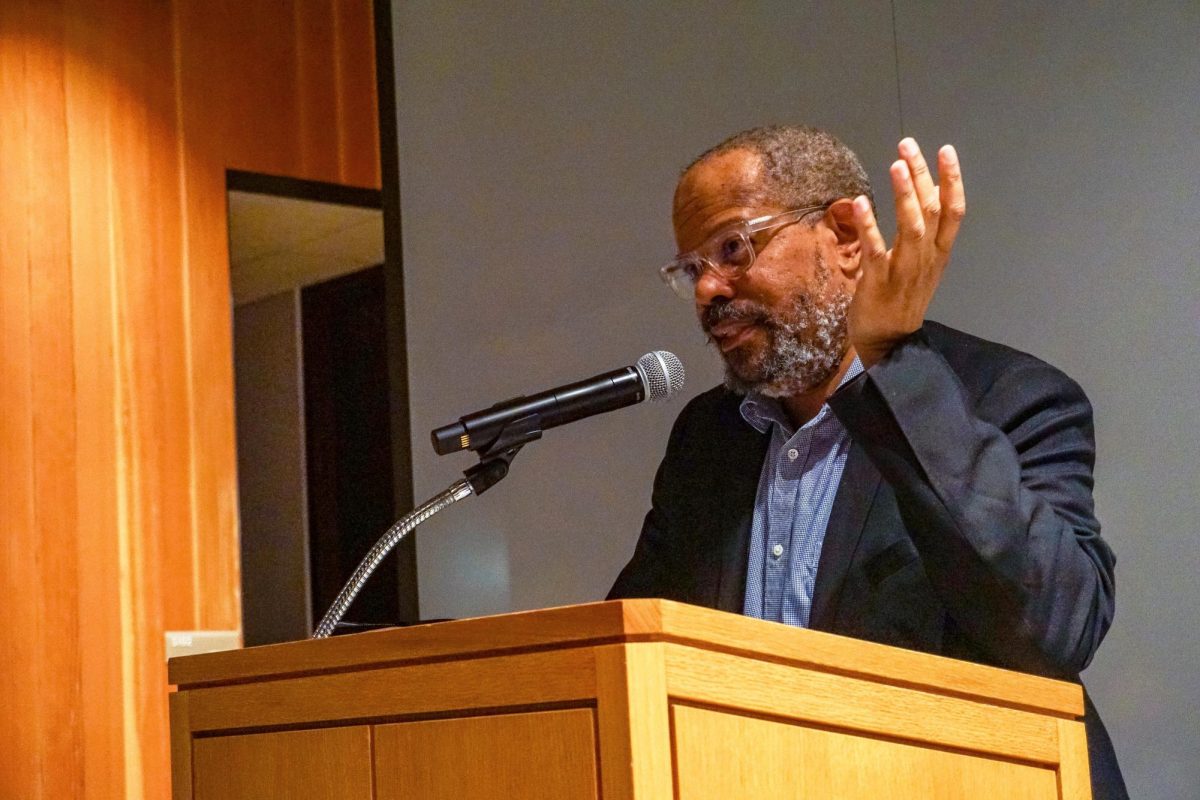
My hope for the United States comes from a speech delivered by Alexandra Conlon `09 discussing her work on American Association of University Professors v. Rubio, a federal lawsuit filed in March 2025.
Conlon successfully challenged a policy that targeted non-citizens for their speech, particularly speech supporting Palestine.
Her central argument was straightforward but powerful — non-citizens in the United States are also protected by the First Amendment.
What made the ruling particularly striking was that the judge, appointed by Ronald Reagan, recognized the constitutional logic of her argument.
Conlon closed her talk with a quiet but powerful reassurance — students, especially non-citizens, could still hold on to a measure of hope, because the protections of the First Amendment extend to everyone within the United States.