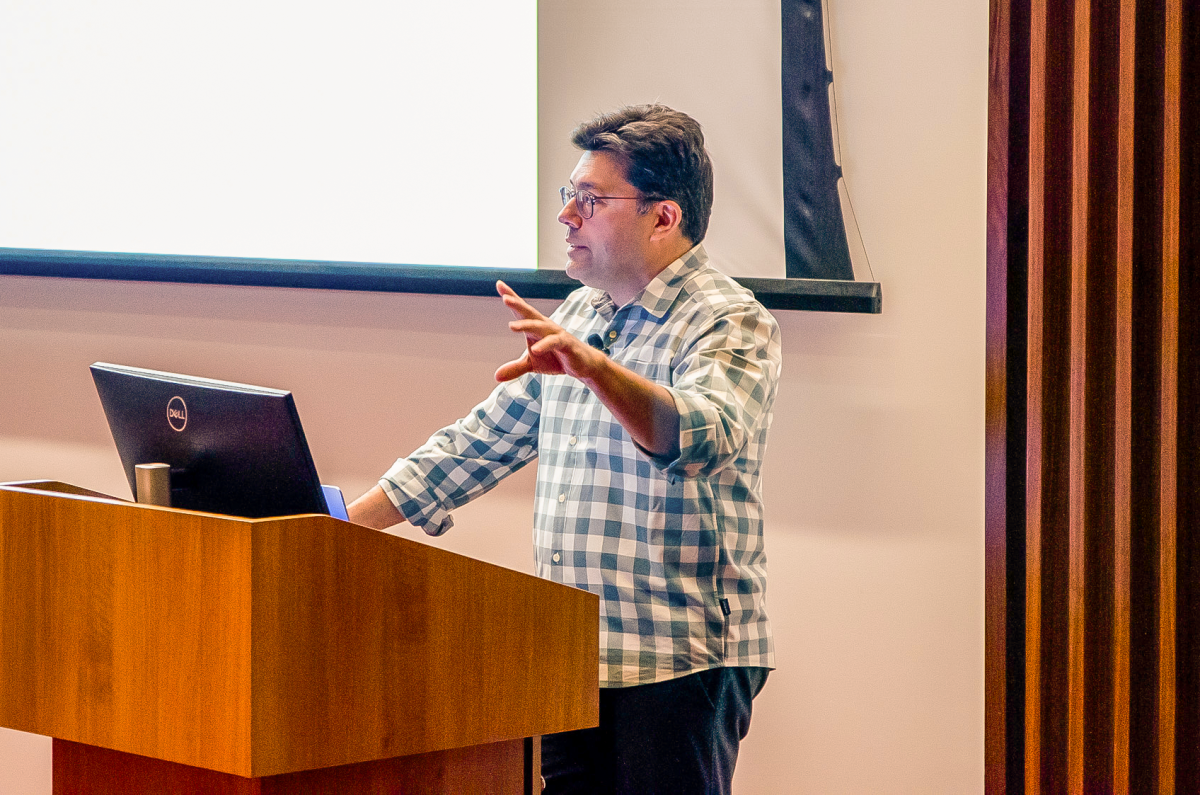
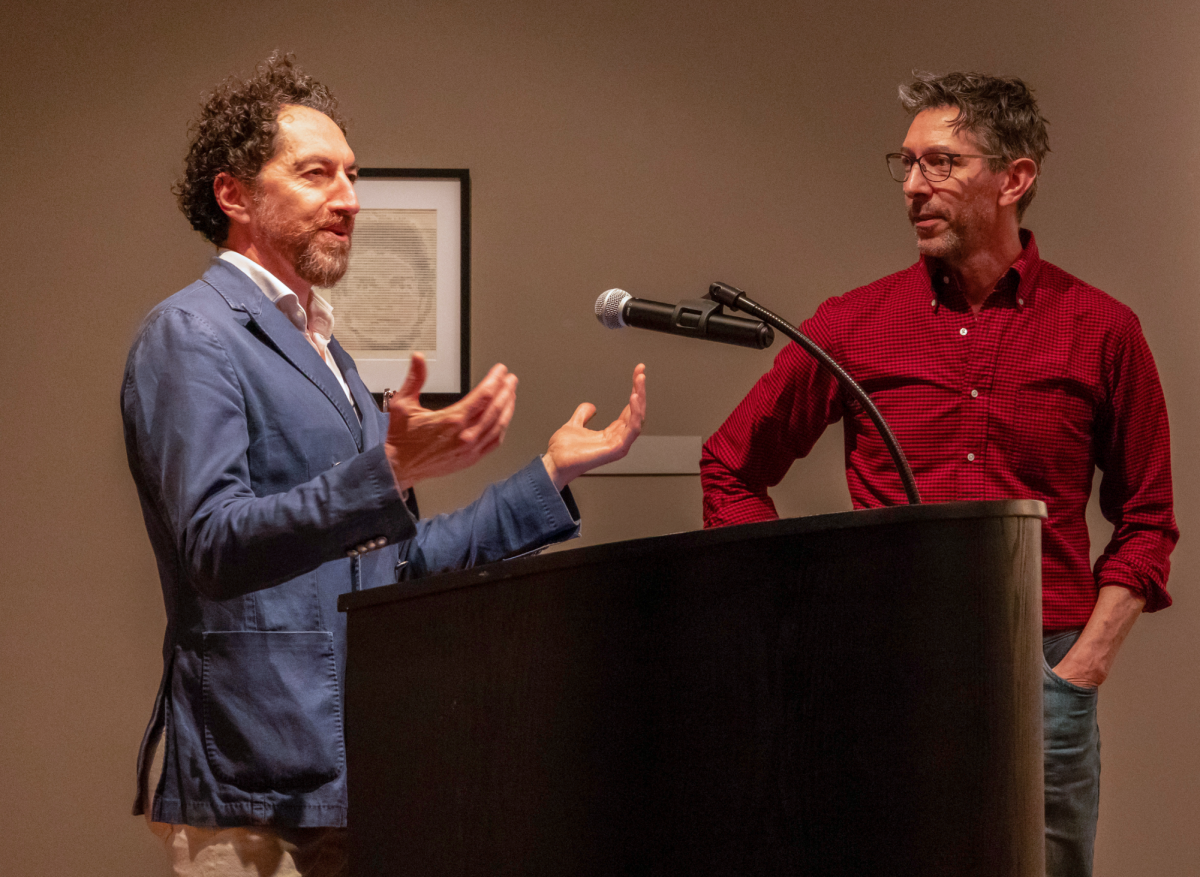
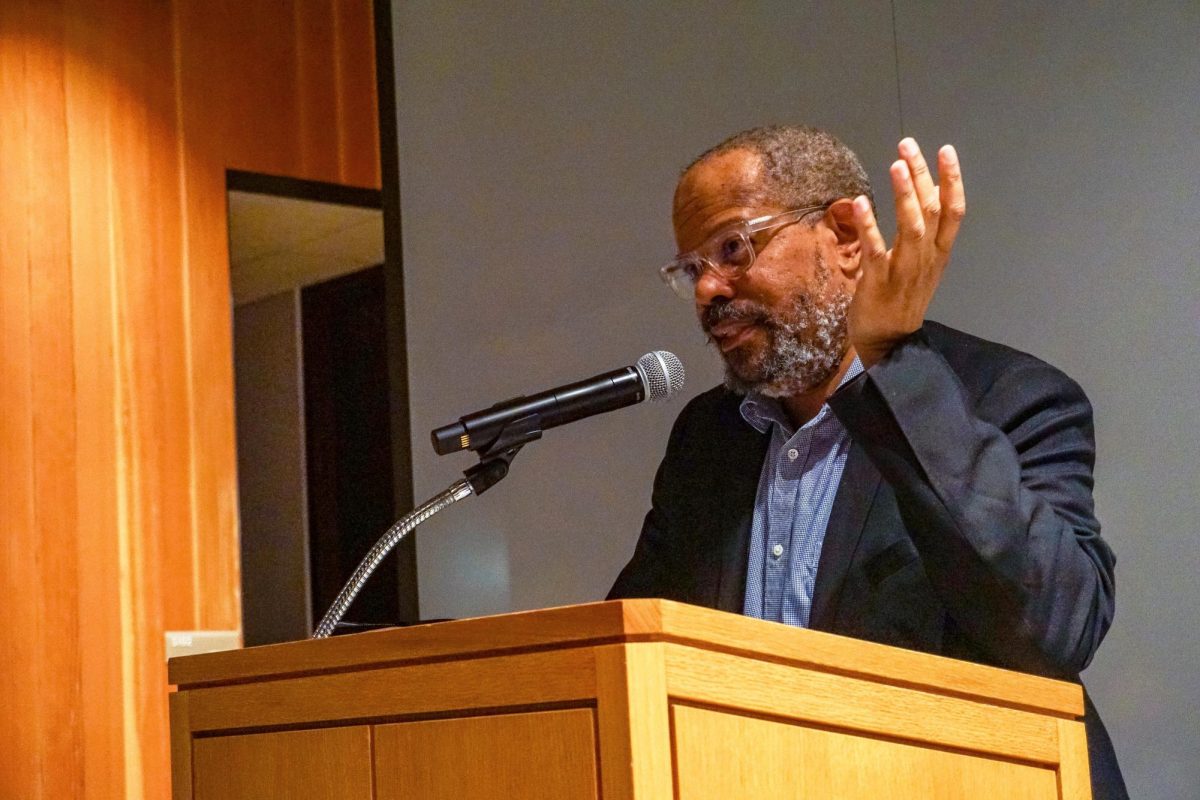
The Rosenfield Program welcomed alumna Alexandra Conlon `09 back to campus to speak about academic freedom, immigration enforcement and what she described as “viewpoint discrimination” in federal policy.
Conlon is a trial attorney whose practice includes white-collar criminal defense, government investigations and complex civil litigation. While introducing Conlon on Jan. 29, Ed Cohn, director of the Rosenfield Program, highlighted Conlon’s involvement in several high-profile cases, including the civil lawsuit stemming from racist violence in Charlottesville, Va.
Conlon centered her remarks on the American Association of University Professors v. Rubio, a federal lawsuit filed in March 2025. The case challenged what Conlon called an “ideological deportation policy” that targeted non-citizen students and faculty members for their speech, particularly pro-Palestinian expression.
“We sued the government and we basically argued three things,” Conlon said. “First, that non-citizens have the same First Amendment rights as citizens. Second, that speech about global events is precisely the kind of speech that the First Amendment protects, and third, that targeting non-citizens for that speech violates their constitutional rights.”
Conlon emphasized that the case was not about endorsing a particular political position. “This case is really about academic free speech in connection with immigration enforcement,” she said.
According to Conlon, the lawsuit arose amid a wave of high-profile arrests of non-citizen students during President Donald Trump’s second term. She argued that these arrests were part of a broader effort to deter campus activism through fear.
“They did everything they could to draw attention,” Conlon said, pointing to public statements and media appearances by senior officials. “The goal was to chill free speech on campuses.”
Although the case was expedited, Conlon noted that it still took months to resolve. The complaint was filed in March 2025, trial began in July and the judge’s ruling followed in late September. “It’s taken almost a year,” she said.
A central challenge in the case, Conlon explained, was proving “chill.” It is the idea that fear alone can suppress speech. In the First Amendment law, she said, chill is considered a real constitutional injury, but it must be demonstrated through testimony.
Witnesses, all non-citizen scholars, testified under oath that they had curtailed their speech, research or travel because they feared government retaliation. “We were asking people to put an enormous bull’s-eye on their own backs,” Conlon said.
Conlon highlighted testimony from a Brown University professor whose research focuses on the Middle East. According to Conlon, the professor described canceling international research travel, withdrawing from conferences and shelving academic work after witnessing the arrest of a Tufts University Ph.D. student for writing an op-ed.
Conlon also described testimony from a philosophy professor who said he stopped advocacy work and became afraid to leave the U.S. to visit his dying brother abroad, worried he would not be allowed to return.
During cross-examination, Conlon said, government attorneys questioned witnesses extensively about their political views, protest activity and even the immigration status of people they had attended demonstrations with.
Through the discovery process, Conlon said her team obtained internal government documents revealing how enforcement decisions were made.
She described a system in which analysts reviewed lists of students and faculty, drafted short “reports of analysis” and forwarded recommendations for visa revocations or other actions.
Conlon said these reports often relied on social media scraping and third-party websites such as Canary Mission, which she described as widely criticized for unverified accusations.
In some cases, she said, the government’s own documents acknowledged that no legal violation had occurred.
Despite this, Conlon said, some officials recommended silent revocations, in which a visa would be revoked without notifying the individual before arrest.
In September, the court ruled in favor of the plaintiffs, concluding that non-citizens lawfully present in the United States do have First Amendment protections and that the government’s policy was unconstitutional.
Conlon said the judge described the actions of senior officials as a coordinated effort to suppress speech.
Conlon offered a cautious answer on what she hoped students would take away from her talk.
“Students, especially non-citizen students, can maybe feel a little more hopeful that at least one court is saying everybody has the same First Amendment rights,” she said. “But the nuance people bring to campus discourse doesn’t always translate.”
“So I guess,” she added, “a little despair and a little hope.”