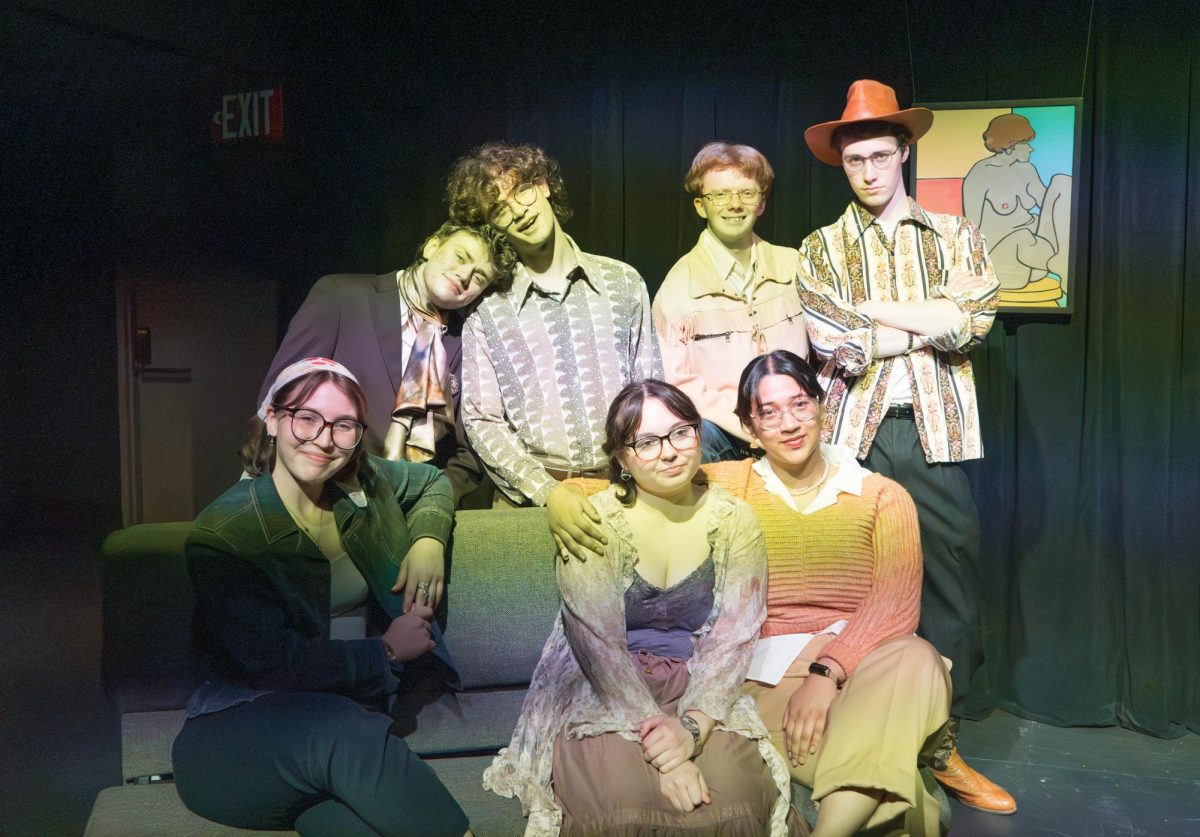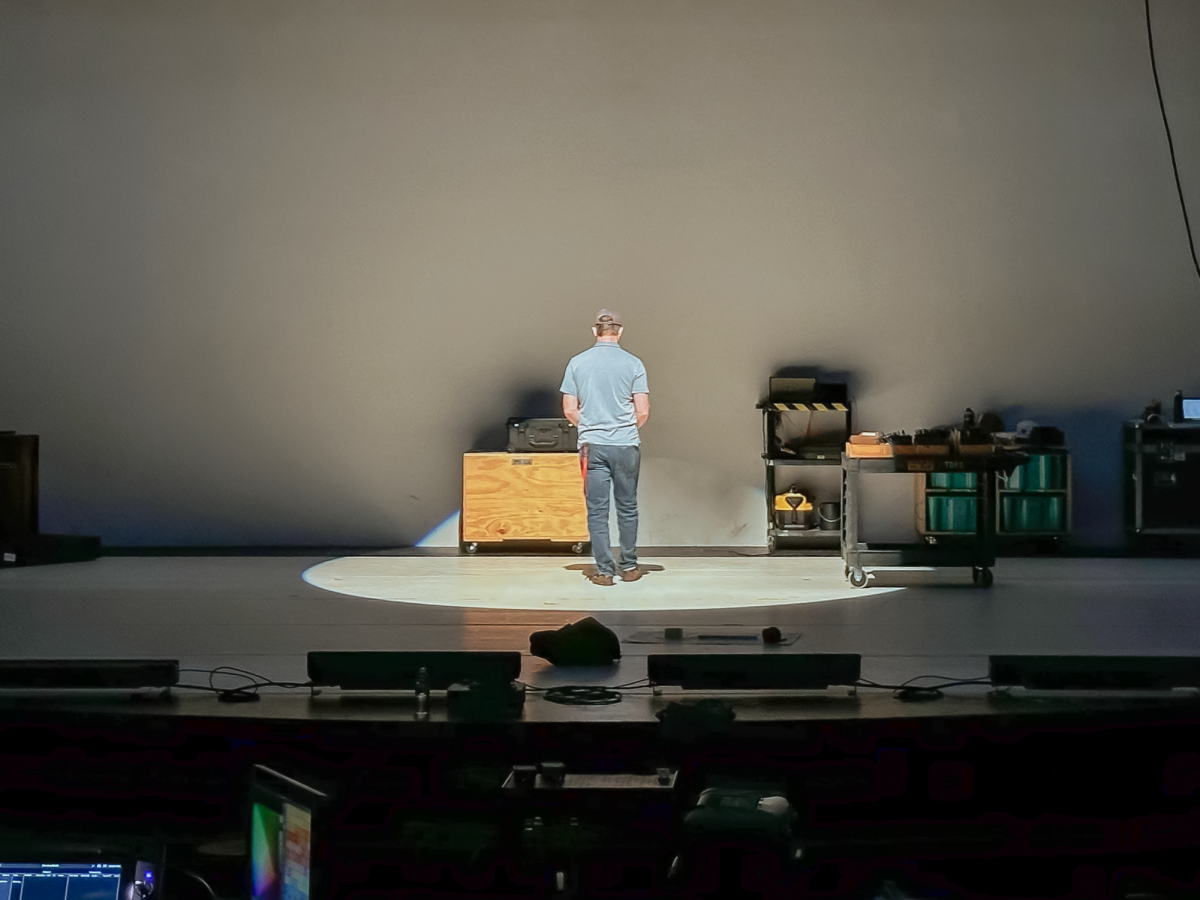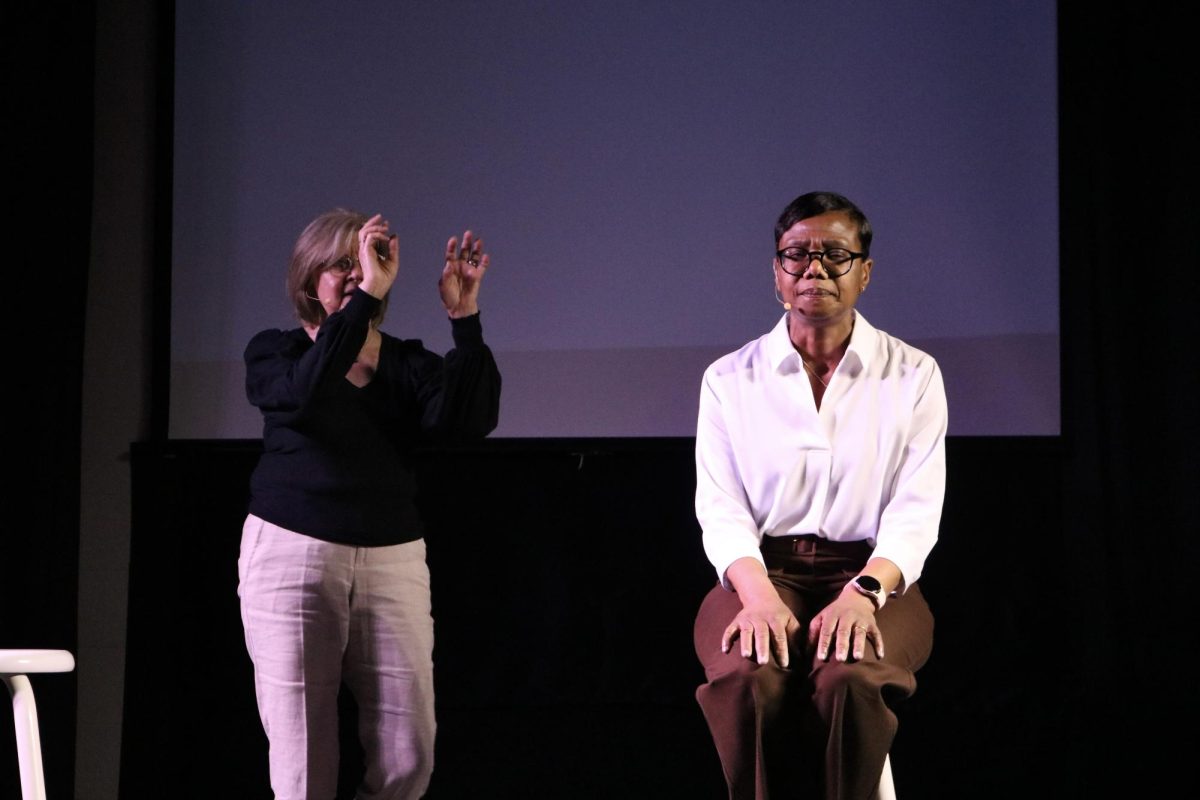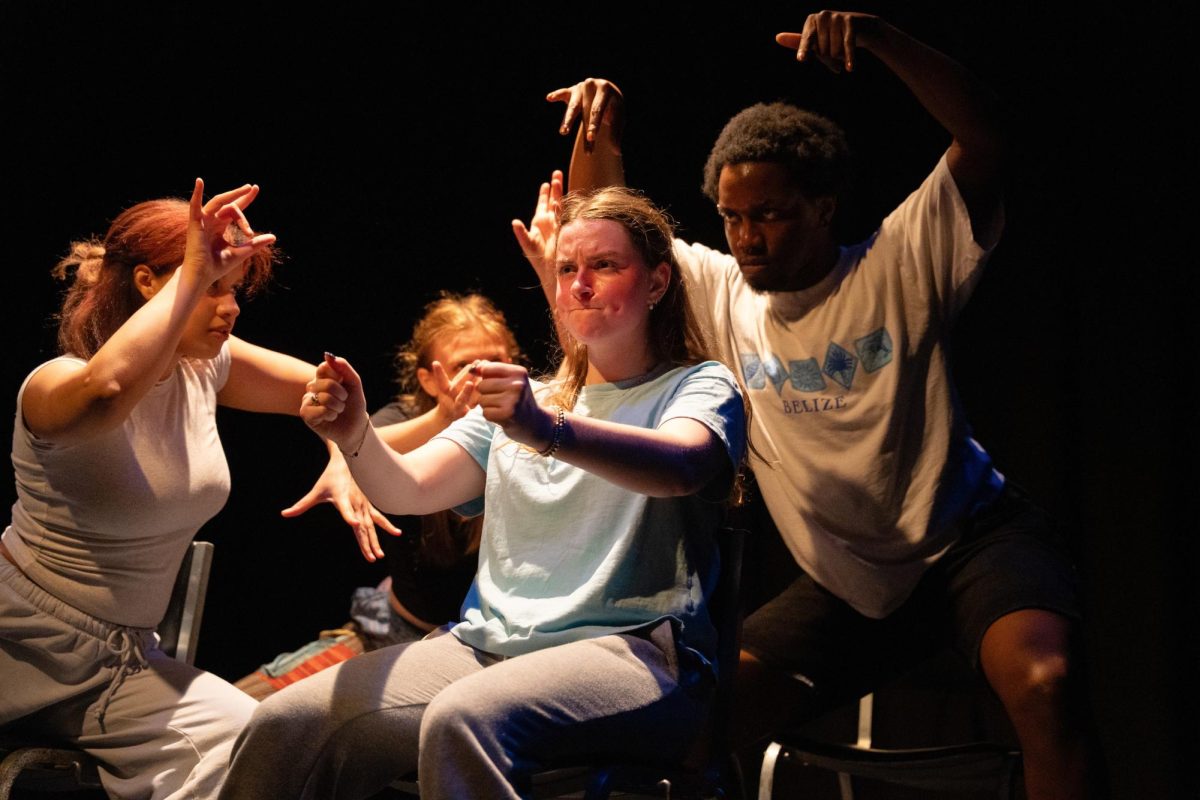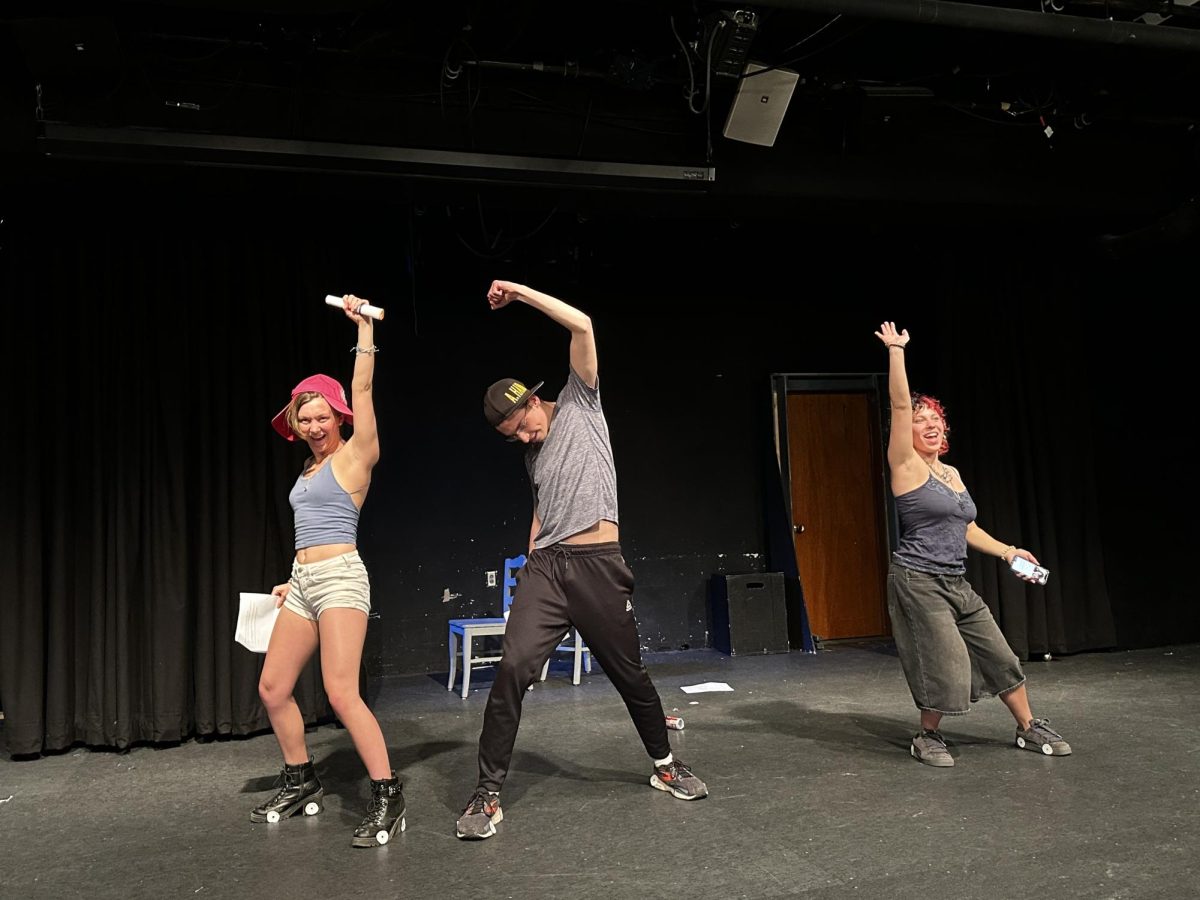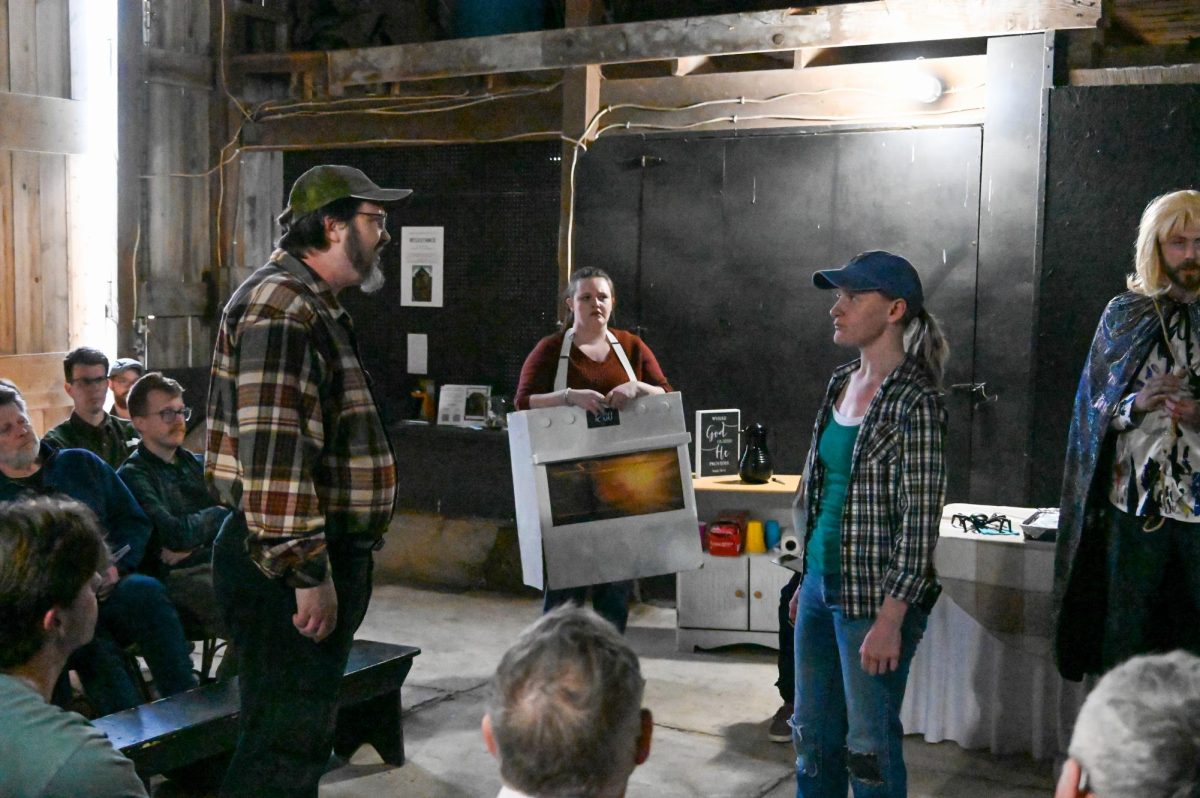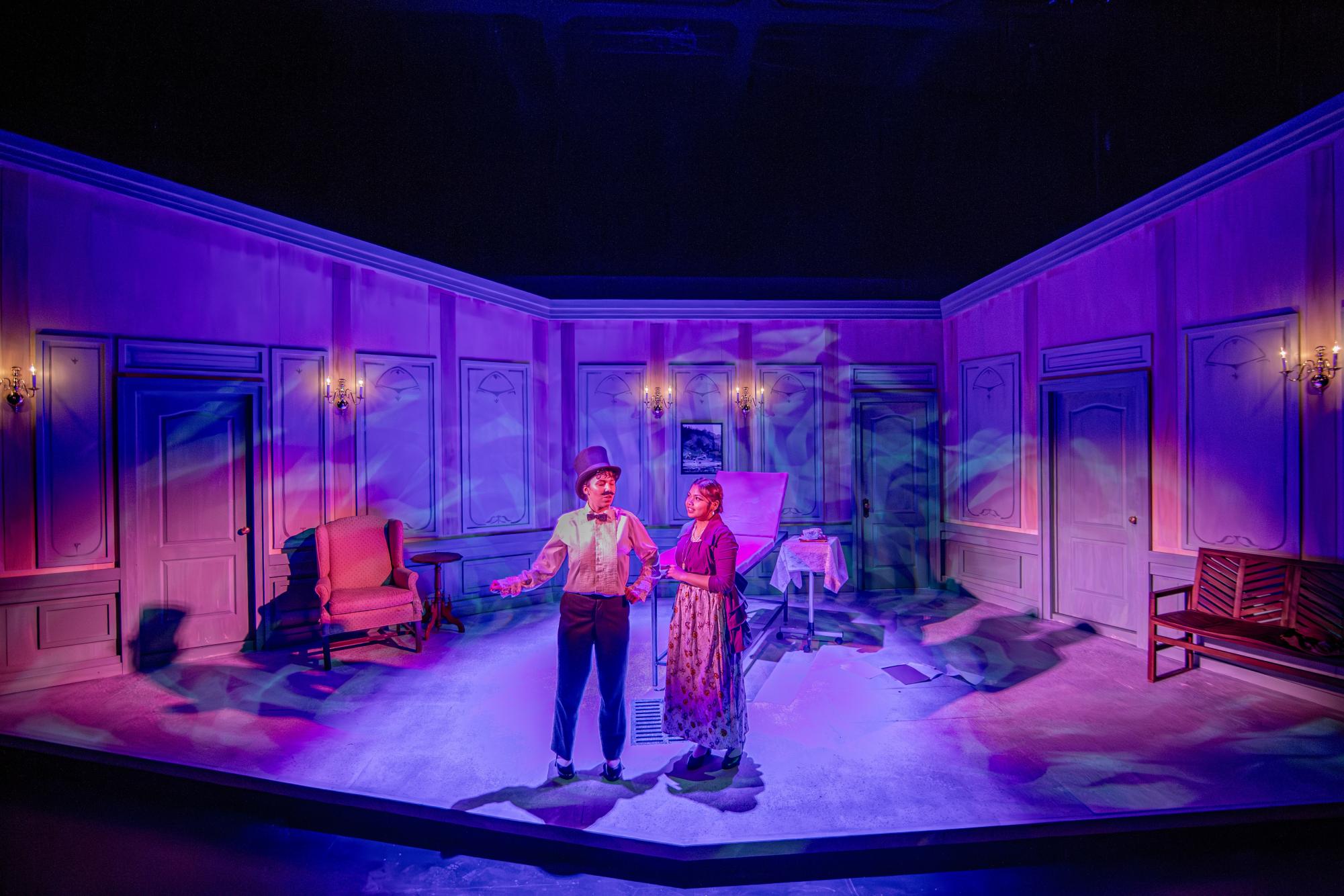

Despite backlash from an artificial intelligence-playwriting controversy, a quick production turnaround and a lack of actors auditioning, four Grinnell College playwrights rose to the occasion for their debut of “Performing Space.” With two unique sets designed by Stuben Farrar to draw inspiration from, students created four very different fifteen-minute one-act plays — one resulting in the murder of a friend, one where a man turns into a phone, one where the tragic death of a loved one unites two polar opposites and one where improvisation turns into a person being locked in a basement.
In December of 2025, initial postering in Bucksbaum called for writers for the spring 2026 Mainstage production called “Variations (an AI collaboration).”
The poster read, “For this project, four authors will work with an AI to develop their fifteen-minute script for two actors using the same set design.” “Performing Space” debuted between Feb. 27 and March 1 without the AI usage.
“The original idea was that the AI was going to be used as a tool to help students be able to write a play that was going to be feasible in the big scale,” said Ariana Lebaron `27, “Performing Space” stage manager.
According to an email from Libby Albright `27, member of the Theatre, Dance and Performance Studies SEPC, after initial vandalism to posters and student boycotts, an open lunch was hosted to discuss concerns with director Craig Quintero.
“When he explained the project, he mentioned that at an international film festival, almost every work he saw engaged or collaborated with artificial intelligence in some way,” Albright wrote of Quintero. “I believe that his rationale for the project was that as theatre artists entering the industry, we would need experience working with AI.”
The process was meant to explore not just what it means to use AI as a tool but the ethical implications as well.
The original poster for the production read, “You will document your interactions with the AI (the prompts you use, your editorial process, etc.) as we collectively explore the ethical issues involved in incorporating AI into our artistic praxis.”
After students came forward with their dislike of the idea, the theatre, dance and performance studies department ultimately decided that the AI component would be taken out.
“What that did to the rehearsal process was make it more rushed as we had to spend two weeks doing a playwright workshop,” said Lebaron.
Despite the initial delay and backlash, the shows continued on. The first set resembled a log cabin with a couch in the middle of the scene with a painting above it, a wardrobe to the left of it and a wooden chair on the leftmost wall. Opening on this set was “Verified,” written by Jack Broadmoore `27 and performed by Brigid Leahy `27 and Bella Totten `27. The play offers an interesting take on the evolution of betting culture.
Immediately after its high-tension ending, “The Witness” by Adyasha Anidita `28, starring Meryem Koksal `28 and Jesse Witt `29, opened with eerie, dim blue lighting and music that immediately sets the scene. The play began with an actress improvising with her manager.
Witt, who played the character of Elin, said about getting into character, “It was confusing trying to figure out what everyone meant by the script, because everything was so vague. Until I found similarity between my role and the roles I previously played.” The vagueness of the script appeared to work to the benefit of the one-act as both actors appeared completely immersed in their roles.
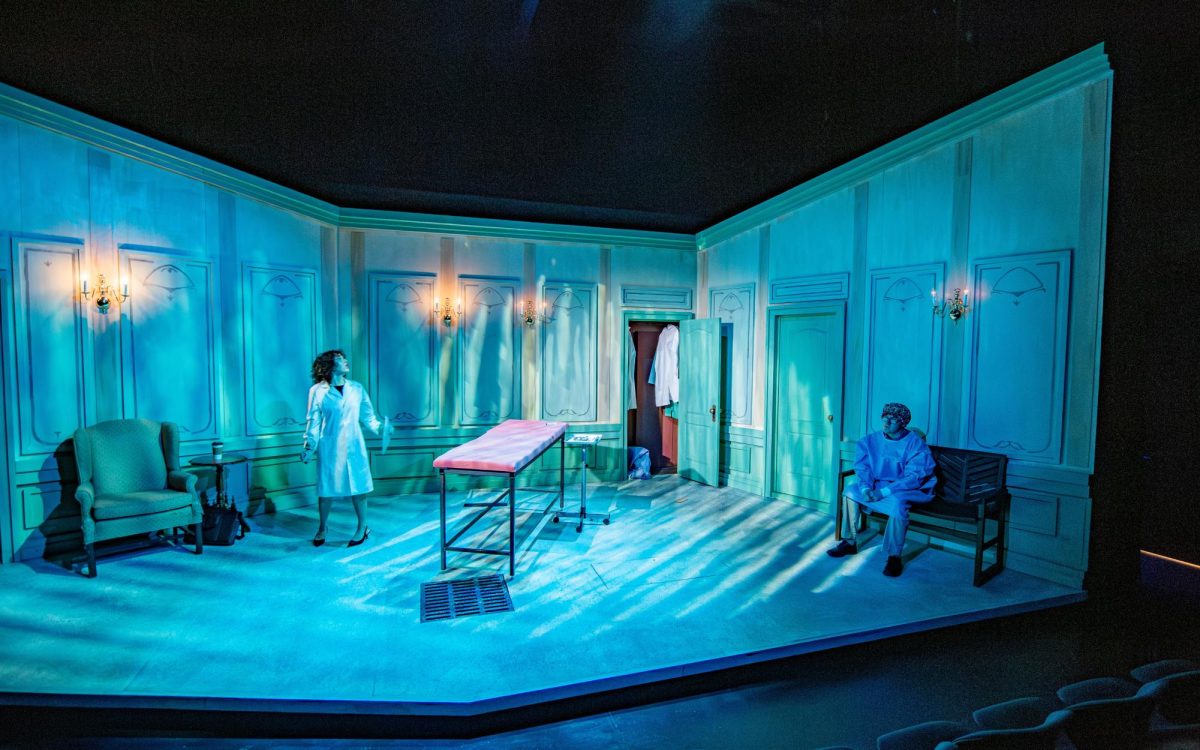
“Phonetics” by Bella Takata `28, the third one-act, was an immersive experience for the audience. The audience had to physically move from their seats, through the door of the wooden set to reveal an entirely new scene behind. This new backdrop had three doors, all teal, with a red surgeon table in the middle of the room, a few paintings around, a vent in the floor and, oddly enough, a vase of flowers underneath the surgeon’s table.
The play made full use of the new space in a one-act drama that appears to be a take on a period piece with modern elements. The outfits included a showy period-appropriate dress for the beautiful, yet self-described as “not smart” Priscilla, and a more raggedy blue dress for the secretly-studying, psychologist-to-be Dorothy.
Both actors, Takata playing Dorothy and Jane Nicole Mozunder `28 playing Priscilla, stuck to the comedic, dramatized tone of the play.
The absurdist drama hit many different story beats throughout, beginning with the two sisters-through-marriage arguing. Then, the play divulges into an impromptu therapy session that turns into a romantic flashback of Priscilla with her ex who eventually turns into a giant phone that crushes Priscilla before she claims all men are “phone-ies.”
Writing and acting in her own piece, Takata said, “To write a world that I had no intention of ever being in and then having to go in it and sell it was definitely weird.” She said she felt much more comfortable stepping into someone else’s world as it felt less like stepping into her own brain.
Takata acting in both her own as well as another one act was primarily due to the lack of actors auditioning, she said.
“The final product of ‘Performing Space’ was great, but I do know they had trouble getting people to audition, which may be due to its association with ‘Variations,’” wrote Albright. Despite the pressured circumstances, none of the actors appeared out of place.
Closing out the show was “The Waiting Room” written by Mozunder. For fans of the “two opposing characters stuck in a room together” trope, this piece delivers.
Patient but indecisive Sam, played by Beck D’Alessio `28, and bold but smothering Yuki, played by Takata, are stuck together in a potentially haunted waiting room waiting to hear the conditions of Sam’s ex-wife and Yuki’s ex-friend Abby after a car crash that later proved to be fatal. Both characters have to learn to accept each other’s strengths and faults.
Takata said, “We joked that we were type-cast, which we weren’t entirely, but we were definitely playing to our strengths.”
Reflecting on her piece, Mozunder said, “I was able to see the final product and I thought ‘wow, this is what I was thinking about a month ago.’” She called the experience of coming into the space as a completely new playwright beautiful.
“I think having a very compact process made the work focused both from the writer’s perspective as well as from the actors, as well as Erik Sanning and Kate Baumgartner, who were leading the team that built the set, and Erin Howell-Gritsch who made costumes,” Director Quintero said. “So it was very compressed, but I think there’s something exciting about that.”
Lebaron said, “Everyone really worked around each other and did what we could.”
She added that the show as a whole was an opportunity for all types of students to show themselves. “Grinnell does such a good job at providing alleyways for students to participate however they want — whether it’s lighting, building the set, stage managing, assistant directing, Lebaron said. “The directing class allows them to direct, but I think adding in that avenue for playwriting is very exciting for students.”