


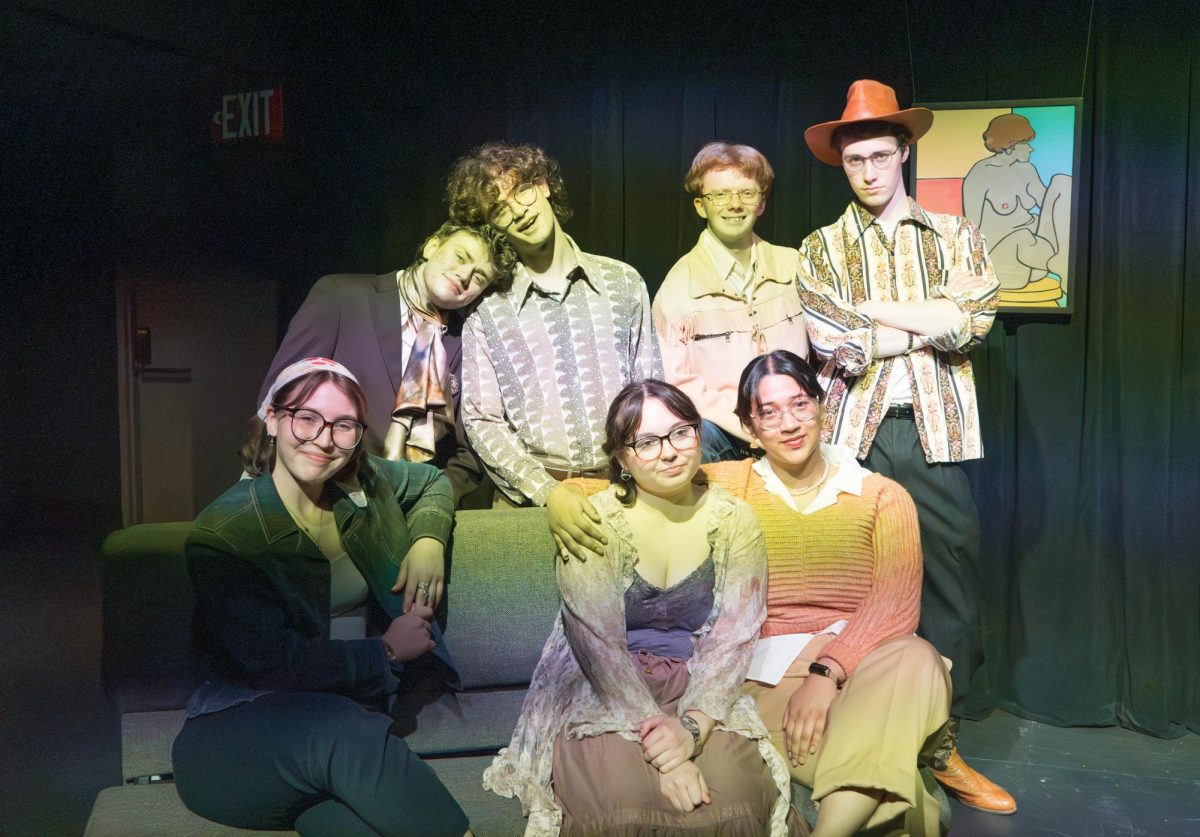















I got to know Craig Quintero last year as a performing cast member in “day/dream,” Grinnell’s spring 2025 mainstage production that he directed. Quintero founded Riverbed Theatre in Taipei, Taiwan, in 1998. It wasn’t until I performed under his direction that I began to understand his approach to creating surreal encounters through experimental theater.
“All that Remains” is a Venice Film Festival premiere that came home on Sunday, Sept. 28, three years after its 2022 premiere. Quintero spent five hours in Bucksbaum 269, guiding viewers one at a time through his 12-minute 360 degree virtual reality (VR) film. This was the experimental work’s first public showing, with each viewer experiencing it alone through an Oculus headset.
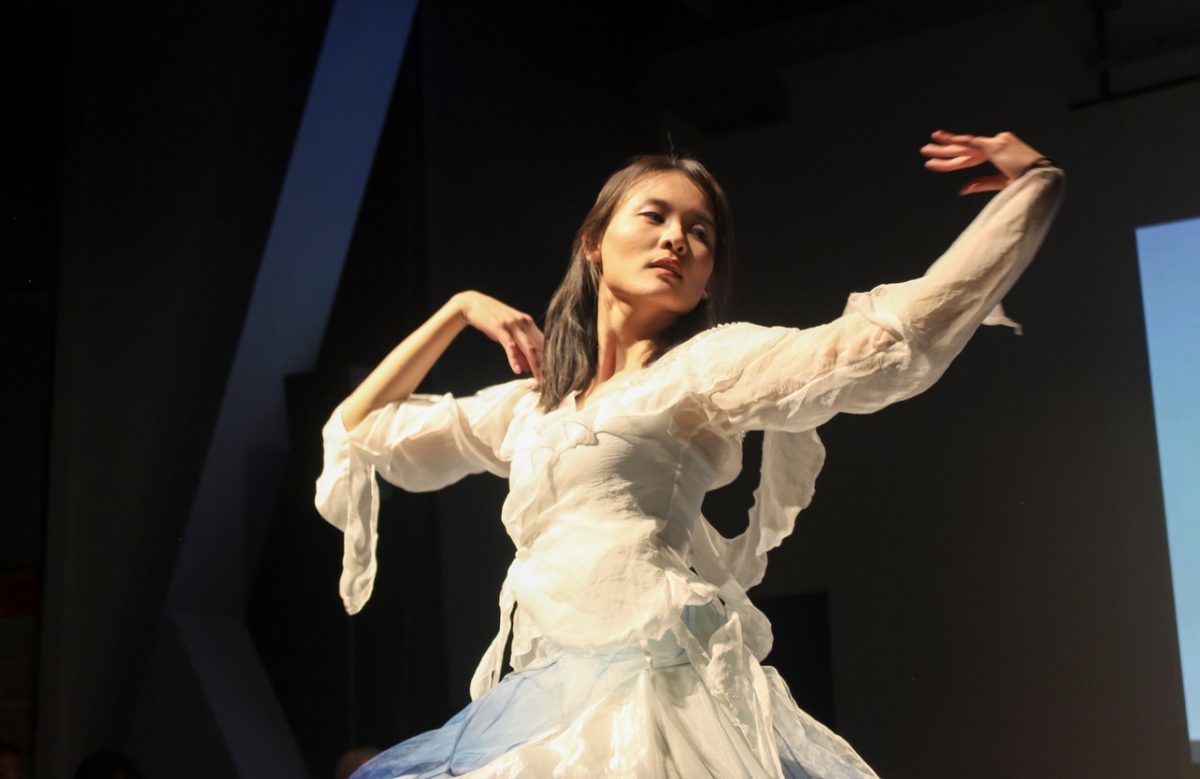
The film opens with the viewer in the centre of a large, dark room, perhaps an old warehouse. Two men in white button-up shirts appear. Each tug on a rope, pulling a large, hefty rug behind them. Once they move past the viewer, a woman appears on the rug in an orange robe. She silently raises her left palm to reveal text — “This is not a performance.” Her other hand reads, “Believe everything you see.” Then, her dress is stripped away to leave only lace underwear.
The entire time, she maintains intense eye contact with the viewer. You can’t look away, because the headset won’t let you. The only way to avert one’s gaze is to close their eyes, but even that feels like a choice you’re accountable for.
For years, Riverbed staged productions that defamiliarized the familiar, creating theatrical experiences that upended conventional expectations. As his company’s success grew and performances scaled to larger venues, Quintero felt increasingly disconnected from his audiences. In 2011, he launched the “Just for You” series, elaborate performances for single audience members.
This was followed by the staging of “Amnesia” in a Taipei hotel in the early hours of the day, mounting the 45 minute performance seven times daily for four days. He built maze-like installations where 28 individual viewers could lose themselves in. The audience could not hide in darkness but were directly engaged, simultaneously watching the performance and being watched. The success led to commissions at venues including the Taipei Fine Arts Museum and Tainan Arts Festival. Tickets sold out in minutes.
Theatre for an audience of one — a special performance for every individual, where no one experience can be truly the same.
VR allows Quintero to transport the audience from one set to another in ways live theatre cannot. The room shifts — the same woman reappears in a claustrophobic and dilapidated room with walls of stained corrugated metal. She reaches for an unlabelled glass dropper bottle, and another arm mirrors her actions from behind a wall, though the face of this performer remains unseen. Tears emerge.
The viewer is then whisked onto a revolving stage. Characters, unnamed and unknown, interact with each other. A figure lays slumped on a stretcher. A woman passes an object to a man. Just before you’re spun into a new micro-scene, the characters slowly turn to stare right into your eyes. You feel like you’ve walked in on something deeply intimate. You can’t look away.
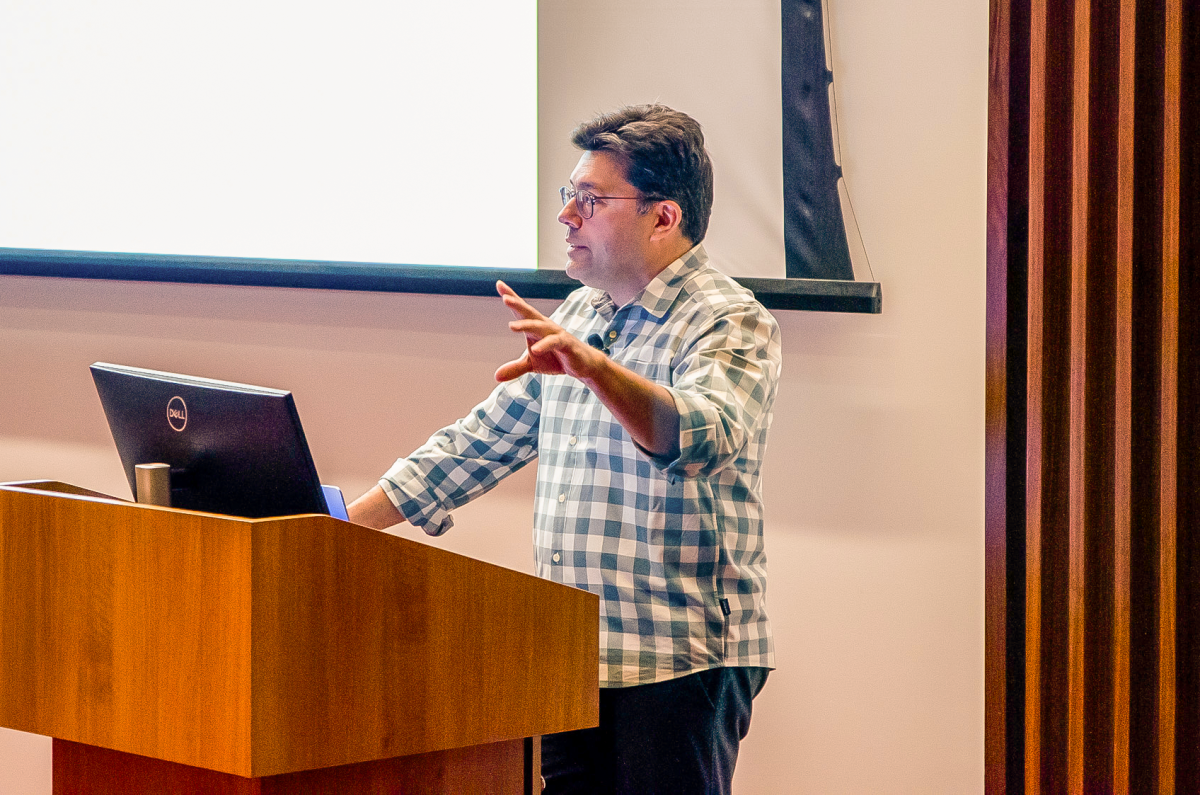
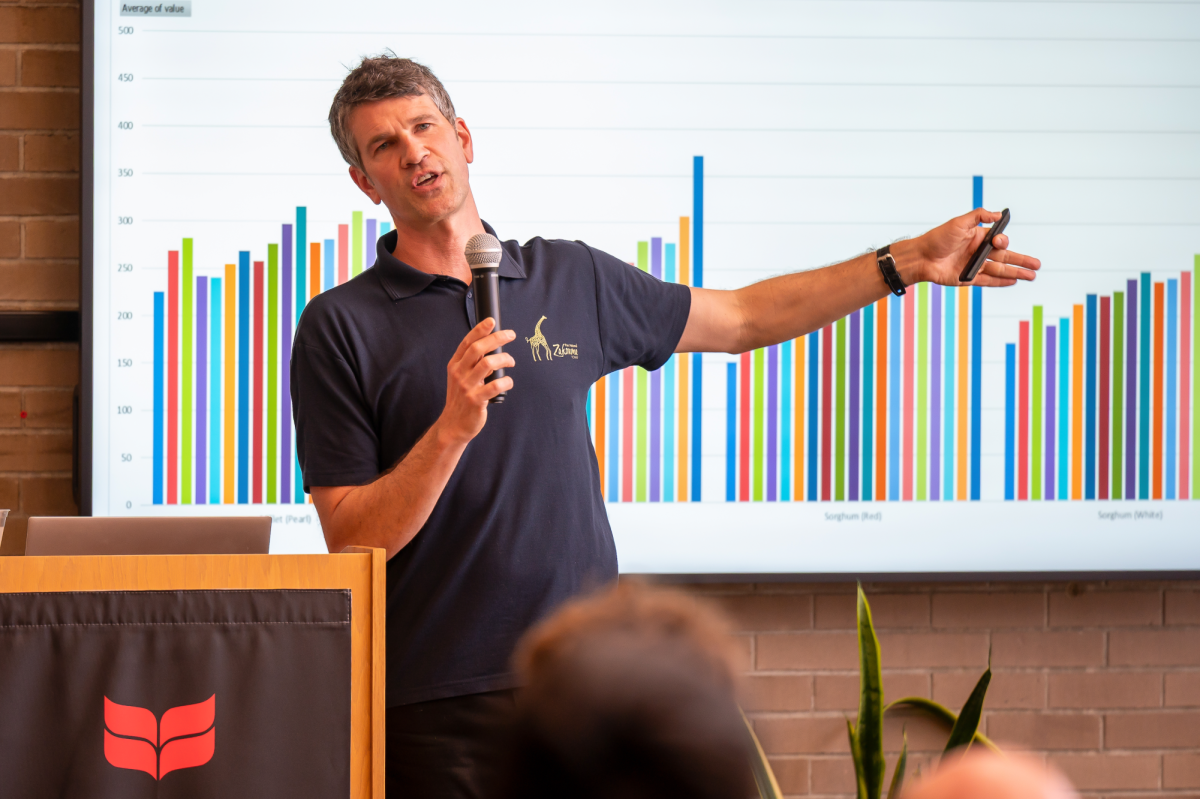
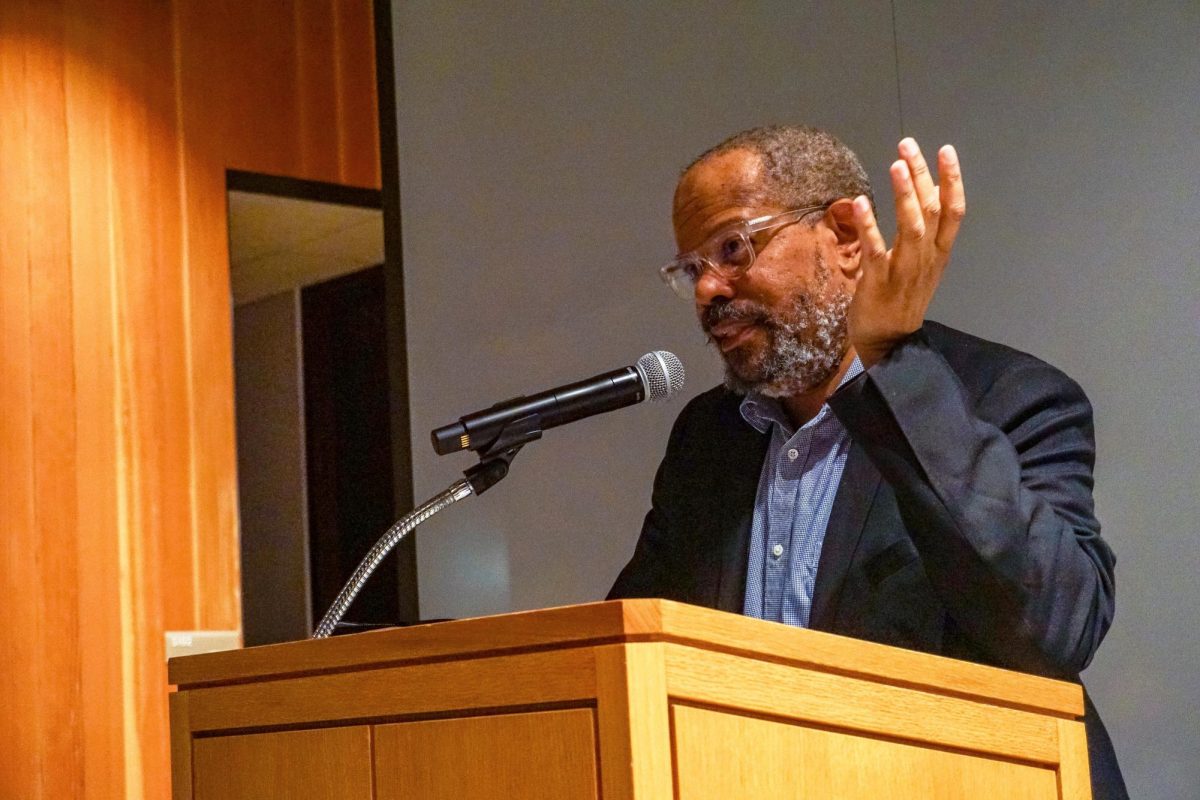
The film stars an all-Asian cast and incorporates liminal spaces that compress and expand. At a Faculty Presentation on Sept. 31 at Burling Library, Quintero discussed his artistic practice and what led him to work with audiences of one, tracing his journey in putting on performances that destabilize audience expectations, moving from traditional theatre productions to VR film.
Quintero said that building massive installations and working with casts of seven to 10 actors for such limited audiences proved financially impossible to sustain. Hence, VR offered a solution. It preserved the intimate encounter while potentially expanding global reach at reduced costs.
The transition meant losing immediate sensory experience — such as no hand touching your shoulder, but VR opened unexpected possibilities. The proximity is overwhelming — Quintero described a family member who backed up six feet, retreating from a performer’s intense gaze. It wasn’t reality, but something real was happening. VR retained the ability to create vulnerability through direct eye contact and intimate encounters that challenge the very concept of reality.
In the final sequence, the viewer is teleported onto a filming set and comes face-to-face with two performers in green screen suits. They curiously and completely invade the viewer’s personal space, tilting their faces at angles, producing sharp creaks with every movement as if about to emerge from their polyester casings. A door opens at the back, revealing a nude man covering his body. He walks towards you looking as if he’s about to cry. He gets on his knees, at where your feet would be. He removes his hands. You can’t look away. The young woman from before reenters, now wearing a grotesquely plastered cast of a pregnant woman’s naked body under her orange robe. She walks toward the kneeling man, opens her casted belly, and closes it around his face.
You blink, waiting to be transported into a new scene where they’re somehow all staring at you again. But no such thing happens. The credits roll, white block letters flickering lightly against the black screen. As your mind races a thousand miles per minute, Quintero reaches over your headset and softly says, “Let me get this off you.”
One challenge Quintero emphasized is the need to curate the audience’s attention in VR. Unlike traditional theatre where the proscenium naturally frames focus, 360 degree environments require careful choreography of sound and visual information. His approach therefore focuses on creating mood and texture rather than explicit meaning, emphasizing what happens during the encounter rather than what the artistic work conveys.
Both “day/dream” and “All That Remains” explore similar territory, but the spatial relationships differ dramatically. In “day/dream,” audiences sat at least 15 feet away. In VR, with performers six feet from the camera, the intimacy becomes almost unbearable. Viewers remove their headsets with tears streaming down their faces. Something happens inside them. Over twelve minutes, they are transported beyond the limits of the everyday.
The technology allows Quintero to bring a distinctly Taiwanese aesthetic to international viewers who might not otherwise encounter it. When he first began exploring VR, Quintero said he asked himself, “What is this technology and how do we approach it artistically?” The answer lies not in the technology itself but in commitment to finding the heart of the form — creating experiences where audiences can escape the constraints of the everyday.
Quintero guided 15 people through the work over five hours and demonstrated his commitment, one person at a time. Five hours for 15 viewers. This is theatre as Quintero envisions it — direct engagement, vulnerability, the impossibility of hiding in darkness. His driving question, as he explained during his presentation, centers on creating work that makes us vulnerable — “What is the work that gets in and becomes a part of us?”
After Sunday, 15 more people at Grinnell are asking themselves that question.