




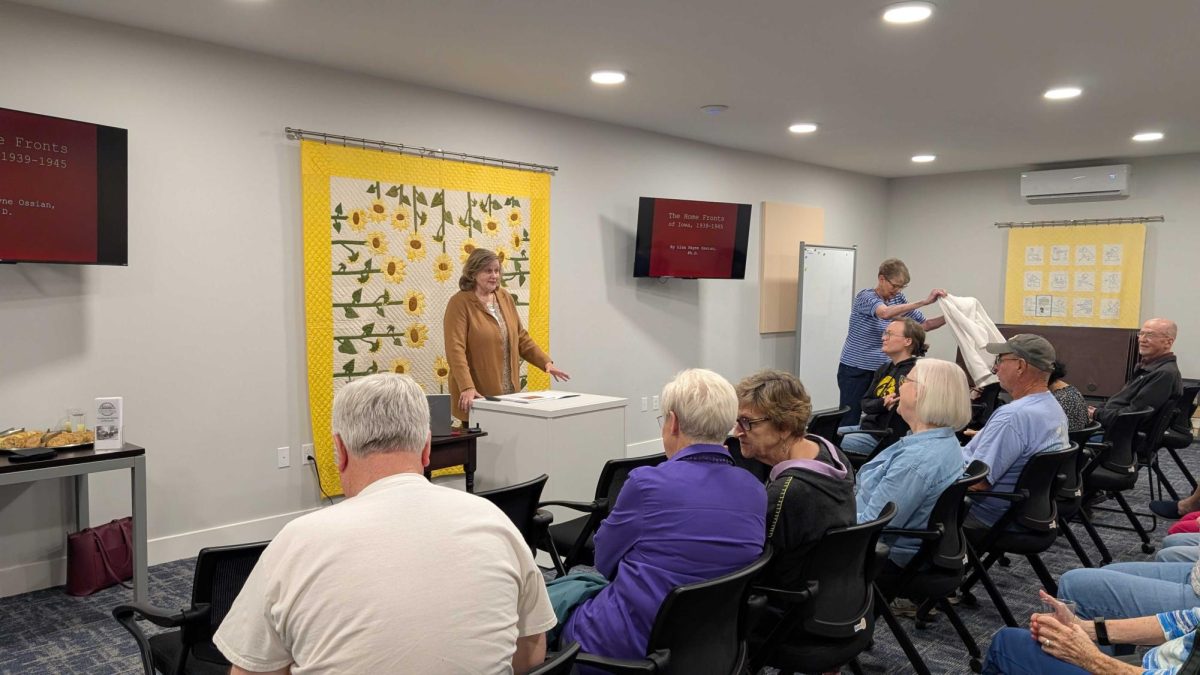









































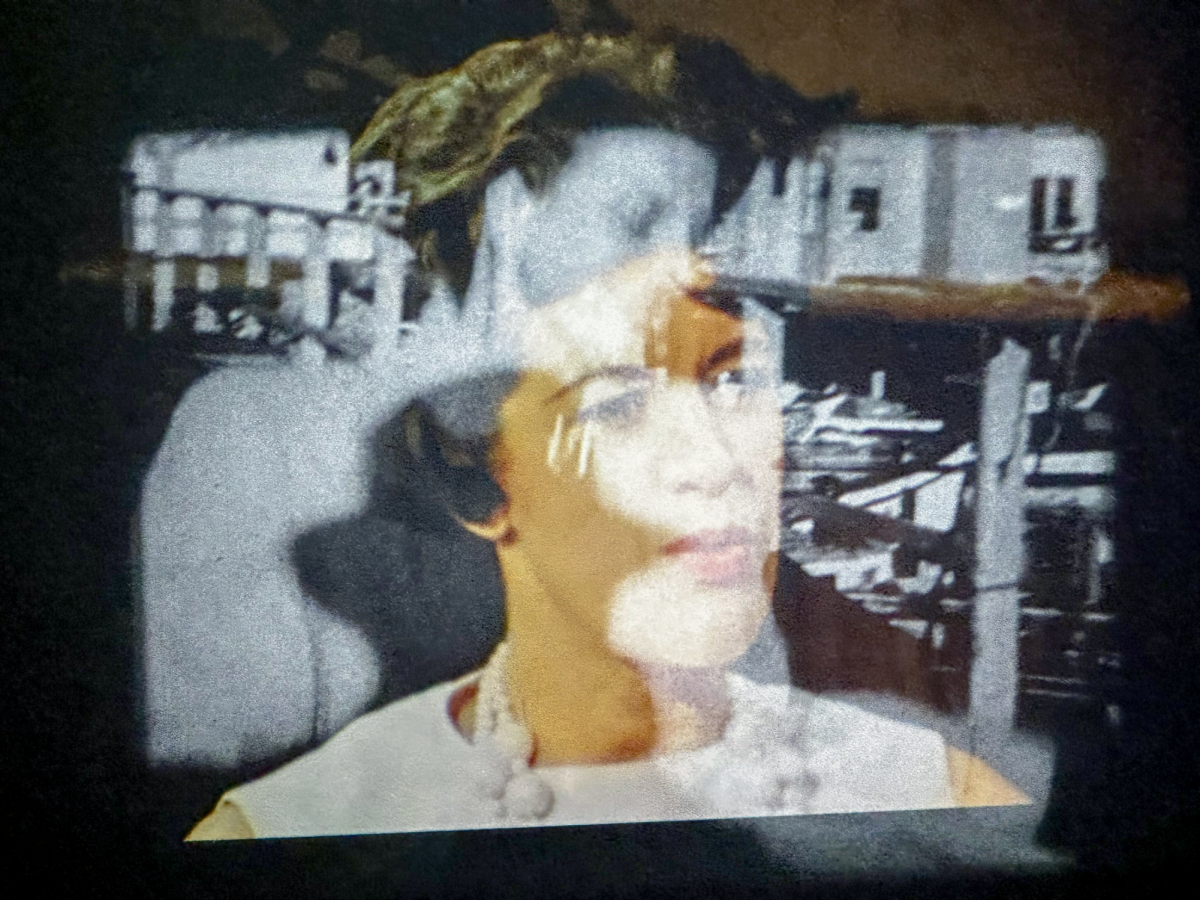
On Wednesday evening in HSSC A2231, Brooklyn-based film artist Jennifer Reeves stood before an audience introducing “The Gloria of Your Imagination,” a live dual-projection performance in which half the film ran digitally and the other half was projected on 16mm film, built from unlikely source material — the 1965 educational film “Three Approaches to Psychotherapy.”
The original film documents a 30-year-old waitress and single mother named Gloria in therapy sessions with Carl Rogers, Frederick Perls and Albert Ellis, three figures of twentieth-century psychology.
Reeves described her discovery of the original film as accidental during the COVID-19 pandemic.
“I discovered the film as an item on eBay,” she said. At the time, she was collecting 16mm prints for another project. “It was a very lucky impulse, because when I watched it, I was completely blown over.”
Watching the sessions, Reeves felt uncomfortable after seeing the power dynamic between Gloria and the three famous therapists. Gloria, she noted, belonged to her mother’s generation. Reeves’ mother had long since passed away, and she found herself confronting a generational distance of understanding one another that she had never fully acknowledged herself.
“I could never quite step into her shoes,” Reeves said. “I wanted to try to understand… how she was shaped by her culture, as were the therapists.”
That desire for emotional and psychological understanding rather than strictly intellectual analysis became the engine of “The Gloria of Your Imagination.” Reeves wanted to grasp what it meant “to be a woman in her 30s in the mid-60s before the second-wave feminist movement.”
The film remained compelling, she explained, because she continued to find points of identification with Gloria alongside some differences. She saw those differences as markers of what had changed since the 1970s.
Reeves spent years researching, reshaping and rethinking the project. “My discoveries continually made me have to edit things out and shift approaches,” she said. “The more I knew her… I became very concerned about the ethical considerations when making a film about her life,” Reeves added.
She eventually reached out to Gloria’s family. Reading her daughter’s reflections brought relief, “I felt almost like… I was on the right track.”
The film’s structure posed another challenge. Without voiceover commentary, the audience must navigate the material themselves. “I thought it was important to not have commentary,” she said. “People have to observe.”
To guide viewers through this unconventional stylistic choice, Reeves crafted visual and thematic supports such as recurring gestures, tonal echoes and carefully timed transitions that allow the audience to participate rather than be instructed. Audience reactions have affirmed the project’s reach across generations. Reeves recalled one student telling her the film made them understand their mother better.
Another audience member thanked her for portraying the effects of Catholicism “in a non-judgmental way, with respect.” Many women, Reeves said, respond to Gloria’s guilt and her anxiety over whether she is “doing enough” as a mother. Even in a post-second wave era, that uncertainty lingers.
If Reeves began the project seeking to understand a generation before her, “The Gloria of Your Imagination” suggests that the act of observing closely, patiently, ethically and without narration can make decades collapse.


Pensee Ismael • Mar 2, 2026 at 11:19 pm
Best thing I read about an artist’s process in a while. Thank you, Reeves and editors for an amazing interview.