











































Residence Life (ResLife) announced that they will be implementing first-year only housing clusters and one additional gender specific dorm for returning students for the 2026-27 academic year following exit surveys from transfer students who indicated that a lack of connection and belonging contributed to their decision to transfer.
Following these changes, some students have expressed doubt about how successful the new housing model will be.
In an email to The S&B, Vice President of Student Affairs JC Lopez wrote that the new first-year clusters will be Cleveland, James and Main in South Campus, Rathje and Rose in East Campus and Norris and Smith in North Campus.
There will also be select first-year only floors in Langan, and designated first-year rooms in Cowles and Younker.
Lopez wrote that these clusters are structured to follow W-Curve model of transition.
The W-Curve model recognizes that students experience five stages of comfort levels ranging from culture shock to acceptance as they adjust to campus life.
“These residence halls were selected because they can provide new students with a variety of options based on their preferences, account for historical class sizes and the projections for the Class of 2030, allow for community clusters to be developed based on the available types of rooms – doubles, triples, etc. – and are in proximity to campus resources,” Lopez wrote.
Lopez also wrote that ResLife is pulling from studies conducted in 2020 by Gravett and Winstone, Felten and Lambert and Winkle-Wagner that indicate that first-year students living in community-based housing perform better in a college setting. “Belonging is strengthened when students form meaningful peer relationships, which in turn supports mental health, academic confidence and campus engagement,” Lopez wrote.
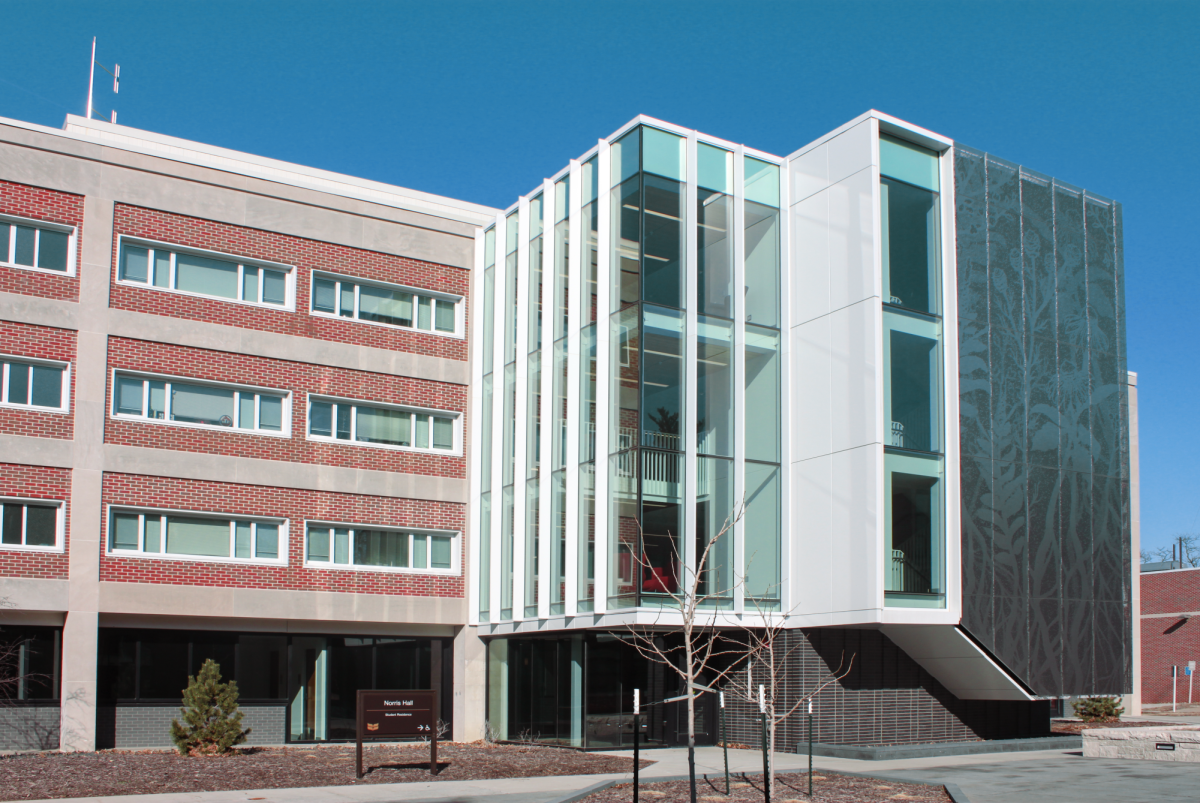
Currently, Norris Hall houses primarily first-year students.
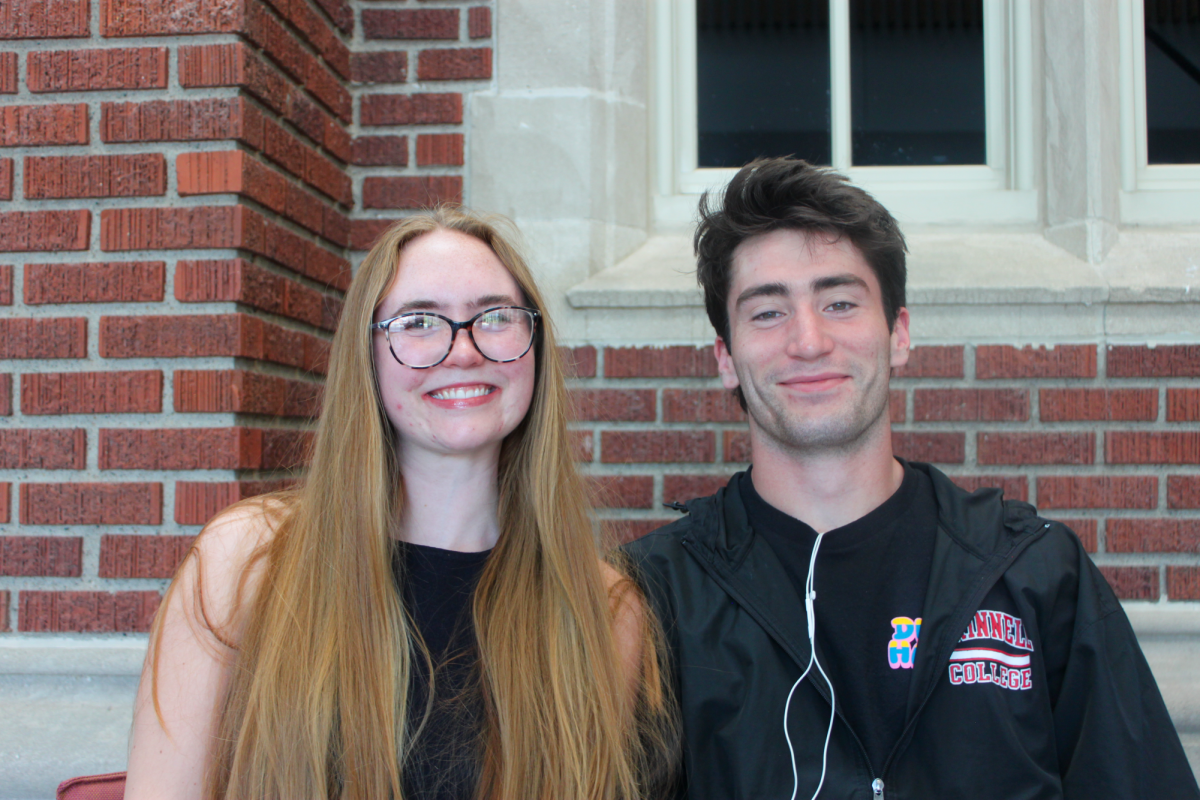
Ellis Liu `29, current Norris resident, said he feels like there is a barrier between students when trying to form meaningful connections in the hall.
“[Norris] isn’t the most conducive to community building,” Liu said. “I feel like it doesn’t work that way in practice, and ends up being more like everyone is focused on figuring out their own things rather than helping each other out.”
Liu said that most of the close relationships that he has built throughout his first year have developed through his involvement in clubs and the different classes that he has taken.
He said he has very few close friends in Norris.
Cleveland Hall is currently the only gender-specific residence hall for students who identify as female.
Next year, Cleveland will be a first-year only gender-specific dorm, and Dibble Hall will be updated to gender-specific housing for non-first year students.
Jenny Perez `28 has lived in Cleveland Hall for the two years she has been here.
She said that living with upperclassmen was integral to her experience as a first-year in college.
“I think that shifting to being freshmen-only takes away from the experience I had because I had other years also on my floor and I was able to connect with them,” Perez said.
“I think [putting freshmen in freshmen clusters] does a massive disservice to the people living there. One of the perks of having different classes in different dorms is, if you are having problems, you can go to an upper classman to figure out what to do,” said Julie Howard `27, current Cleveland resident.
Howard has lived in Cleveland Hall for her entire time at the College.
She said she is upset that next year Cleveland won’t be available to her as an upperclassman.
“I’m very routine oriented, and I’ve developed a lot of my routines on campus around living in Cleveland,” she said.
Olivia Brightly `29, current Norris resident, said that part of the reason she doesn’t feel connected to the student community in Norris is that it is difficult to build a community with people who don’t know how to live by themselves yet.
“I think it’s really important, if we want to make a good community, to have people learn from each other, and if you put a bunch of people who don’t know what they’re doing in one building, they’re going to fail,” Brightly said.
Lily Lockwood-Keil `29, current Norris resident, and Brightly both said that a lot of the issues that they have with living in Norris have to do with the housekeeping performed by some of their peers living in the building.
Lockwood-Keil said, “The laundry politics … we’ve had many issues. Most people assume that you will move their laundry for them.”
“Nobody knows what they’re doing,” Brightly said.
“I think a lot of the learning how to live by yourself comes from having a mix of different classes with the upperclassmen teaching freshmen how to do things,” she said.


Randy Gleason • Feb 27, 2026 at 10:14 am
Interesting story about a pretty dramatic change in student housing at Grinnell. Beginning this fall, almost all first-year students will be housed in specific residence halls reserved exclusively for first-year students — except for occasional single rooms occupied by a non first-year.
Faith Ferry did a nice job reaching out to students for a reaction and perspective.
I realize the story was based on an email to the S&B from JC Lopez, vice president of Student Affairs, and that there were links to academic articles that provided some of the basis for the decision.
However, I think the story would have benefited from a brief interview with someone from the Office of Residential Life, who could have responded to specific questions and explained the reasons and rationale for the new policy in more depth.
I called the office and within a couple hours, received a callback from Paul Frost-Lau, associate director of housing operations. He was very friendly and professional – like everyone at Grinnell; I’m guessing it’s the alchemy of Pag’s pizza and Grin City doughnuts – and he encouraged me to contact him again if I had additional questions.
I still have reservations about the plan. I lived in James Hall my first year and really appreciated having some second- and third-years down the hall, across the hall and on other floors in James who offered advice and shared their perspectives.
I’m not sure assigning everyone who initially has no clue or very little clue about being a student at Grinnell to the same residence halls is the best approach, but Mr. Frost-Lau assured me that it’s being done at other colleges with noted success.
I guess we’ll see how it works at Grinnell.
Randy Gleason ’82