





















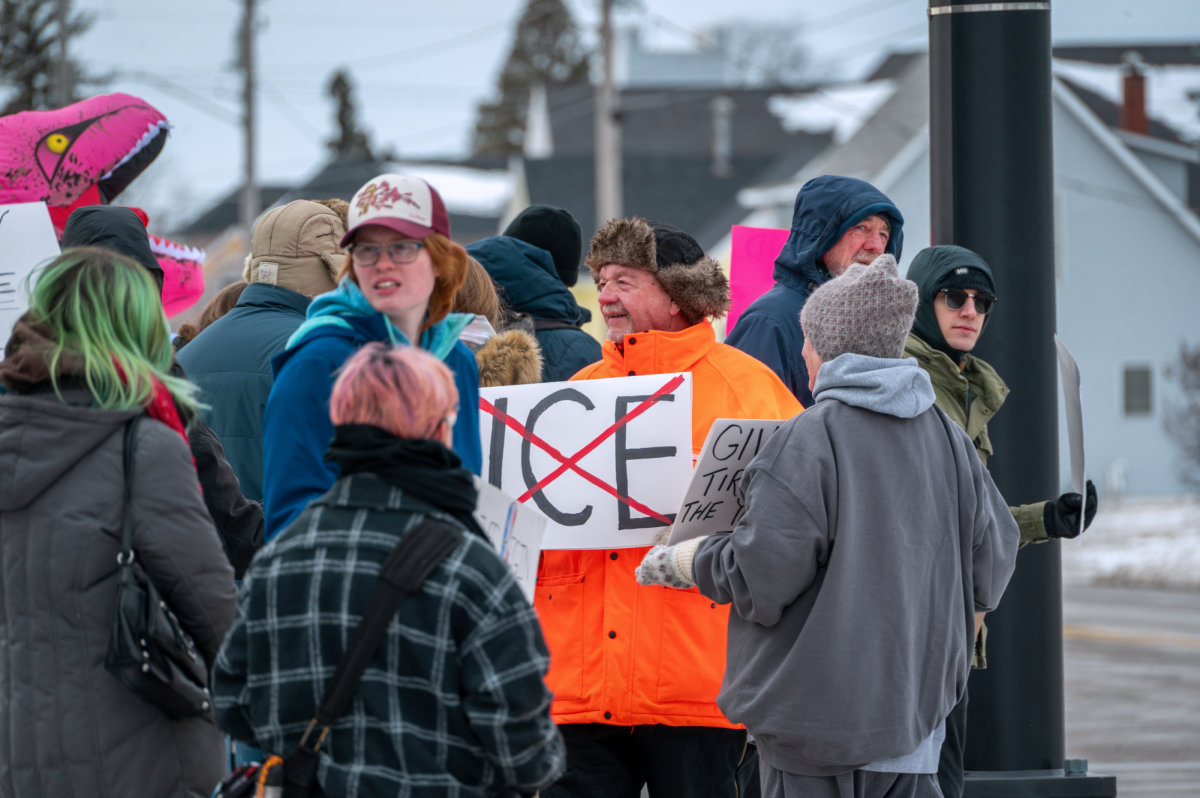
Few things have shaken me more than waking up and watching a video of Immigration and Customs Enforcement thugs pistol whipping Alex Pretti before shooting him repeatedly.
I don’t know why it was such a wake up call. It is not that unprovoked violence by law enforcement or federal agents is anything new, and I’ve seen the video of Los Angeles police officers beating Rodney King in a very similar way.
I think that my familiarity with such violence was what hit me that morning. We have let ourselves become far too comfortable with the government killing us in the streets. Now, we have a regime who have decided that they can and should storm cities, detain anyone they can, commit unspeakable crimes against citizens and get away with it, all in the name of “immigration enforcement.” They can murder Renee Nicole Good, call her a “fucking bitch” and get a slap on the wrist at most.
When they killed Pretti, I immediately understood what was happening. Just like the cops who murdered George Floyd, these agents committed violence because they hated and they could. And just like the seismic outrage that followed the murder of Floyd, I believe we need to do something big and do it now.
The time for complaining is long gone. We all know this is wrong. We know the man in the White House — or is it the High Castle? — is sick and power hungry. None of this is new, nor should it have been a surprise.
In these circumstances, a simple protest won’t work. While I believe demonstration is important, Stephen Miller won’t flinch at the same old chants.
I apologize for dancing around my point, so here it is, as clear as I can make it. We as a student body need to see action from our school, our state and our country or we have to shut this place down.
In the spring of 1970, Grinnell students shut the campus down in response to the Kent State shootings and the war in Vietnam. This was not an isolated incident, as schools nationwide had similar demonstrations, but we were part of it. I believe that these students laid the groundwork for what we can do today.
The core concept of large-scale student protest in the 60s and 70s was that there is — as cliche as it sounds — strength in numbers and unity.
Grinnell was small then and is the same today, but that does not diminish the impact of large and specific demonstrations. Students had demands, and they would not waver until those demands were met. It was clear what needed to happen.
I strongly recommend reading Bruce Nissen `70’s piece on his experience at Grinnell and how he approached protest. Like him, I do not want to see Grinnell turned into a violent landscape where we resort to terrorist tactics. Instead, here is what I propose.
With the most recent agreement, or what I’d call a capitulation, by the Democrats, the White House is ostensibly required to engage in negotiations surrounding the behavior of ICE. So far, Tom Homan has agreed to reduce the surge of agents in the Twin Cities, but there has been no clear resolution to the conduct of ICE agents.
If these talks do not result in concrete oversight, a cessation of large-scale operations and a reinstatement of the right to trial for detainees, or if there is another shooting, we should stop participating in this school. This means no class, no extracurriculars and no money spent past food and necessities.
Grinnell is a school with immense power and money, and if this institution is unable to function, it will be noticed.
I want to emphasize that the school is not my enemy. I love Grinnell, and I am incredibly grateful that I even have the opportunity to say this. I view the College as on the side of the students, and if we band together in action, we can make things change. I would encourage anyone affiliated with the College to join students in this movement, as it is only with unity that change can happen.
I initially wanted to write this as a call for Grinnell College to cease giving any money to government officials or investments, but I feel that we as students mean more than any divestment. A few people might notice if one of the richest schools in the country stops investing or donating. A lot of people would notice if that same school screeched to a halt.
What made the student protests of 1970 work was that it was ubiquitous. There were protests all around the country.
I am under no illusions that only Grinnell can change this nightmare, but we can absolutely be the first to try.
In conclusion, let me use lyrics from Crosby, Stills, Nash and Young’s “Ohio,” written in response to the Kent State shootings.
Gotta get down to it
Soldiers are cutting us down
Should have been done long ago
What if you knew her and
Found her dead on the ground
How can you run when you know?
We should have never been in this situation. Let’s do what we can to stop it before one of us is next, face down in the streets.


Allison Haack • Feb 16, 2026 at 2:17 pm
As one of the archivists on campus, I would like to make sure that it is understood that the two-day campus closure that was voted upon on May 5, 1970 is different from the closure of campus and cancellation of commencement on May 13th.
On May 5, 1970, the faculty voted to suspend classes for two days. This was based in part on a resolution by the student senate and around 300 students. Students also took over the AFROTC (Air Force Reserve Officer Training Corps) building. The May 8, 1970 edition of the S&B has several articles about the closure and the discussion surrounding it.
The 1970 early closure of campus and cancellation of commencement was initiated by the college administration. See the front page of the S&B from May 15, 1970, available on the Libraries website.
There is lots of good information about student activism and protests of the past in the college’s Special Collections & Archives. This material serves as a reminder of the past and an inspiration for current and future students.