
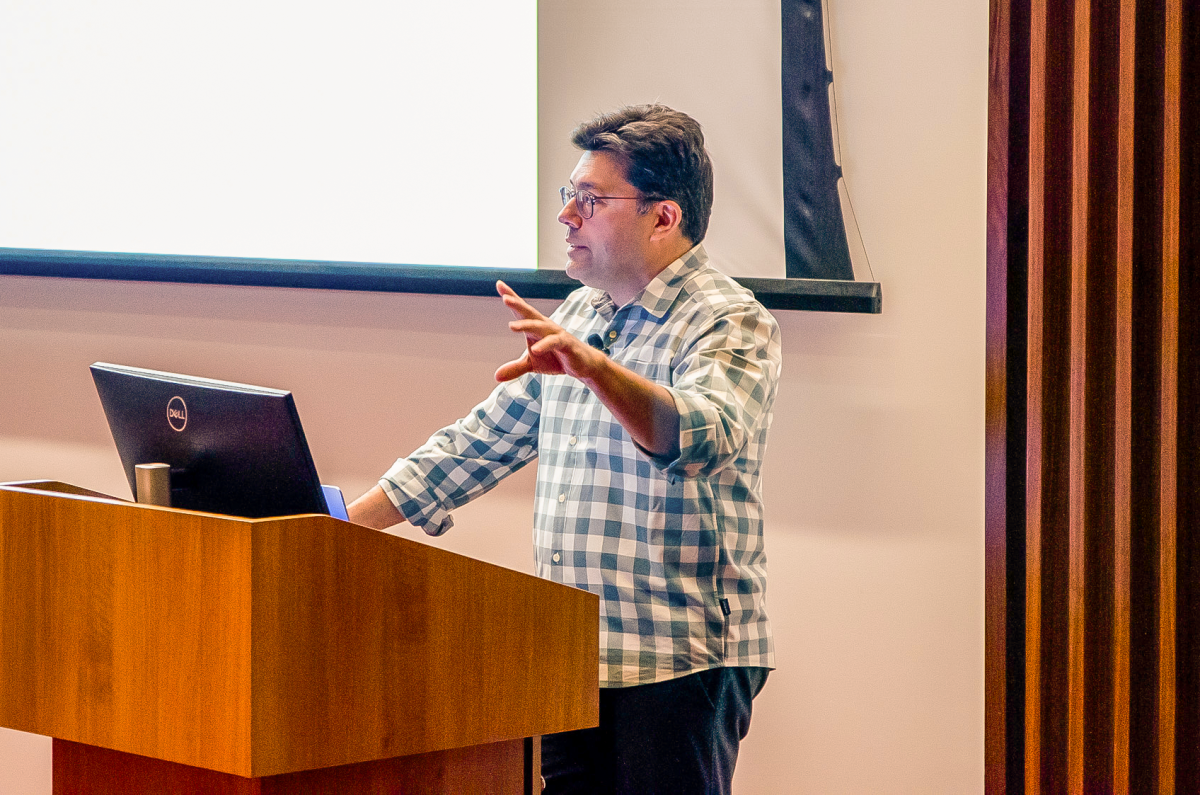


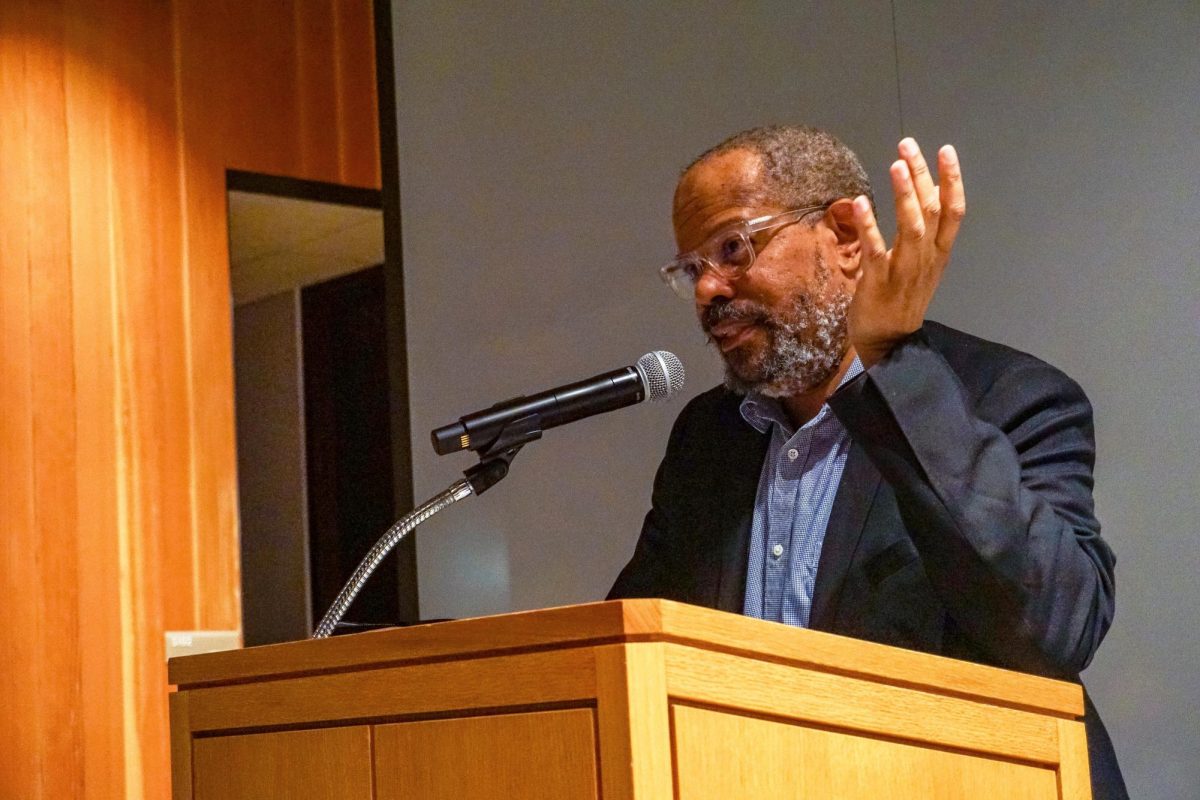









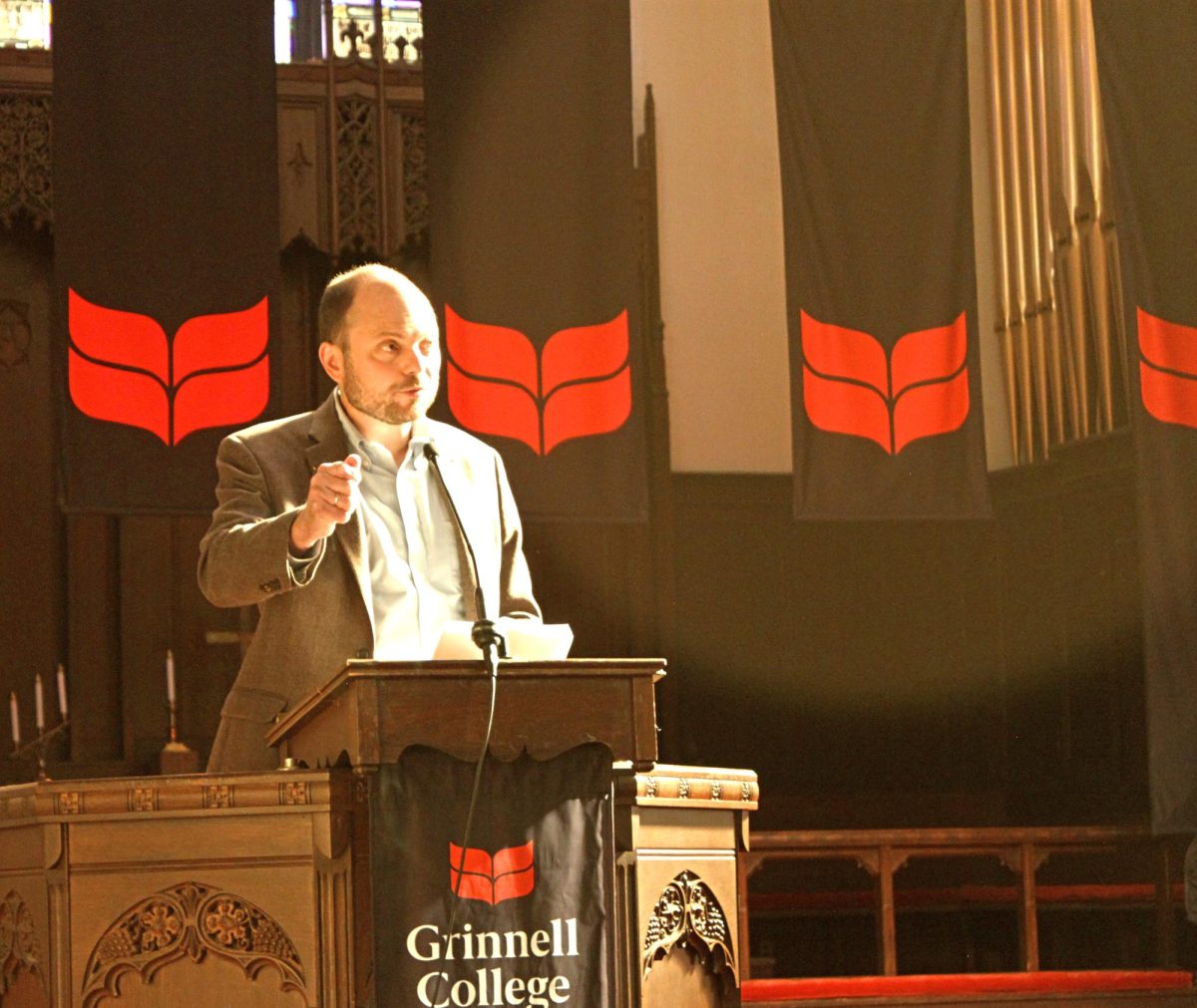
Hundreds of people packed Herrick Chapel on Thursday to hear former political prisoner and Russian dissident Vladimir Kara-Murza share firsthand insight drawn from years of opposition to Vladimir Putin’s government. Kara-Murza placed his experience within a longer history of political repression in Russia, arguing that the treatment of political prisoners has remained largely unchanged since the Soviet era.
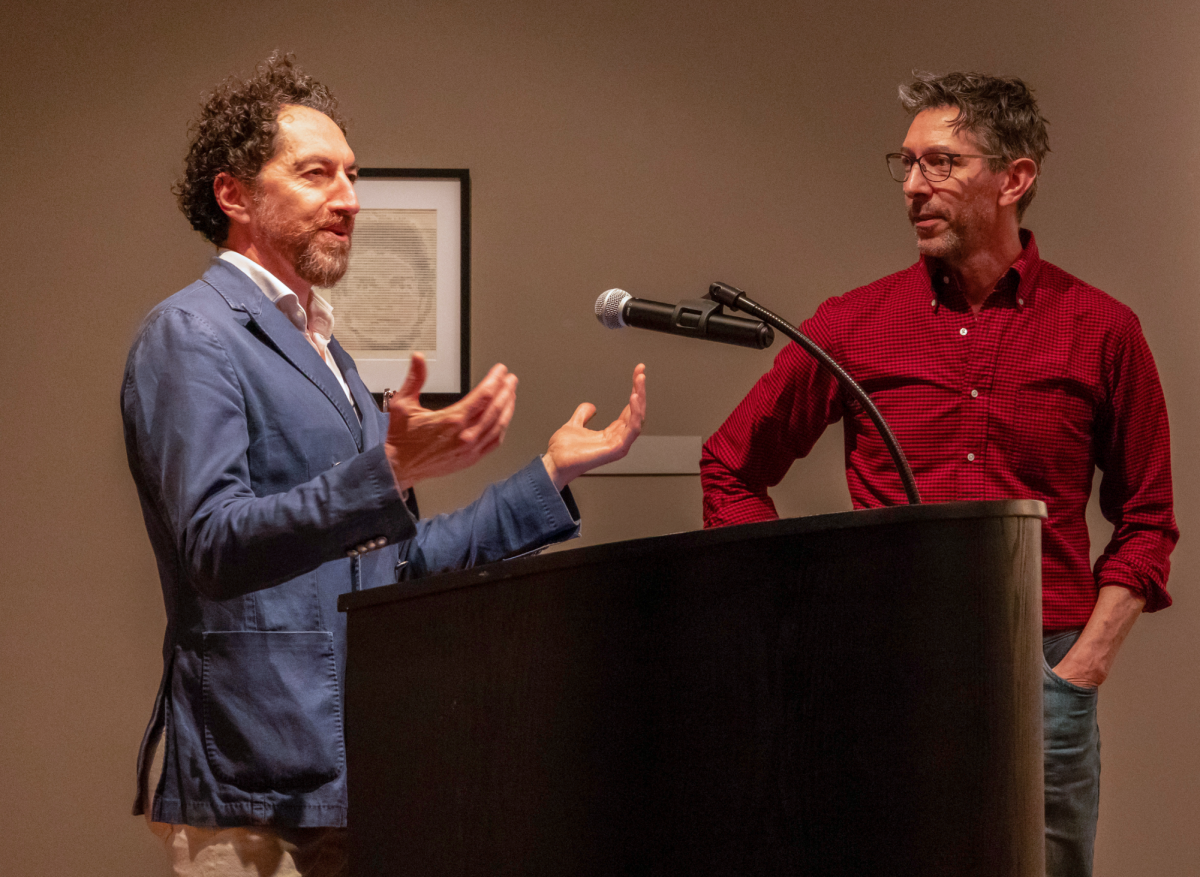
Edward Cohn, professor of history and director of the Rosenfield Program, introduced Kara-Murza as “one of the greatest human rights activists of the present” while cautioning that it was “dangerous to sum up a career in accomplishments.” Cohn noted that Kara-Murza’s life has been shaped by sacrifice as much as success.
Kara-Murza has survived two poisonings linked to Russian security services and was sentenced in April 2023 to 25 years in prison for speaking out against the invasion of Ukraine. He spent months in solitary confinement before being released in August 2024 as part of the largest Russia–West prisoner exchange since the Cold War.
During his imprisonment, Kara-Murza has received a number of international honors — including the Pulitzer Prize for Commentary, the Sakharov Prize for Journalism as an Act of Conscience and the Václav Havel Human Rights Prize.
Kara-Murza opened his remarks by expressing gratitude for the opportunity to speak, drawing a sharp contrast between Herrick Chapel and where he had been just 18 months earlier. “I feel privileged and delighted to be with all of you here today,” he said. “Just about 18 months ago, I was sitting in confinement, at a maximum security prison in Siberia, certain that this was what the rest of my life was going to look like.”
He went on to describe the psychological toll of the prolonged isolation. “I, of course, full well knew about the United Nations rule that equates prolonged soldier confinement to torture,” he said. “I had known about this rule, but I cannot say that I ever understood it. I certainly do now.”
Kara-Murza referenced memoirs by Soviet dissidents such as Vladimir Bukovsky and Natan Sharansky, noting that those deemed particularly dangerous were subjected to the same conditions of isolation. The purpose, he said, was not only to punish, but to prevent ideas from spreading. He said that a prison guard told him that he would infect people with his views.
Building on that history, Kara-Murza warned that political repression in Russia has intensified today. “It is a shocking and sobering fact that today’s Russia alone holds more political prisoners than the whole of the Soviet Union did in the mid-1980s,” he said, adding that those who have publicly opposed the war in Ukraine now make up the fastest-growing category.
Illustrating the human cost behind the numbers, Kara-Murza pointed to individuals currently imprisoned for speaking out, including opposition politician Alexey Gorinov, independent journalist Maria Ponomarenko and a 15-year-old boy who had received a five-year sentence for distributing leaflets criticizing the war.
“This reality doesn’t come overnight,” Kara-Murza said, describing Putin’s gradual dismantling of democratic institutions. He likened the process to “plucking a chicken feather by feather to lessen the squawking,” a strategy he said Putin applied “carefully, gradually, slowly, with a ruthless determination.” The first feather to go, Kara-Murza said, was the independence of the media.
That erosion, he said, has contributed to widespread misunderstandings of Russian society abroad. Despite state propaganda portraying national unity, Kara-Murza rejected the idea of broad public support for the war. “A regime that really did have public support for its actions would not need to keep its society in a state of constant fear,” he said.
As evidence, Kara-Murza pointed to the public response to the 2024 presidential campaign of anti-war candidate Boris Nadezhdin. Across the country, he said, people stood in hours-long lines in freezing temperatures to sign in support. The scenes, he argued, revealed “not the aggressive, archaic vision of Russia today, but a hopeful, peaceful, democratic Russia of tomorrow.”
Kara-Murza ended on a personal note, describing his release as a “a human-made miracle,” made possible by people in democratic countries who continued to speak out on behalf of people in Russia.
He recalled hearing the voices of his wife and children for the first time after his release. “When I was in prison, I was not allowed to call my family,” he said, calling it a long Soviet tradition to punish loved ones alongside political opponents. “Standing in the airport terminal, hearing the voices of my wife and my children on that telephone — I do not think I’ll be able to find the right words in any of the languages I speak to describe how that felt.”
“There is no doubt that tomorrow will come,” he said, urging people in Russia and abroad to continue to work together to bring it closer.