












































On Dec. 5, 2025 (right as we became too busy for fall finals to object!), Residence Life sent an email explaining how their “updates” to student staff positions will lead to an “enhanced” residential experience and a “sustainable” workload for student staff. But this is all misleading: not only will the residential experience worsen and student staff workload grow, but more importantly, students will have less agency over their own lives.
As the semester starts, and before we get too busy, we should not only prepare ourselves for academic and personal growth, but also gather the energy to resist Grinnell College’s power grab, which has been years in the making. As a reminder, let’s discuss Residence Life’s December email.
- When there are no more house coordinators (HCs), students lose the power, expertise, passion, recognition and resources to lead their own campus culture.
- Reducing community advisor (CA) positions by four does not lead to a more sustainable or reduced workload for any student worker; it increases the workload that all CAs have to take up, such as the number of duty shifts and more.
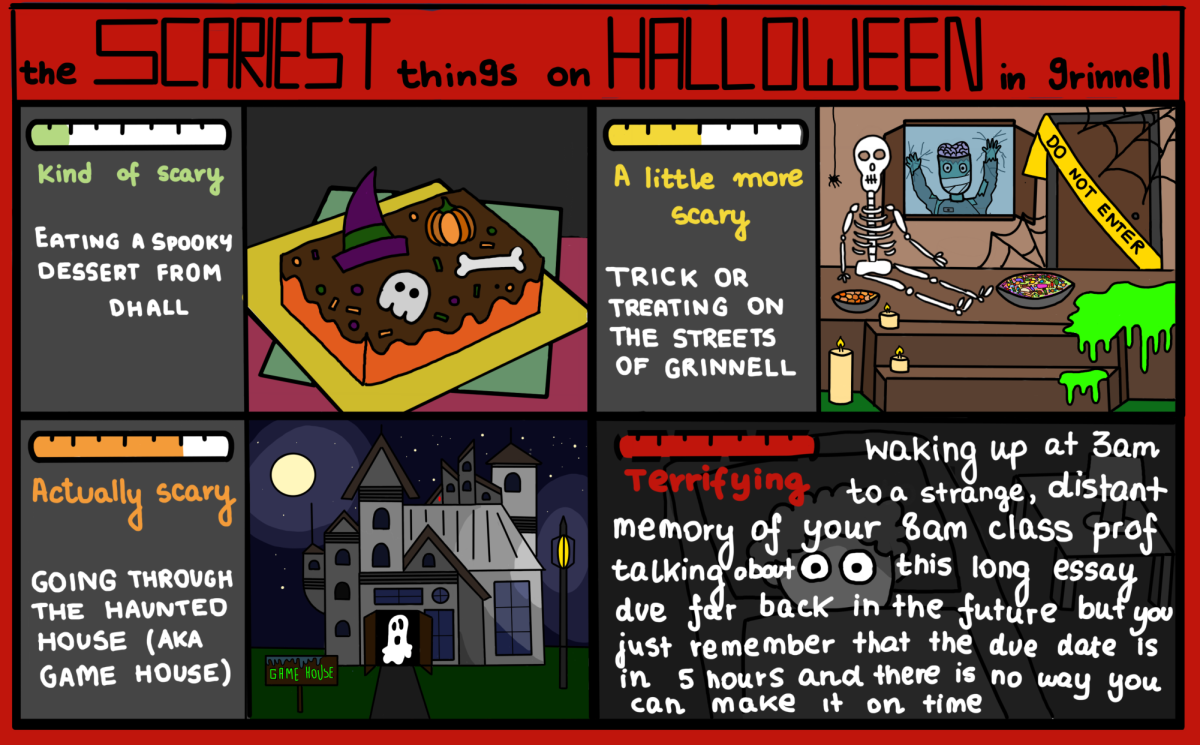
- The house changes, like moving Farm House and closing GAME House, seem to be a top-down decision, not a student-driven one. Did Residence Life solicit applications before announcing this?
All of the above says one thing: The College doesn’t want students leading student life. They don’t trust that students can grow independently into citizens. They don’t believe in self-governance, where students have real decision-making ability and material power. There is no transparency or well-argued rationale that justifies these decisions, just vague platitudes. They want a sanitized kind of student life that looks good on admissions brochures, extracts profits by any means possible, and doesn’t give bad PR.
If Grinnell College wants to view students as responsible people, it must let students, not strategic plans nor finances, determine student life. Residence Life aligns itself with the strategic plan, yet many of their events are attended by few students or for instrumental reasons. This track record suggests that their December changes, also aligned with the strategic plan, would produce the same, unengaging effects.
To correct this, Residence Life and the College administration should go beyond listening to student voices. Instead, they must place as many students as possible in driving, not just guiding, roles such that the administration can radically adapt to the multiplicity of student needs. The power grab did not start in December. It started before I was a student here, such as when President Raynard Kington moved parties off campus. It continued as the administration required meal plans for off-campus students, attempted to cut early arrival housing, reduced the HC budget, increased CA weekday duty rounds (before reverting this), cut student worker meals, and reduced off-campus housing approvals. It will lead to all students living on campus, as Dennis Perkins recently said to The S&B, even if this means the destruction of student-led campus culture and the exclusion of those who need or want more agency over their growth for any reason.
Almost two years ago, I wrote in opposition to mandatory meal plans here. Today, it’s sad to see how much worse Grinnell College is as they double down on forcing students to live and eat on the College’s terms, even if I like the convenience of the residence halls and the Dining Hall. Unlike last time when I wrote near finals week, I am writing this early so we have the time to recognize and organize against this ongoing power grab. If you are concerned, please speak, write, and demonstrate with your classmates to Residence Life, the administration, and the Trustees so we can restore our power to self-govern and materially preserve what our college stands for.

Bob Stanis '84 • Feb 6, 2026 at 12:15 pm
This sure doesn’t sound like the Grinnell College I graduated from in 1984. What the heck is going on there? What pea-brained bean counter can say with a straight face that reducing staff will reduce workload for those remaining?