




















On Election Day, Democrats won general elections in Virginia, New Jersey and New York. In addition to these major results, Democrats also won several other statewide races in Georgia, Pennsylvania and Mississippi and successfully passed a Californian redistricting proposition spearheaded by California governor Gavin Newsom.
These results are raising questions for next year’s midterm elections and whether Democrats can flip enough seats to snag a majority lead in Congress.
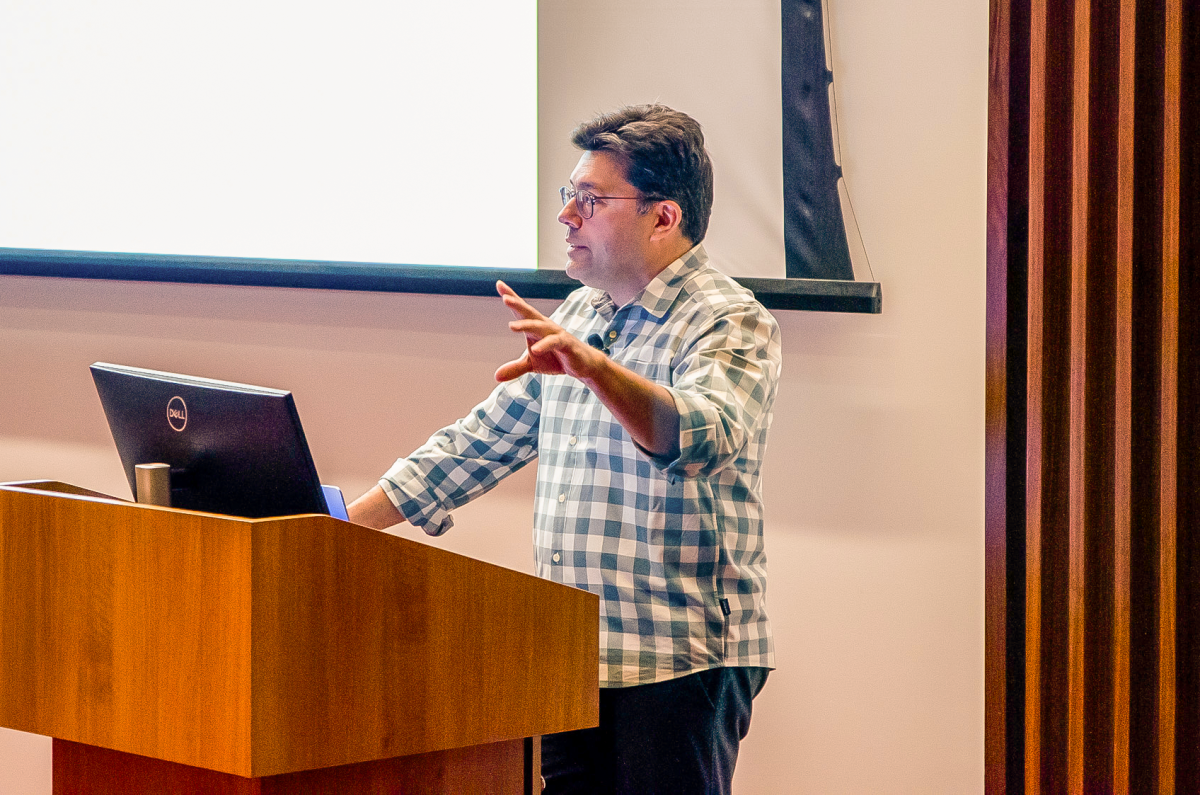
“Overall, this was a great election for Democrats, and I think that was expected for a few reasons,” Political Science Professor Peter Hanson said of this year’s Nov. 4 elections.
Hanson specializes in American politics. Hanson noted that in off-cycle elections, or elections held in odd-numbered years, voters tend to be energized by dissatisfaction with the president, leading to voters in the opposing party turning out in higher numbers than the party in power.
Additionally, he said that all of these elections were held in places that are generally safe for Democrats. As Republican leaders have acknowledged, the party often has a hard time turning out their voters when Donald Trump is not on the ballot, he argued.
“Donald Trump has an ability to get low-propensity voters, people who may not normally vote, to show up and vote for him when he’s on the ballot. Whereas, Democratic voters right now are very angry, very frustrated and very energized, and they are showing up in very large numbers,” said Hanson.
Barbara Trish, another political science professor who specializes in American politics, said that the margin of the Democratic wins was notable.
She stated that this election and the narrative of strong Democratic performance was likely to inspire hope in Democrats for future elections.
“I think that the narrative kind of takes on a life of its own and, whether or not it’s true, people act as if it’s true, and that becomes important politically,” she said.
Hanson said that it is not advisable to over-interpret the results of off-cycle elections, especially in relation to the midterm elections, which will occur in November 2026.
“It’s a long time until next November,” said Trish.
Hanson predicted that in the coming midterms, it would be very difficult for the Democrats to take the Senate, given that the Senate seats which are up for election, such as the Iowa seat, are in Republican- leaning states. However, he said that Democrats may have a strong chance of taking the House of Representatives.
“Democrats are very energized, and I don’t see that changing before the midterms. If they’re able to replicate their margins of success next fall, then they stand a very, very good chance of taking the House back,” he said.
If the results suggest promising future outcomes for the Democrats, they also force the party to confront internal tensions and the reality that they may need to change strategy to win. Hanson argued that Democrats need to address the genuine issues of economic insecurity that voters face, and the party’s old guard doesn’t know how to do that.
“The reason Donald Trump wins is because he promised to shake things up. He’s the bulldozer that’s going to knock down the old ways of doing business and bringing something new and that’s appealing to a lot of people,” said Hanson. “In response, Democrats have really positioned themselves as the party of the status quo and the old order, and that’s not really an appealing message to enough voters for Democrats to be able to win elections.”
Trish said the Democrats are still going to be faced with this internal tension in locating where the party’s strength, and votes, will come from – from left-leaning progressives or from moderates, from the experienced or from the youth.
She noted that these internal tensions in the Democratic Party aren’t historically unique, referring to the ideological conflict between anti-war voices and conservative “hawks” in 1968, and between centrist and progressive in 2016 and 2020.
She also asserted that Democrats would have to strike a balance between simply opposing Trump, at the cost of potentially alienating undecided voters, and projecting a positive vision of their own, that wasn’t a referendum on the president. The success of Zohran Mamdani, mayor-elect of New York City, in this context raises new possibilities.
“New York voters are quite a distinct constituency, so something that works there might not work in central Iowa,” said Trish.
Nevertheless, Hanson noted that Democrats needed candidates who could credibly promise changes to the youth.
“It doesn’t mean a candidate like Mamdani is going to win everywhere,” said Hanson. “But there’s an Iowa version of that somewhere.”
Hanson pointed to Rob Sand, a Democratic nominee for Iowa’s governorship, as an Iowa version of Mamdani. Sand is a young, popular candidate who represents the Democrats’ best chance of winning in republican-leaning Iowa.
On the national scale, Hanson said Gavin Newsom, through the redistricting effort, had positioned himself as a presidential candidate and a challenger to Trump.
“He’s experimented with different personas,” said Hanson. “Immediately after his election, he was famously sitting down with Republicans on his podcast to chat about politics in a way that some Democrats found conciliatory. Now he’s flipped and become the voice of the opposition to Donald Trump, and that seems to be where he’s going to stay.”
Hanson said that following these elections, Republicans may want to shore up their election chances. To do so, he said they must decide whether it’s more advantageous to show their loyalty to Donald Trump, or, to break occasionally on matters that are really important to their states and districts in an effort to build bigger coalitions.
“My guess is we’re gonna start to see Republicans showing a bit more independence,” said Hanson.


Carol Sallee • Nov 15, 2025 at 1:54 pm
Thanks for sharing this good information and ideas.