


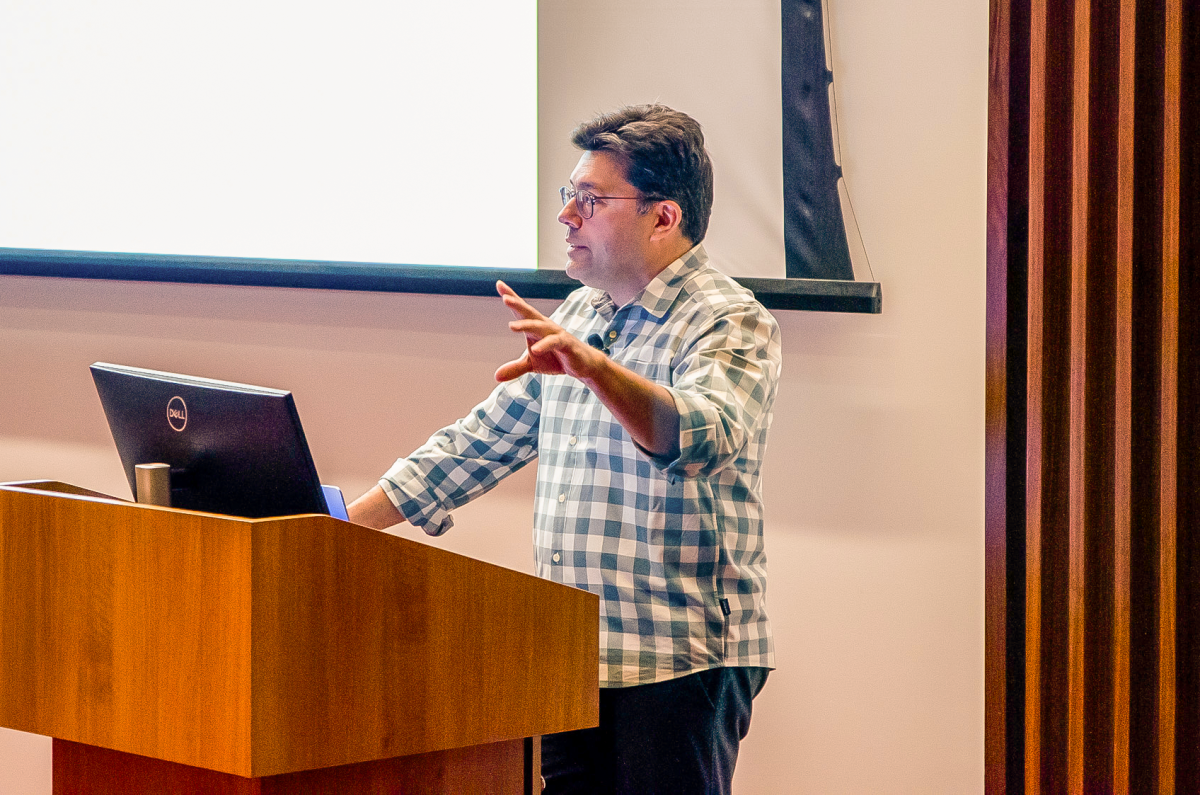

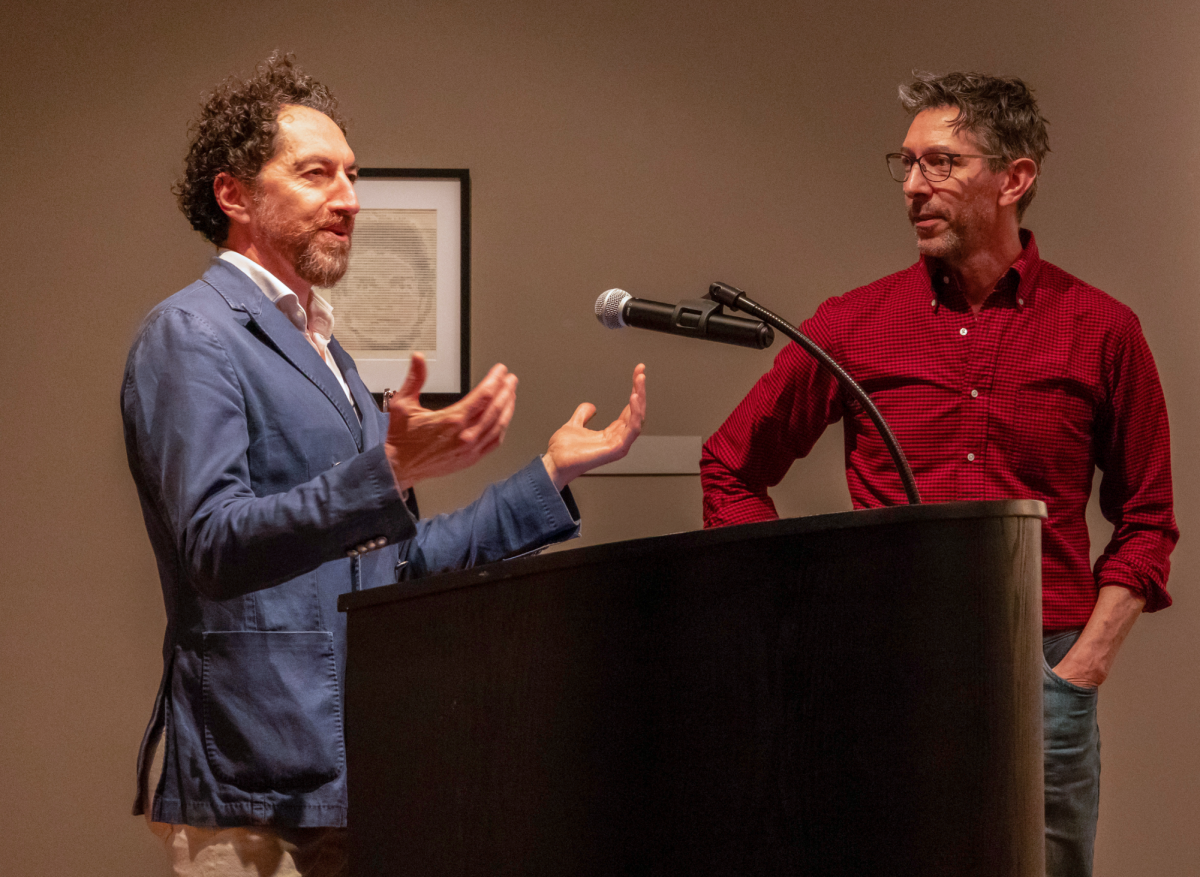
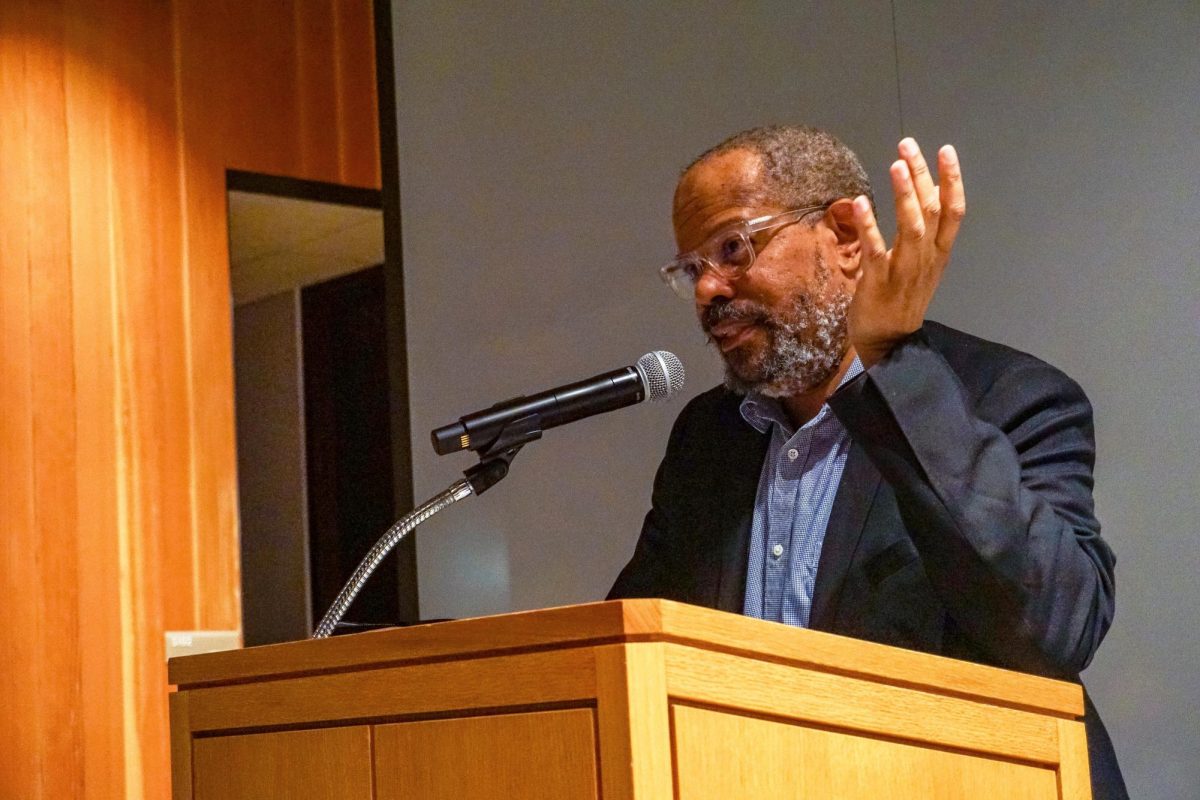







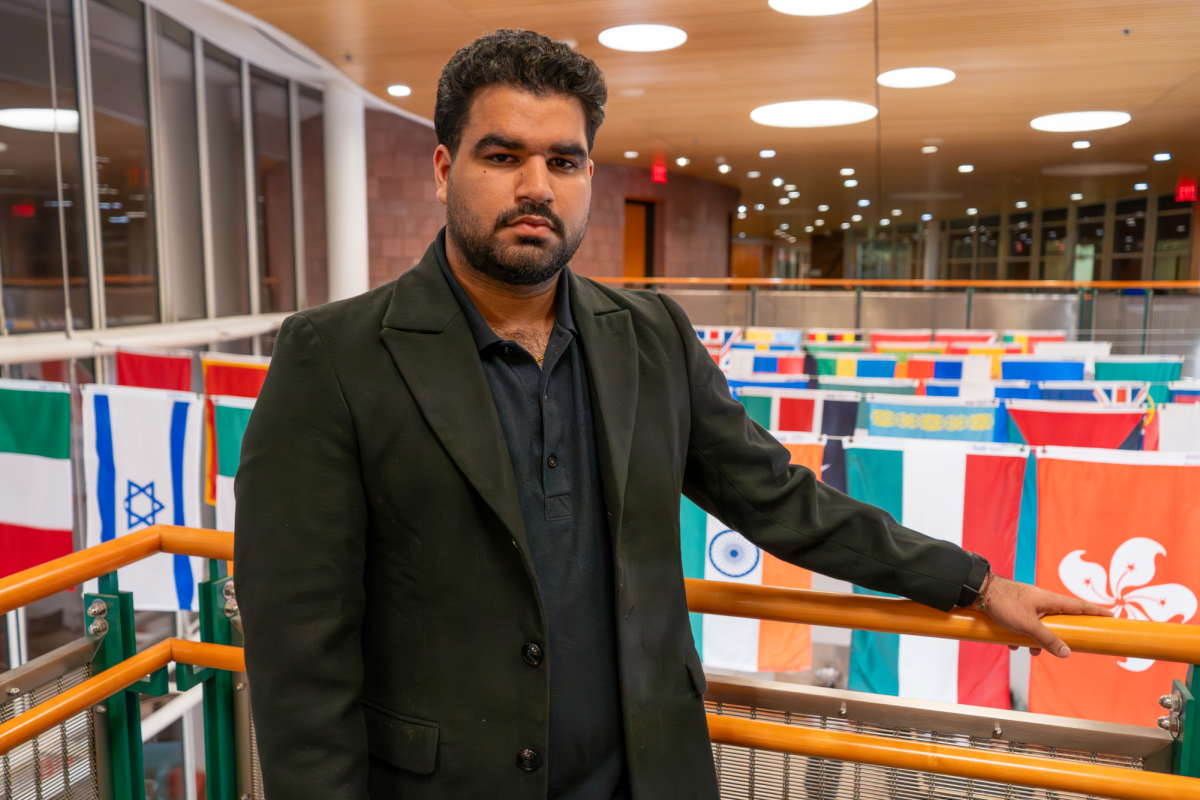

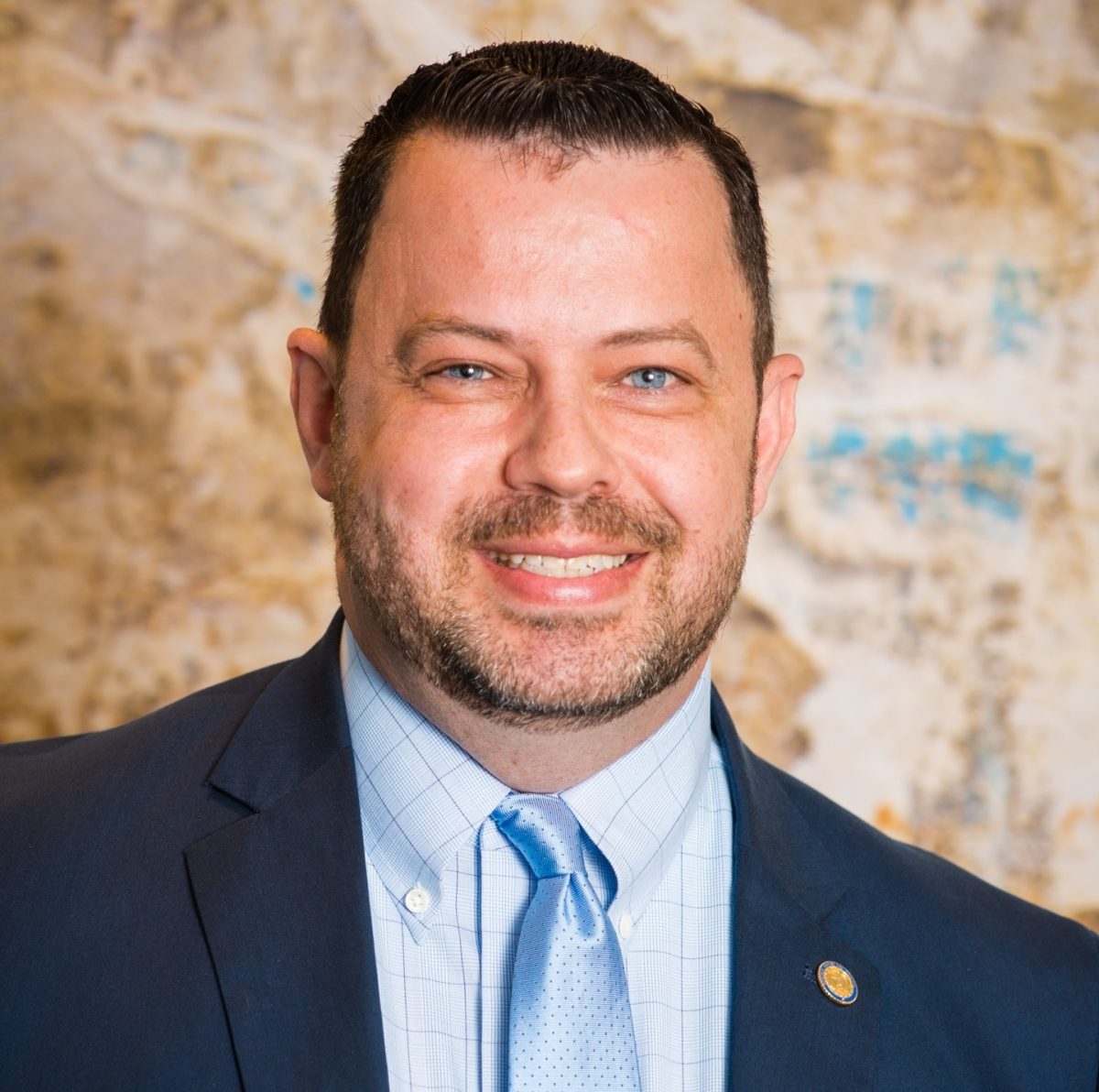
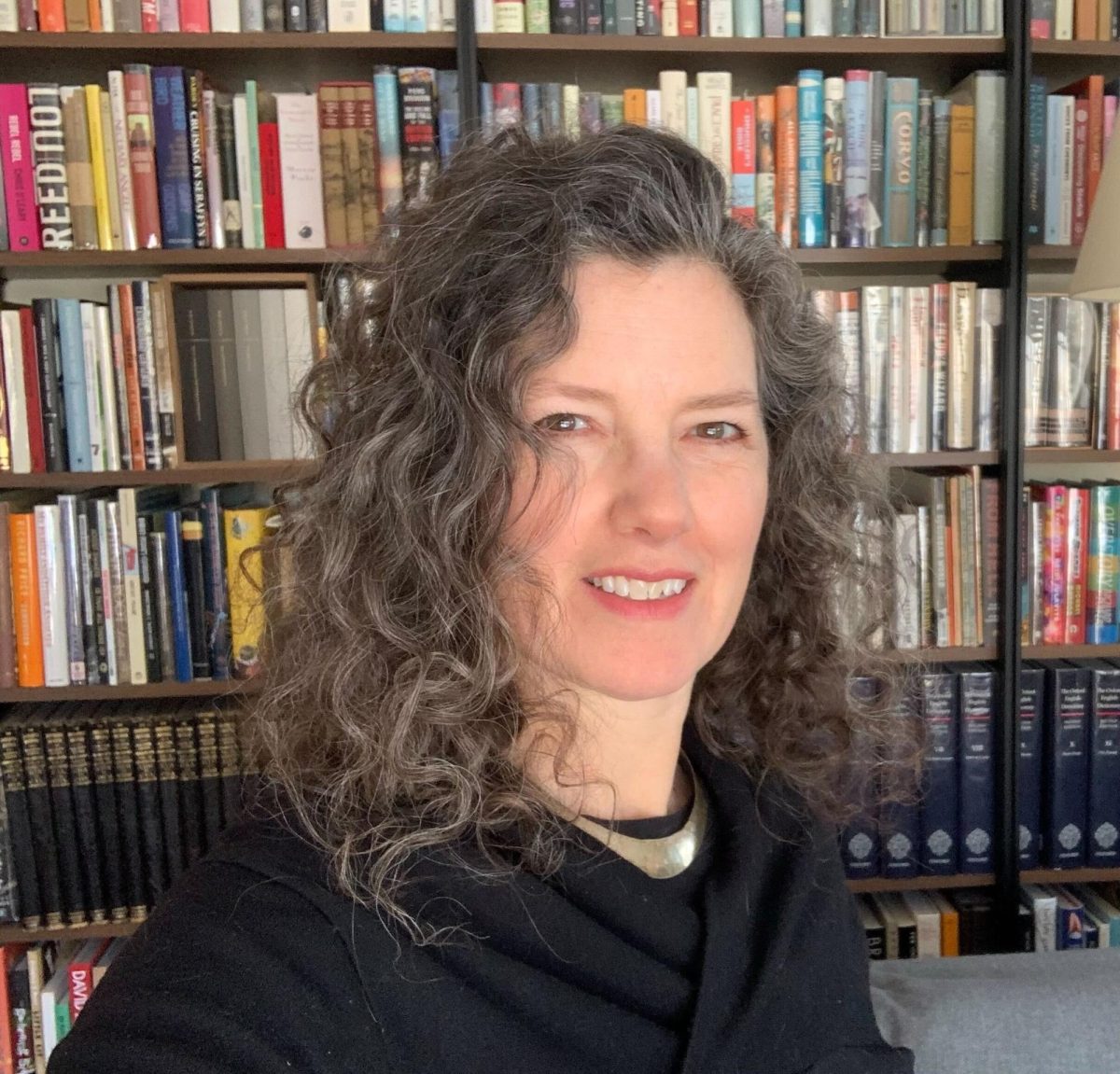


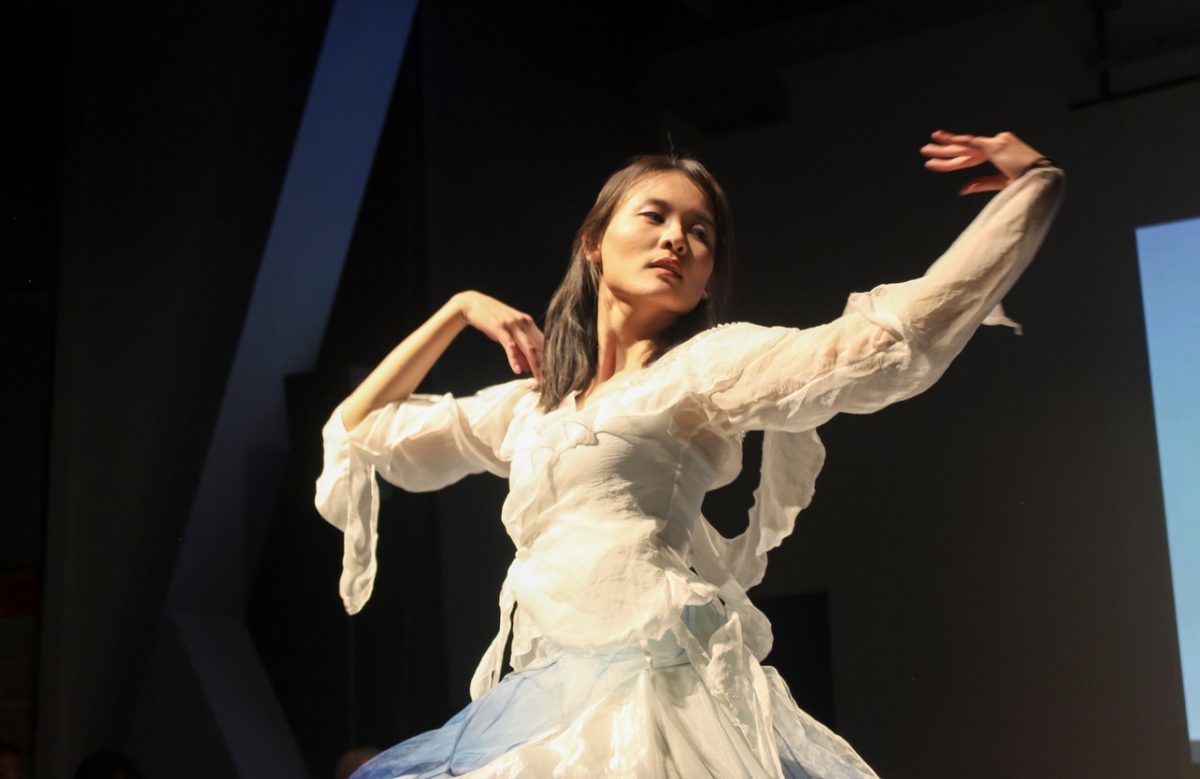



Stanley Museum of Art hosted internationally acclaimed multimedia artists Julien Creuzet and Aguibou Bougobali Sanou in conversation on their narrative engagement with African historical masks and figures. The evening included a screening of Sanou’s choreographed performance “A Rebours” from his “Mask Utopia: The Remaining Fragments” series and Creuzet’s video installation “Zumbi Zumbi Eterno.” Cory Gundlach, Curator of African Art, moderated the discussion.
Sanou, assistant professor of theatre, dance and performance studies, discussed his relationship to masks through his Bobo ethnic background from Burkina Faso. His home country has more than 70 ethnic groups, each with their own traditions.
“We do not have the word mask in our vocabulary. It doesn’t exist,” Sanou said. Instead, they use a term that translates as “those who came from the bush.”
Sanou addressed the display of these African objects in Western museums. “We tend to call this thing mask. This is only the head,” he said. The complete ritual object of a masquerade includes a full body, but museums typically display only the carved head portion.
His Mask Utopia project originated from his encounters with sacred objects in American museums. When he arrived in Iowa, he visited the Grinnell College Museum of Art and saw a Bobo mask on display. He said that this was a real mask used for worship, not something decorative or trivial.
At the Stanley Museum, he found a mask from his family and asked, “What are you doing here?” This led to his collaboration with the museum.
Sanou described the screening of “A Rebours,” as a way to pose questions about what happens when spiritual artifacts move from their ritual contexts into Western institutions.
“In our context, they are not merely objects in museums. They are being,” he said. In his society, museums do not exist. “Every single thing we have is to be used.”
Creating the work required navigation between tradition and contemporary performance, said Sanou. Some masks cannot be performed outside their ritual context because they are sacred. In traditional Bobo culture, women are not allowed to wear the mask. Sanou worked with a contemporary mask maker to design something authentic but adaptable. The buffalo mask in the performance is worn by the two main dancers, though they use only the head because the full body cannot appear on stage outside its context.
In spring 2025, Sanou brought Somdlawend Ezekial Zongo, Burkinabe musician, to perform a revival and adaptation of his original choreography, to the College’s dance ensemble program.
The original performance includes incantations by a djembe drummer. Sanou said the drummer was calling ancestral spirits and energy, along with the supreme entity, to support the dancer in the fight.
Sanou addressed misconceptions about African religious practice. “I don’t know how some people landed in our territory and witnessed innocent people worshiping God and asking their ancestor to intercede, to channel their message to that supreme one.”
Sanou said that African masks and objects are not his ancestral gods. “We have knowledges, very advanced sciences to reach out to God.” Ancestral spirits serve as intermediaries. Those who have died know the truth better than the living, so the community asks them to channel messages to the supreme one.
Julien Creuzet is a French-Caribbean visual artist and poet whose work addresses his diasporic experience and relationship to his ancestral home, Martinique. His multidimensional installation “Zumbi Zumbi Eterno” is on view at the Stanley Museum.
Creuzet said the title distinguishes “zumbi” and “zombie” — Zumbi dos Palmares was a Black leader who resisted slavery in 17th-century Brazil by establishing self-emancipated communities known as Quilombos. Creuzet said that the concept of “zombie” as understood today did not exist when Zumbi was alive. The zombie mythology emerged about 20 years after Zumbi’s death. Creuzet suggested that the zombie concept may have been created to prevent people from believing a Black leader could successfully resist the colonial system.
Creuzet uses technology to animate Congolese power figures, or minkisi — carved wooden sculptures traditionally used in spiritual practices to connect with ancestral spirits and divine forces. He pairs these animations with music exploring the history of resistance in Brazil.
He does not distinguish between poetry, sculpture, video and sound in his work, treating text as an integral artistic form that accompanies and extends the exhibition experience.
Creuzet traced his interest to surrealism’s engagement with African art. He said that surrealist figures like André Breton, Aimé Césaire and Wifredo Lam came to Martinique during World War II, bringing surrealism as a way to examine African history and representation. He referenced Chris Marker’s film on African statues, who argued that when a statue loses its social function, it becomes museum art. “One idea is with technology, we can try to give one possibility about the social position of the object,” Creuzet said.
Working with choreographer Anna Léon, who has knowledge of the African diaspora and resistance movements, Creuzet explored how animation could restore movement to objects fixed on pedestals. He discussed how the pedestal itself is part of the sculpture, and how animation could give human proportions and movement to what had been fixed in wood.
Creuzet said museums and theaters are spaces where people can dream. For him, exhibitions are about how different forms can create language and discussion.
Creuzet connected this to his contemporary interest in genealogy and DNA testing. “Many people would like to do it for a simple question, because it’s about what is my history and how I can understand myself, or maybe I can understand my identity,” he said. “That gives some content to rethink or start to redream again.”
“If you can’t take with you the form you see in the museum, you can have the text with you for a long time,” he said.