










































Two weeks after the Trump administration invited nine elite universities to join a controversial funding agreement, no schools have signed on. Grinnell College President Anne Harris says concerns about academic freedom may explain the resistance.
The “Compact for Academic Excellence in Higher Education,” sent to university presidents on Oct. 1, offers participating colleges priority access to federal grants and White House events in exchange for agreeing to ten sweeping commitments, including banning the use of race or sex in admissions and hiring, capping international student enrollment at 15 percent, and “maintaining institutional neutrality” on political and social issues.
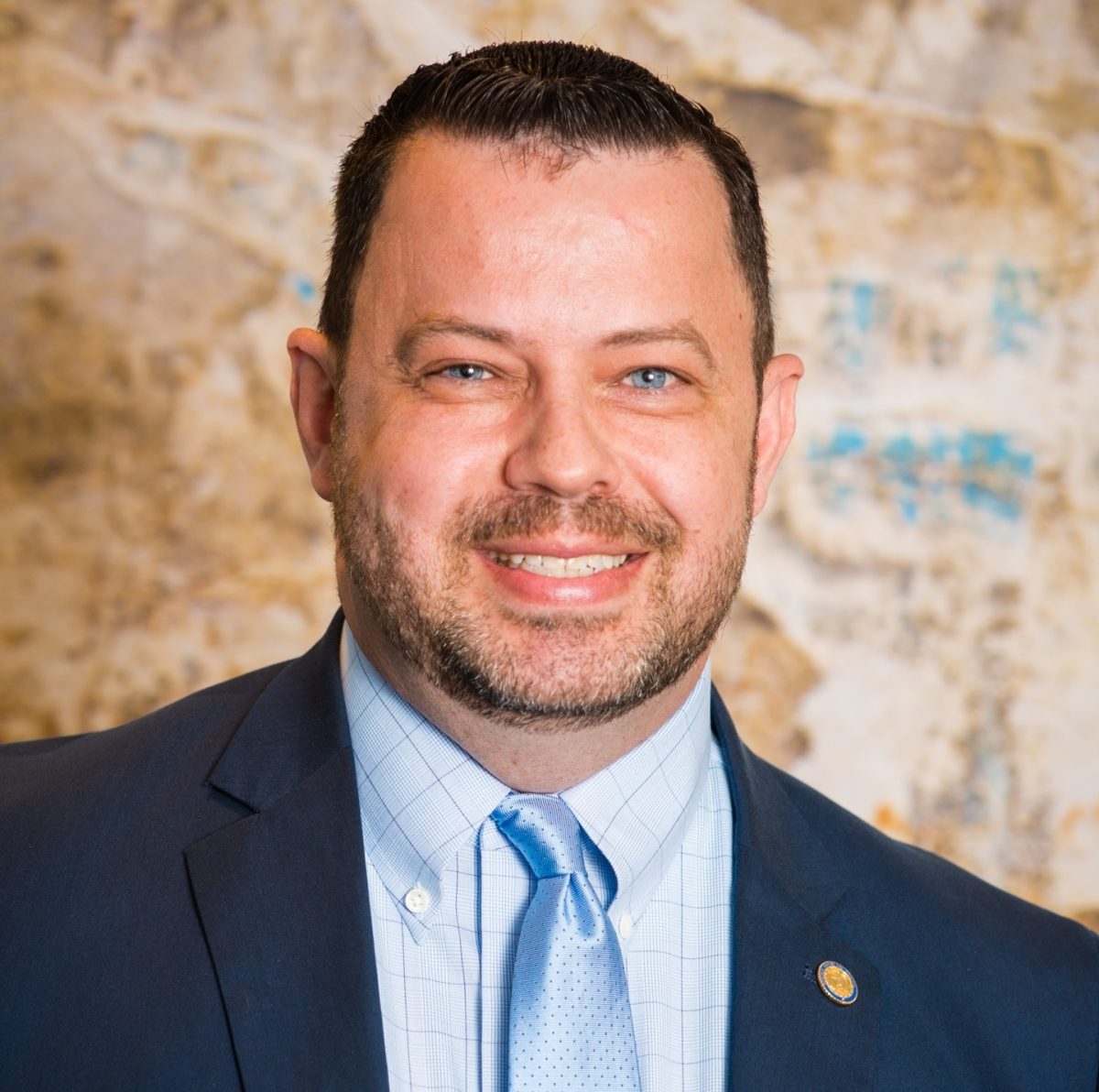
While Grinnell wasn’t among the nine schools invited to join, Harris told The S&B she’s been closely tracking both the Compact and institutional responses to it. Her conclusion — the proposal raises unprecedented questions about government oversight of higher education.
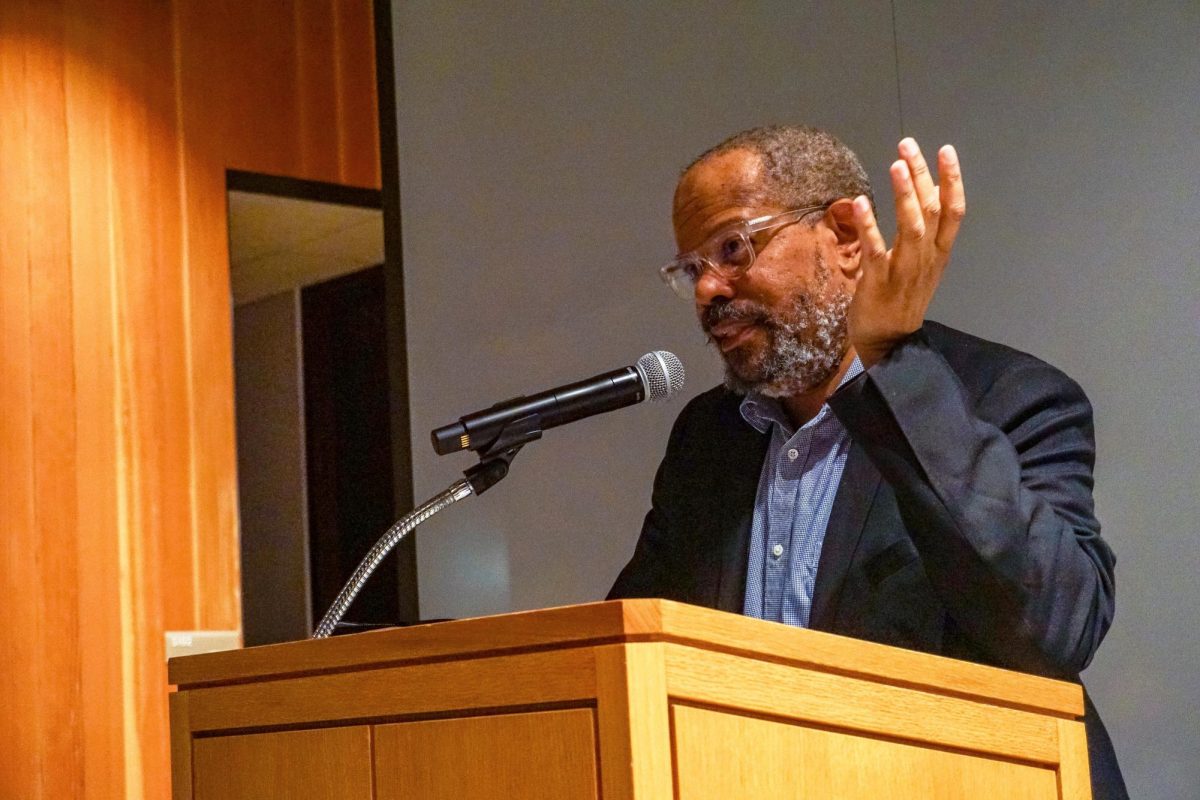
“To have that much government oversight over the four essential freedoms would be unprecedented, and I think would really change the purpose, mission and effectiveness of higher education,” Harris said.
The 10-point memo, obtained by the Wall Street Journal, lays out an extensive set of terms that the administration says is intended to “elevate university standards and performance.”
Institutions that sign and later violate the terms could be forced to return all federal money received that year, as well as private contributions upon donor request. Adherence would be reviewed by the Department of Justice.
The White House sent initial invitations to Vanderbilt University, Dartmouth College, the University of Pennsylvania, the University of Southern California, MIT, the University of Texas at Austin, the University of Arizona, Brown University and the University of Virginia. The nine schools were given an Oct. 20 deadline to respond.
Brown University President Christina Paxson released a statement calling the Compact “fundamentally at odds with Brown’s mission and values.” Dartmouth President Sian Leah Beilock expressed skepticism in an interview with the Chronicle of Higher Education. Williams College President Maud Mandel wrote that the Compact “threatens to undermine the academic independence that is essential to excellent higher education.”
The University of Texas at Austin is the only invited school that hasn’t announced its decision. Brown University, Dartmouth College and Williams College have publicly rejected the Compact, according to reports in the New York Times, the Dartmouth and the Williams Record, respectively.
Though Grinnell received no direct outreach from the administration and faces no obligation to respond, Harris said the College has been carefully studying the document.
According to Harris, the College’s approach to analyzing legislation follows a framework she outlined at an Aug. 27 campus colloquium on navigating the legislative landscape, held two months before the Compact was announced.
“Reading the legislation is the first thing we do, in great and meticulous detail,” Harris said at the colloquium. “Sometimes that is hard to do because the headline will grab you.”
At that same forum, Harris said she emphasized grounding institutional responses in Grinnell’s values, including its commitment to a diverse community — one of the College’s core values. She said Grinnell has made itself “constitutionally accountable” to diversity, which has been “important in all of the attacks on diversity, equity and inclusion (DEI),” a value that is at odds with the Compact’s first requirement, which bans any consideration of race or sex in admissions or financial support.
For analyzing the Compact specifically, Harris said she’s been using the lens of a 1957 Supreme Court case, Sweezy v. New Hampshire. In that case, Justice Felix Frankfurter outlined what Harris calls “the four essential freedoms of the university” — who may teach, what may be taught, how it may be taught and who is admitted for study.
“There are several of the elements of the Compact that we would really need to question in light of that Supreme Court precedent,” Harris said, noting she discussed the case at greater length during the August campus forum.
Beyond academic freedom concerns, Harris pointed to questions about fair competition for federal grants. The Compact offers preferential treatment to participating institutions, giving them priority access to federal funding.
Harris said Grinnell’s approach has been collaborative. “We study the document, we find an analytical framework and then we engage in a process of discernment. I consider myself so fortunate in having such amazing partnerships with the Board of Trustees and with faculty leadership, especially on this issue that is so connected to academic freedom.”
Harris said the Compact represents a potential shift in the relationship between higher education and the federal government — a partnership that has been in place since World War II.
The GI Bill, signed in 1944, “really opened up who is able to attend college,” Harris said, noting her own father was a beneficiary. Federal financial aid programs like Pell Grants followed, along with massive government funding for research that brought together universities, government and industry.
But how the relationship between higher education and the federal government is changing remains unclear.
“I do think it’s too early to tell,” Harris said. “I think we are seeing more conditions. We are seeing more involvement in the issues that are safeguarded by the four essential freedoms. But these things are not decided yet. The Compact is still very much kind of in conversation.”
She said college presidents nationwide are working closely with their boards of trustees and faculty leadership to understand what the Compact means and what might follow.
“You’re not seeing a lot of joint statements or things like that,” Harris said. “I think part of the silence, if I can call it that, or part of the moment that we’re in right now is that there’s a lot of work institutionally.”
The Compact comes as the Trump administration has spent months pressuring universities over allegations of antisemitism and concerns about diversity practices. Some schools, including Columbia and Brown, have reached settlements with the administration, while others, including Harvard, remain at odds.
According to the Wall Street Journal, the administration chose the nine schools because it believed they are, or could be, “good actors.” The administration said participating schools would receive priority for grants “when possible” as well as invitations to White House events, but wouldn’t limit federal funding solely to the Compact signatories.
On Oct. 27, after The S&B spoke with Harris, New College in Florida publicly volunteered to become the first university to sign the Compact.
Harris’s central question from her interview remains unanswered – what’s the difference between a shift and a change? The answer may depend on whether more institutions decide to sign on and what the federal government does next.