










Every Thursday at 7 p.m. for the rest of October, stories of resistance, spirituality and identity will grace the screen of HSSC A2231. This fall, as part of a campaign called “Healing the Narrative,” the Haitian Arts Digital Crossroads (HADC) project on campus has launched a seven-week film festival centered around a broader effort to reclaim and reframe Haitian narratives that colonization, displacement and misrepresentation have fractured.
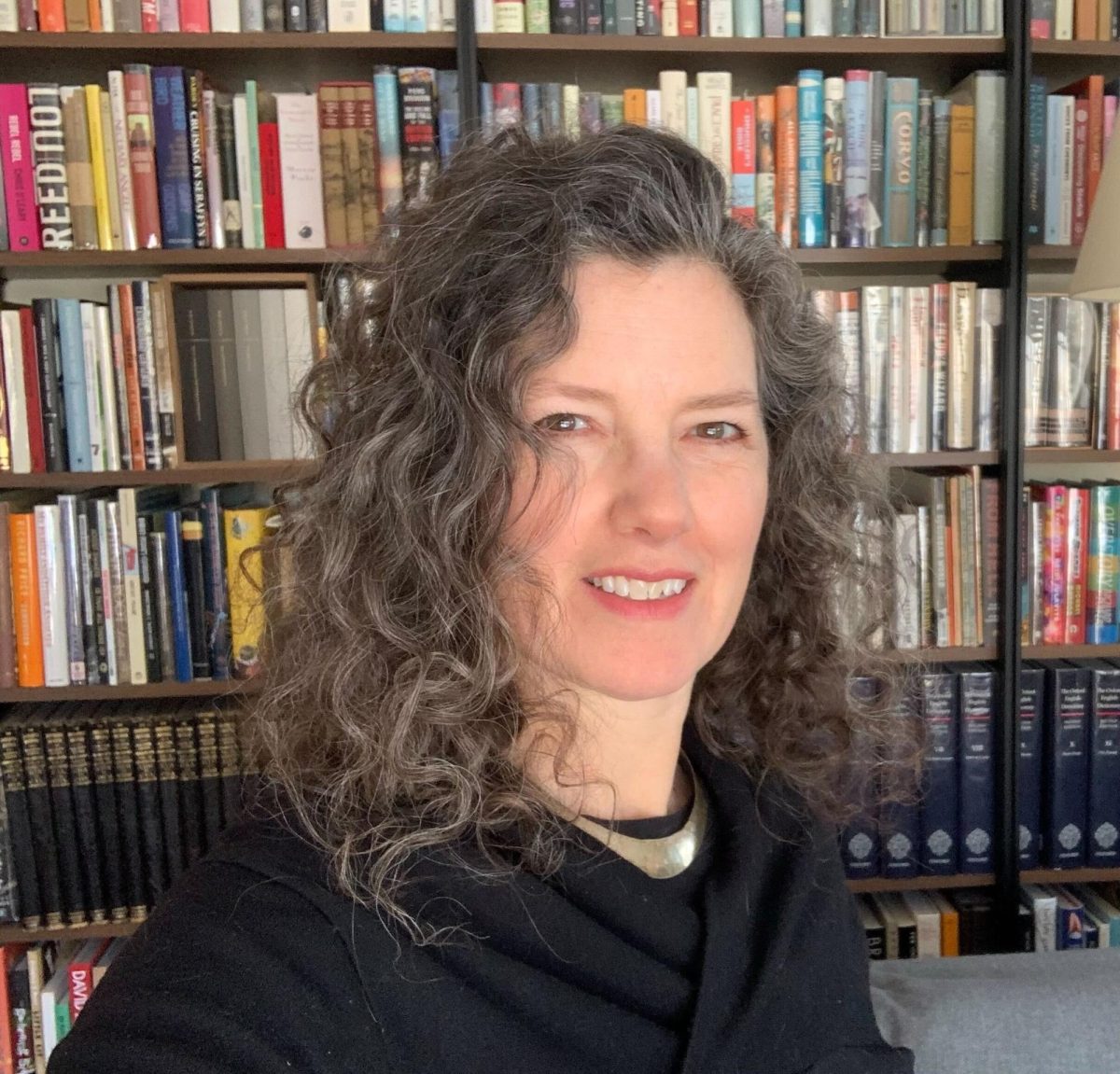
Petrouchka Moïse, assistant professor and the cultural and community-based digital curator for Grinnell College’s libraries, said, “I looked at spacemakers — the people and the institutions that create the space where we can look at our indigenous narratives, our marginalized narratives — and think about ways of readdressing them and giving it back to our community, and giving it back to different audiences.”
The HADC project began in 2019 when Assistant Professor of Art History Fredo Rivera discovered that the largest collection of Haitian art in the world had been sitting in Waterloo, Iowa, a city with no Haitian community.
“This collection has been amassed for, I would say, over 50 years, close to 75 years … sitting with no digital presence,” said Moïse. Referring to the Waterloo Center for the Arts and Grinnell College, she said, “They came together to think about how to get the narrative out.”
A planning grant from the National Endowment for the Humanities allowed greater collaboration between institutions across the U.S. to explore the themes and potential of Haitian artwork. Waterloo Center for the Arts and Grinnell College then put together a Mellon Postdoctoral Fellowship to bring an expert to the College that could help digitize a Haitian art catalog and encourage other institutions to follow suit.
That, said Moïse, was how she ended up at Grinnell in 2020.
“They found me. They got me to leave Louisiana and move to the corn,” said Moïse. “And so for the past five years, what I’ve been doing is healing that narrative.”
Having worked on HADC for five years, Moïse has expanded the scope of the initial project. Now, the project has a novel partnership with 15 other institutions across the United States and abroad that have also digitalized Haitian art in their collections, integrating works from different institutions into a cohesive narrative of Haitian culture.
“I felt that the film series was a good way of introducing the Grinnell community to the Haitian culture,” said Moïse. “And how many different ways has it had to encounter erasure? How many times do we define resilience, identity, displacement and belonging?”
Moïse worked with the Haitian International Film Festival to curate a series of films to be shown. She said the curating board for the film festival looked at different themes of the artwork available on the HADC website, such as migration, politics and spirituality, in order for the films to engage viewers on reflecting about Haiti and its people.
“I would say that probably out of the seven films we are showing, I’ve only seen three. I want to be engaged as well. I want to be part of the audience,” said Moïse. “I want the scholar in me to come out. The teacher in me stays prepared. So I try to anticipate every single question, but the scholar in me looks to deep dive, analyze, vet and look at different things.”
While the film festival is only set to run for this semester, the work will not stop. Plans are underway for a project called #VodouReboot, where Moïse is working with the Waterloo Center for Arts to look at placing contemporary work back in sacred spaces. The exhibition for this project will take place November 2026 at the Waterloo Center for the Arts.
“In history, what we’ve seen is that they have come into our communities and into our sacred spaces, taken our work off the wall, put it into museums, in galleries, and have stripped the sacred from it and made the conversation completely aesthetic,” said Moïse. “How do we put back what was taken from us, and how do we leverage that?”
While rooted in Haitian culture, the implications of the project are far-reaching. In a time when global narratives are being contested and rewritten, the Haitian Arts Digital Crossroads project is offering a model for how to do that work with depth, care, and integrity.
Moïse said the importance of the Haitian Revolution is a narrative that is “actively being attacked,” but that they are resilient and that has inspired important liberation movements such as Black Lives Matter and the Harlem Renaissance.
“You’re seeing a narrative that started in the 1500s, and because of our beliefs, because of the way that we see our identity, regardless of wherever it is and however fragmented it becomes, it still inspires,” said Moïse. “I would say the beauty is not the people. It’s the belief that the people carry.”
The reclaiming of narrative, of voice and of power is the heart of the entire project.
“I’m hoping what Grinnell can take away from this is that the importance of the narrative and the importance of all aspects of our humanity are tied into our contribution to it,” said Moïse. “It’s not just sitting back and waiting for things to happen; it’s for us to be active participants in this life.”