





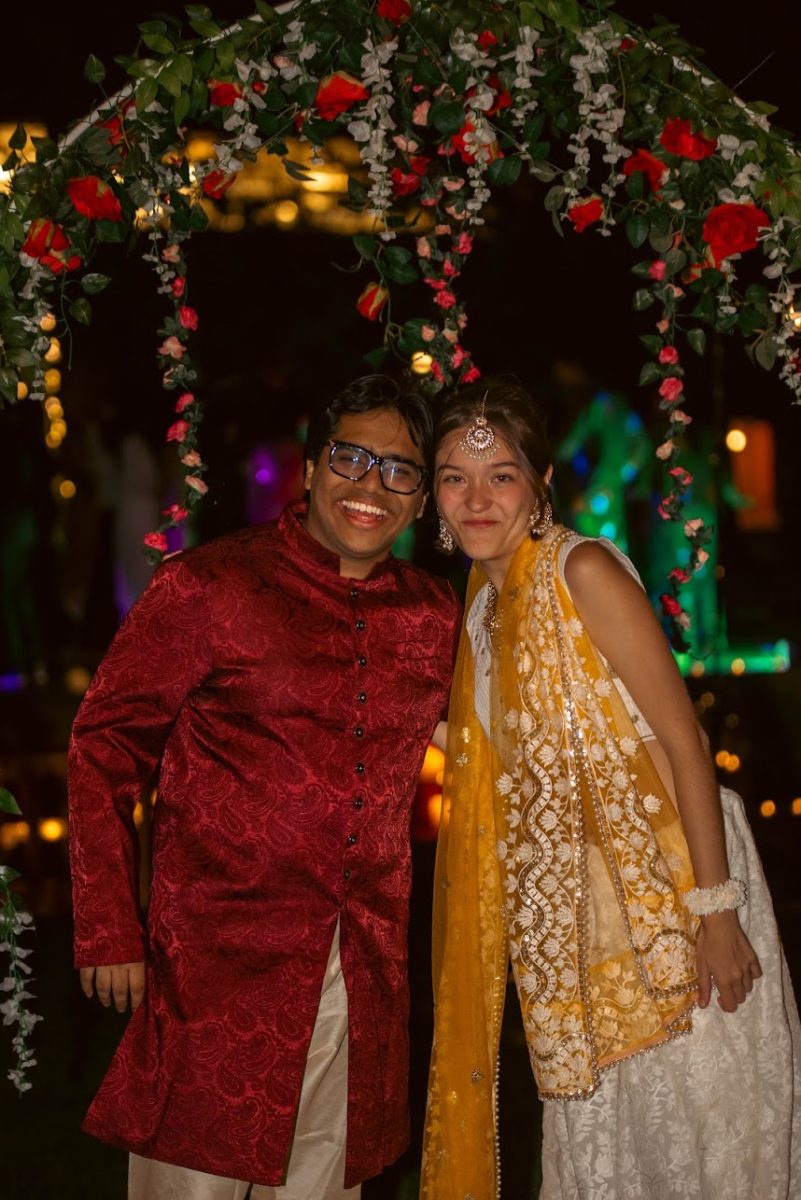


























Durga Puja, the ten-day long Hindu festival honoring the goddess Durga, is celebrated by tens of millions of people across the world. The festival found its Grinnellian manifestation in the dimly-lit outdoor prayer space of the Center for Religion, Spirituality and Social Justice (CRSSJ).
The festival took place on Oct. 2 and was organized by the recently-formed Hindu Culture and Sanatana Dharma (HCSD) club.
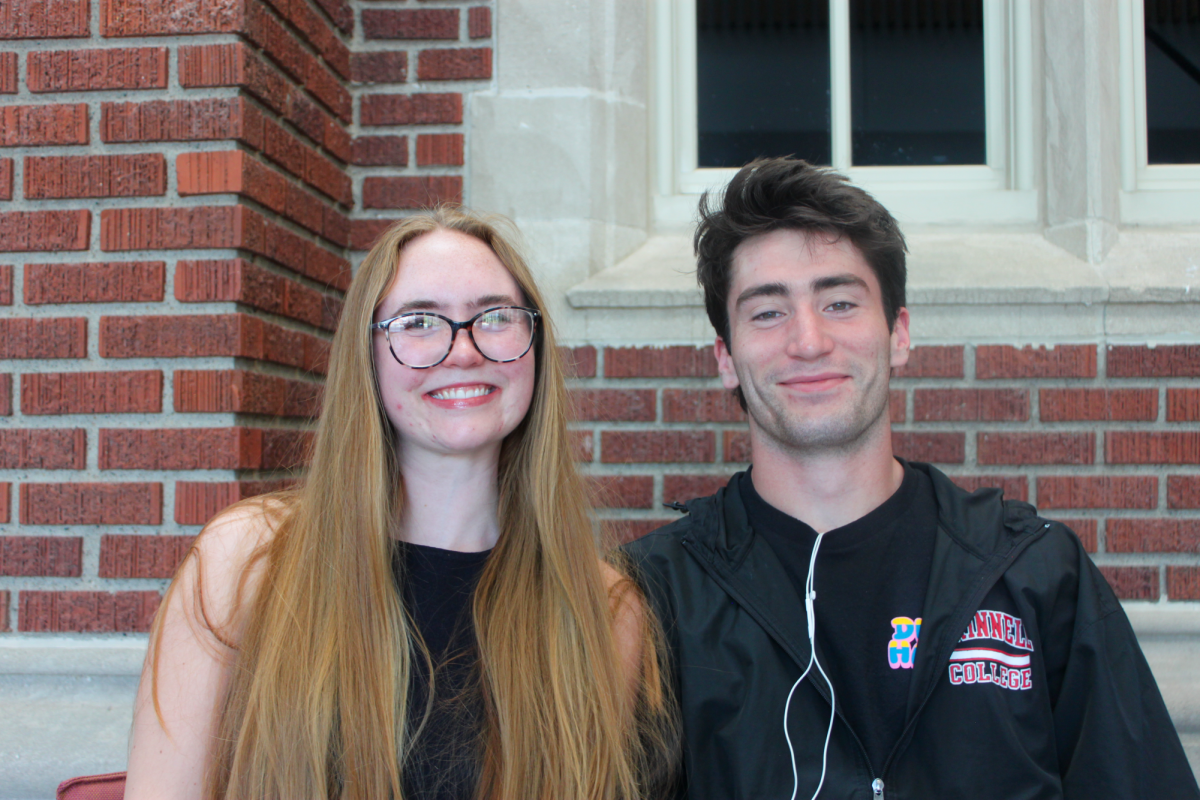
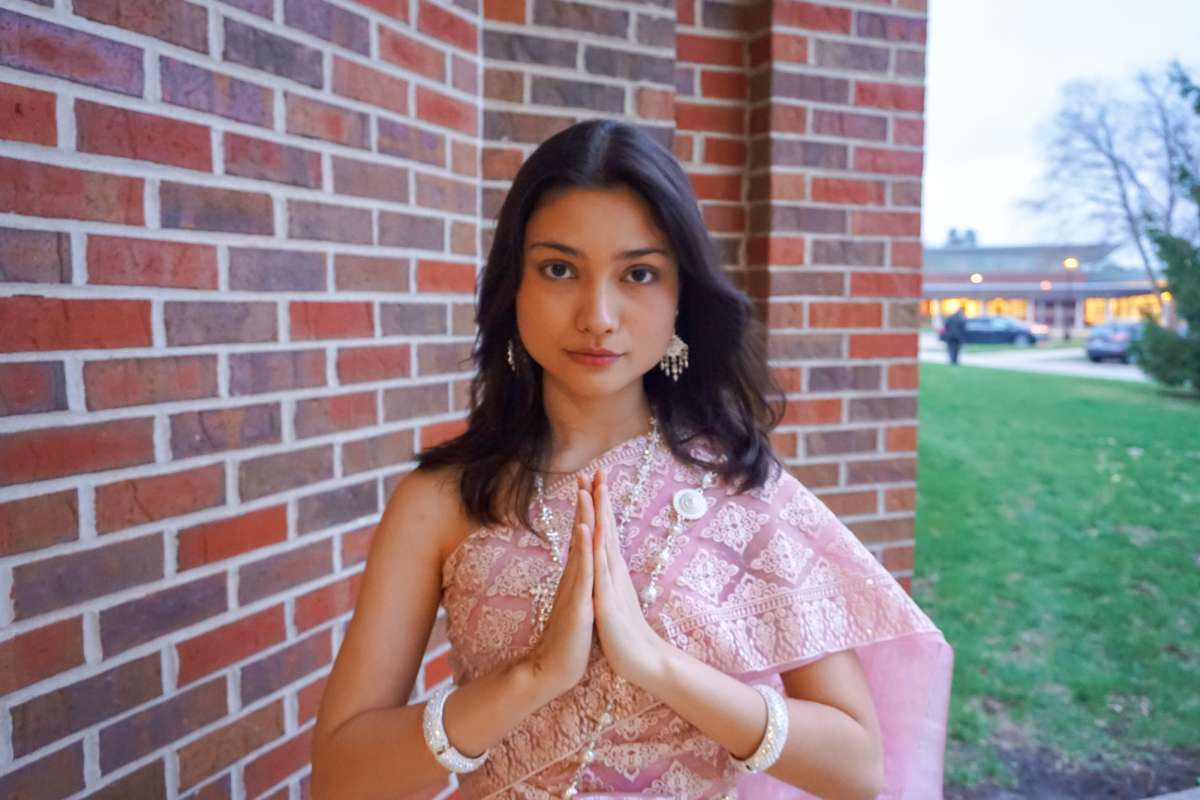
HCSD is represented by its cabinet members, president Hridi Ghosh `28, treasurer Adyasha Anindita `28 and event coordinator Debasmita Goswami `29.
These designations, however, are often merely in name.
Last spring, Ghosh approached Anindita with the idea of starting a student organization representing all dharmic religions from South Asia, which includes Hinduism, Buddhism, Jainism and Sikhism.
Eventually, this idea narrowed down to centering purely on Hinduism.
For the three cabinet members, the decision to develop HCSD was motivated in differing ways.
For Anindita, HCSD allowed her to celebrate the cultural aspect of Hinduism, even more than the religious aspect, that she had grown up with. “It’s a way to be back home for a little bit,” said Anindita.
Anindita distinguished the role of HCSD from the role of organizations like South Asian Students Organization (SASO), even though they engage with similar events.
“SASO focuses on introducing these festivals to a global audience, without getting into the nitty-gritties,” Anindita said.
Ghosh noted that SASO’s celebration of traditional South Asian events like Diwali often center on pop culture.
“You have the people singing Bollywood music and the pretty clothes, and that’s important too, but Puja is a separate thing from that,” Ghosh said. “There’s important aspects to both, but we’re centering around again, the practices and the faith behind the celebration.”
Anindita said that one of the ways HCSD intended to promote an authentic celebration of religious culture was to celebrate religious events on their actual day.
During fall break, HCSD will host a trip to a Hindu temple in Des Moines for Diwali, which falls on Oct. 20.
For Goswami, growing up as a Hindu in Muslim-majority Bangladesh offered few opportunities to connect with her religious heritage.
In search of community at Grinnell, she happened to ask Ghosh if Durga Puja was ever celebrated on campus. “It was a little far-fetched but then she said, ‘In fact, we’re starting it this year. You know what, you should become a cab member for it,’” Goswami said.
In preparation, they gathered supplies for the Puja — sweets for prasad, a religious offering of food, and marigolds for pushpanjali, a religious offering of flowers. A painting of Durga was used as a substitute for the traditional clay sculpture.
Ghosh led the chanting of the ritualistic mantras, and sang a bhajan, a devotional hymn to Durga.
Copies of the mantras were printed and passed out to attendees. Aarti, the ritual of waving a lit flame in front of the deity’s idol, was conducted.
“It was interactive, and we were trying to teach people how the Puja is conducted,” Goswami said.
For Ghosh, she said growing up in Minnesota meant that she was often surrounded by Christians.
As a child, she participated in Durga Pujas, offering prayers, watching her mother and other married women apply the traditional vermilion to each other’s faces, wanting to be involved in the fun.
In fourth grade, she started going to the Chinmaya Mission, a Hindu spiritual organization center located in Chasca, Minn. where she began to read Hindu scriptures, and understand why religious traditions are conducted as they are.
“Why do we do Puja? Are we asking God for a Tesla? No, the relationship with God is not transactional. Puja is a meditation. It’s for the self, and to welcome Bhagwan [God] into our house,” Ghosh said.
For Ghosh, learning the why of Hinduism, in connecting practices to their philosophical cores, leads to equanimity and contentment, noting that these larger philosophical concepts can and are implemented in daily life.
“My goal is to spread the knowledge of Hinduism and to help current Hindus connect with their culture,” said Ghosh.
To promote the understanding of the underlying philosophical structures of Hinduism, HCSD intends to conduct study groups of the Bhagavad Gita, a central Hindu text.
Ghosh said that she wanted to make a welcoming space where people from all backgrounds could find knowledge.
“I want to create a community where you can practice and show their interest in this religion unapologetically,” said Goswami.

