





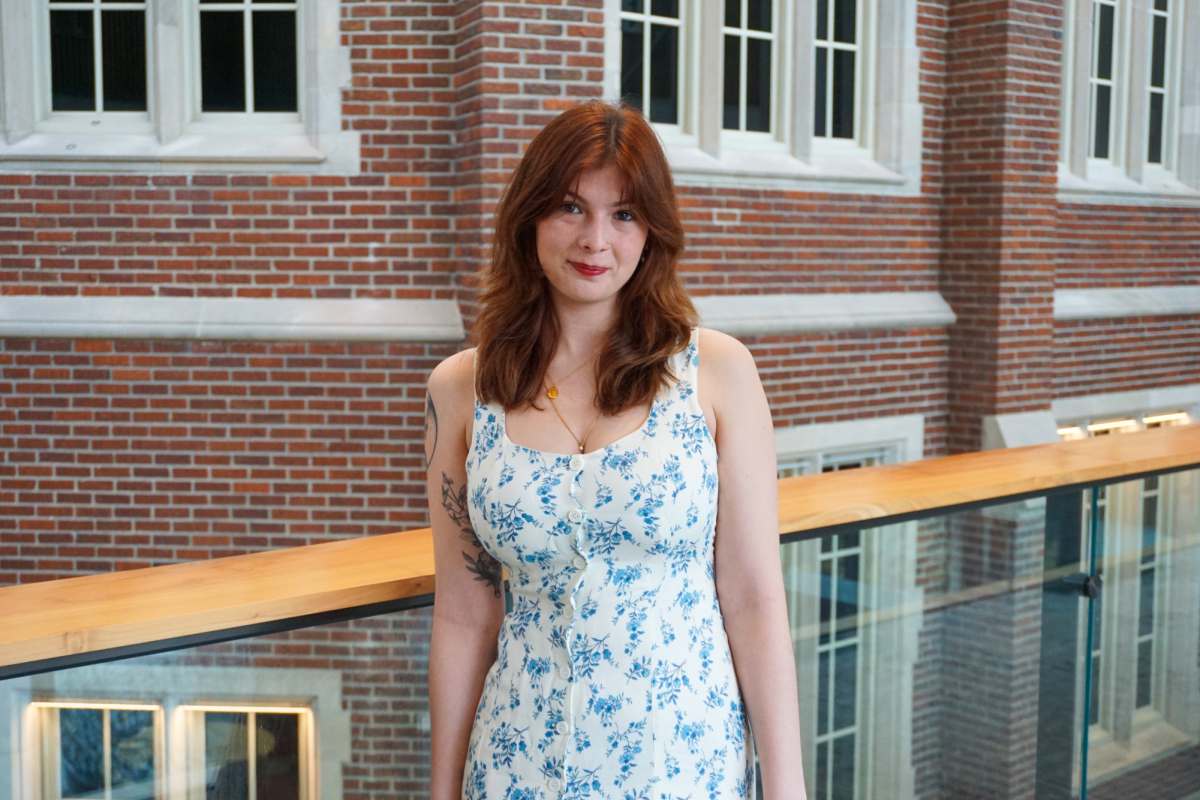




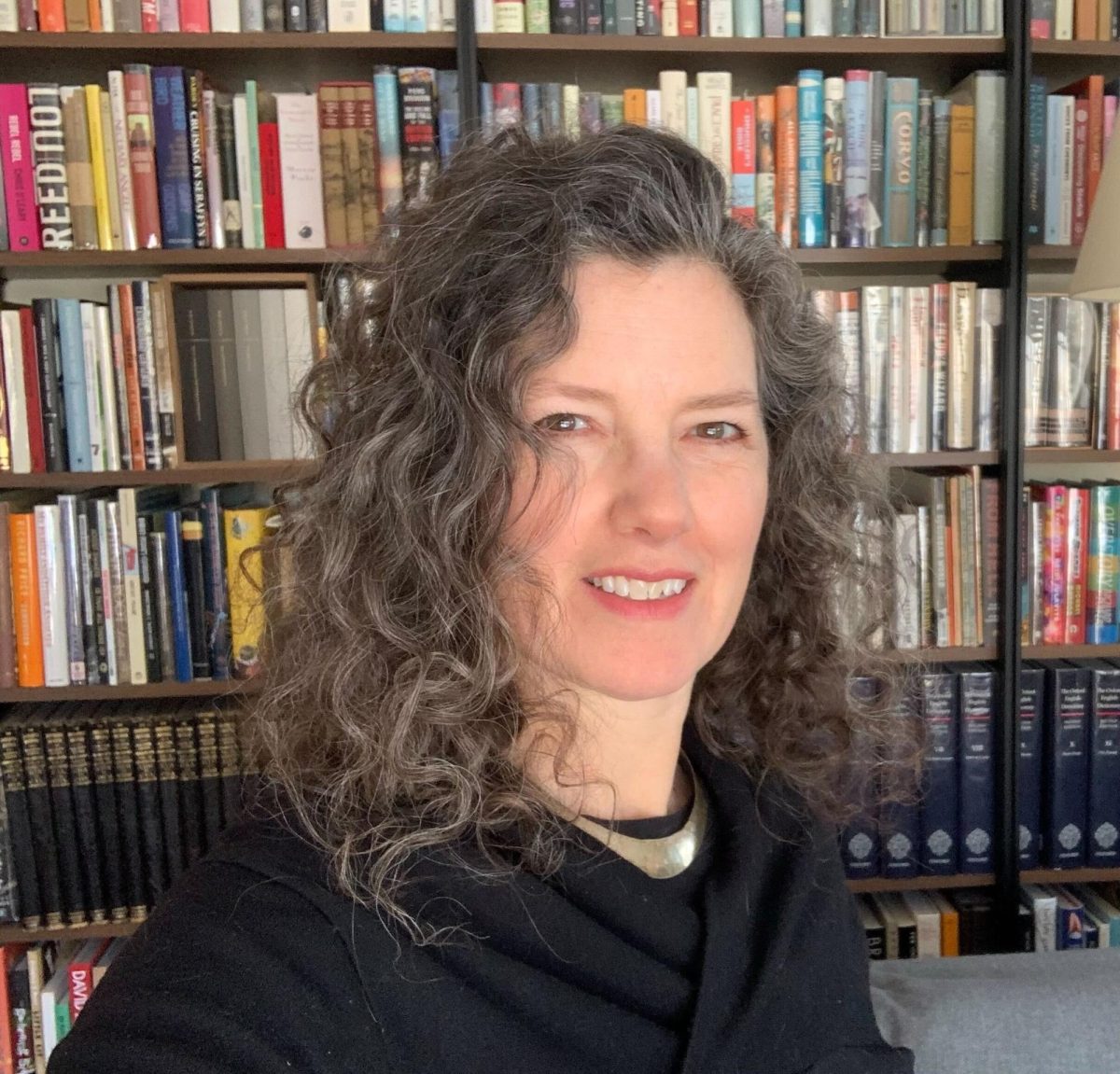




Torry Bend thinks there are three key attributes of puppetry — feelings, playing with scale and empathy.
“Theater and most live [performances are] going to be scaled to the human body. With puppetry, you get to build the performer itself … and that allows you to play with scale and think about concepts that are bigger than the human form,” she said.
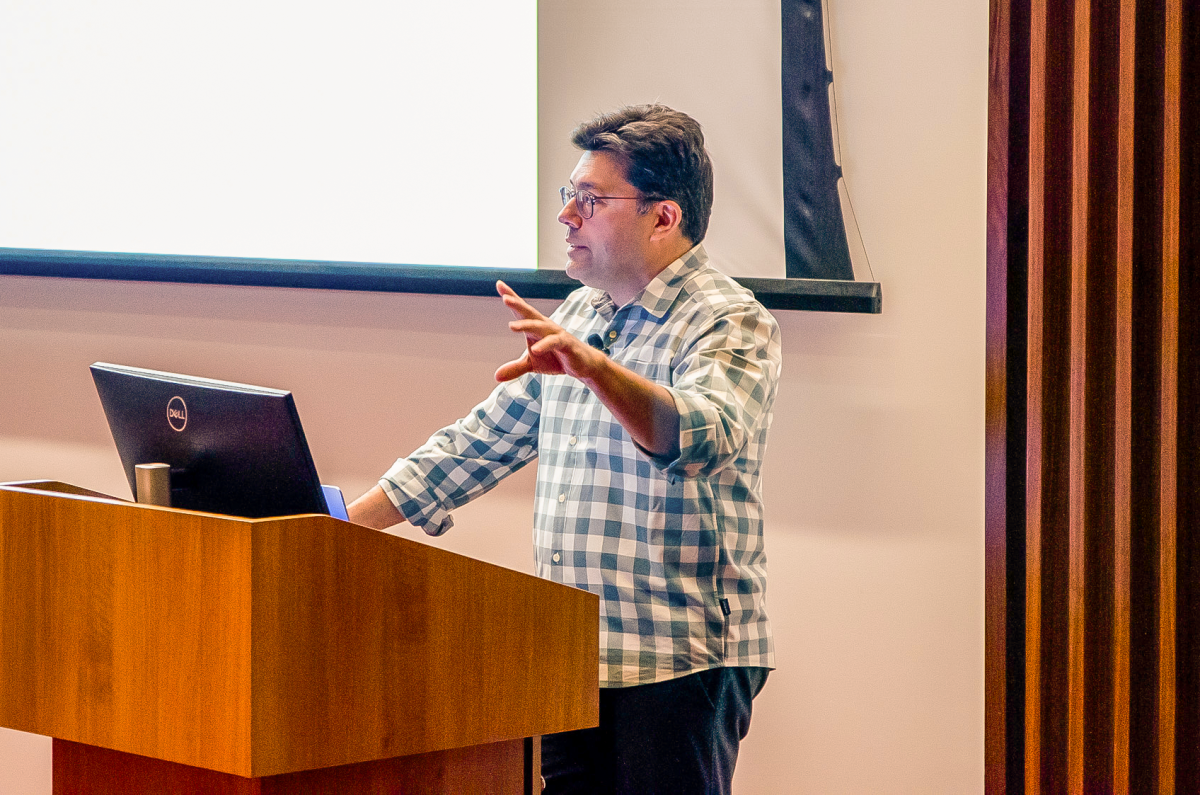
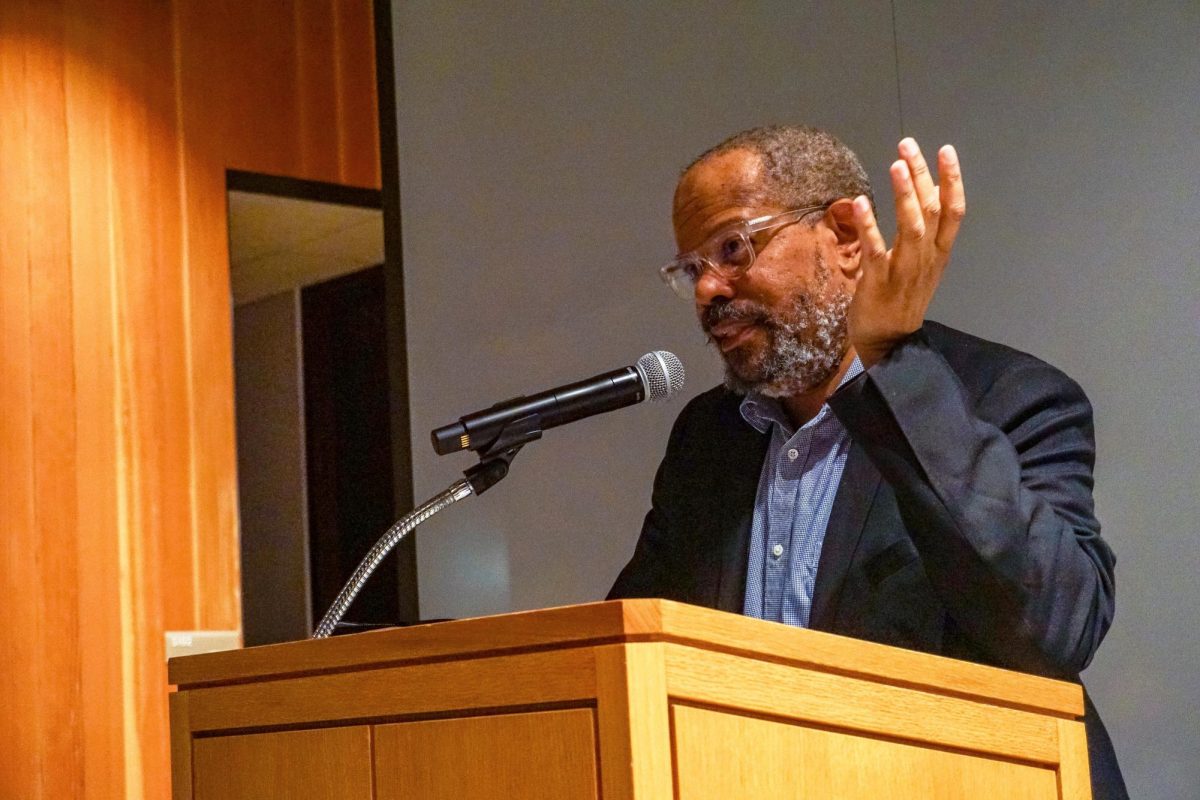
Torry Bend, puppet artist, set designer and professor of theater studies at Duke University, gave these comments — that theater creates new worlds and alters old ones — in a talk titled “Puppetry, Change and Resilience; performing and teaching during climate crisis” for the Scholars’ Convocation on Sept. 11. She said that puppetry reflects on the idea of meaning and the feelings embedded in them.
Bend said she did not become a puppet artist until later in graduate school.
“I was putting on talent shows with my cousins when I was a kid,” she said. “In high school [I] was in shows both at my school but also in a local community theater.” As an undergraduate, she studied environmental science and studio art, until she was recommended to enroll in a puppetry course.
“What they showed me in that class was that you could make story without narrative, or you could make narrative without words,” she said.
During the talk, Bend referred to “Holoscenes,” a water tank performance that comments on rising sea levels, directed by Lars Jan and Early Morning Opera, describing it as “part dance, part clown work, and part object performance … because object performance is definitely a form of puppetry.”
“The performers do very everyday things. They clean the tank. They sell pomegranates on the side of the street,” she said. Yet, “It floods and recedes and floods and recedes … They sleep, and it’s shocking to watch.”
For Bend, the performing arts emphasize new ways of interpreting everyday events. “After [the flood] is upsetting, you realize how beautiful the water is,” she said.
Bend added that the environment around the puppet was also important. In “If My Feet Have Lost The Ground,” an original show about a woman who spends more time on planes than at home travelling abroad for work, Bend said that she was very interested by the concept of space.
“What are the aesthetics of these spaces that were very glass, metal, sort of industrial?” she said, “And this particular character’s relationship to [this environment] being safer than her home.”
After the Scholars’ Convocation, Bend hosted a puppetry workshop teaching participants how to bring everyday objects to life, in place of marionettes. Students and faculty worked together to form quick performances using shower caps, craft paper and thin packaging foam sheets.
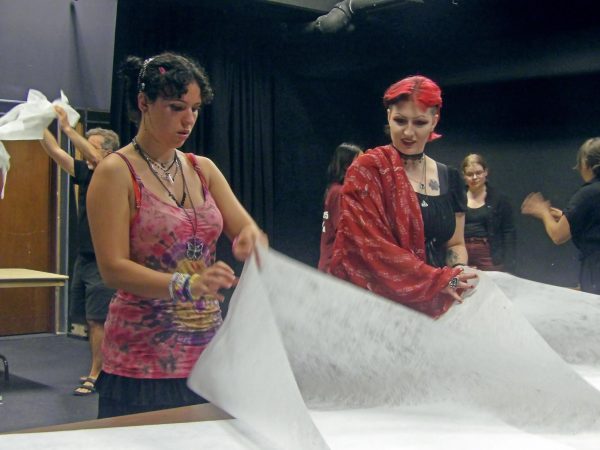
Bend emphasized that puppetry is about using what one has at their disposal, considering the limit of objects and materials. Responding to a student’s question about the process of puppet making, she said, “We go, we scrounge, and we make a bunch of materials that we can find on hand … but it is really trial and error,” adding that Walmart sweeping pads had been “essential.”
Last summer, Bend’s puppetry class at Duke University went to Wilford, N.C. In collaboration with artists and scientists, they crafted a puppet of a white whale — Granite, Wilford’s community mascot.
“The community just decided about showing off nature and thinking about nature,” she said, adding that such intent could begin the process of truly understanding the impact of the climate crisis within the performing arts. “What was exciting about this summer project is it really kind of proved to me that the Granite Science Parade is working.”
Bend said she had participated in a workshop in North Carolina with teachers and scientists figuring out how to teach science to middle school students. Though this was one of her first experiences teaching with puppetry, she said the goals were clear and the intent was shared among everyone.
“This is magical, and the most impressive thing was that these people were excited,” she said.
Bend’s message revolves around the idea that the performing arts and puppetry can introduce and teach creative commentary on the climate crisis to anyone willing to step in. She said she believes that teaching this aspect of the performing arts brings the community together — “It has become this really positive and exciting solution.”