
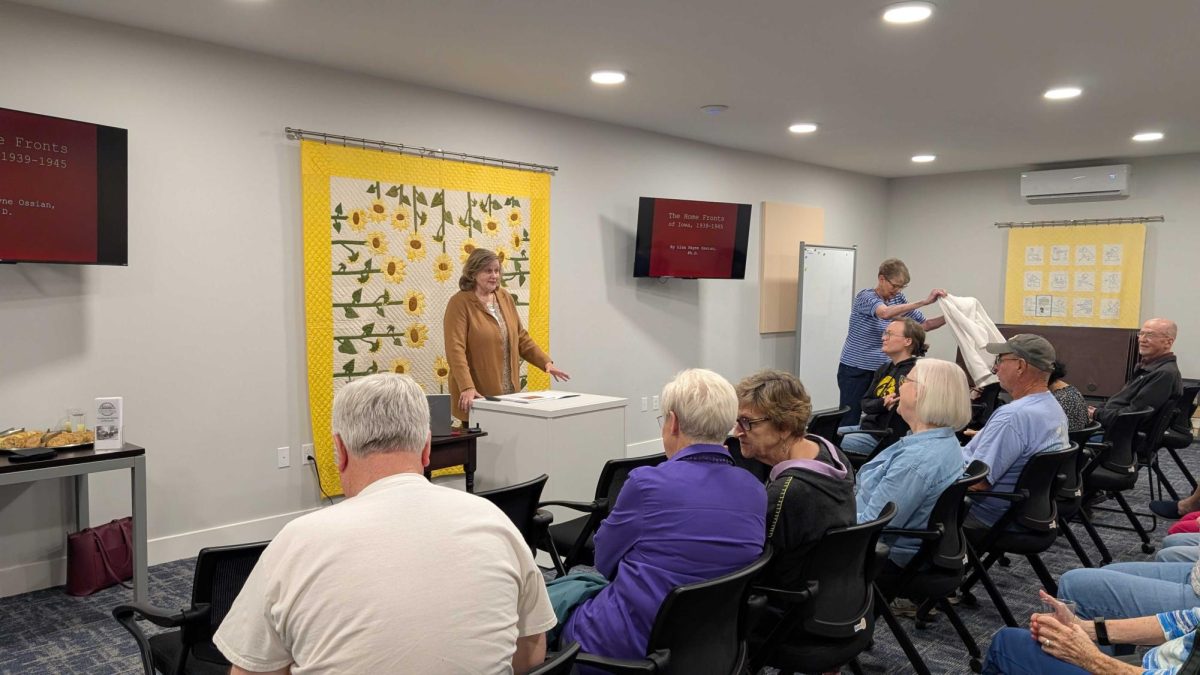








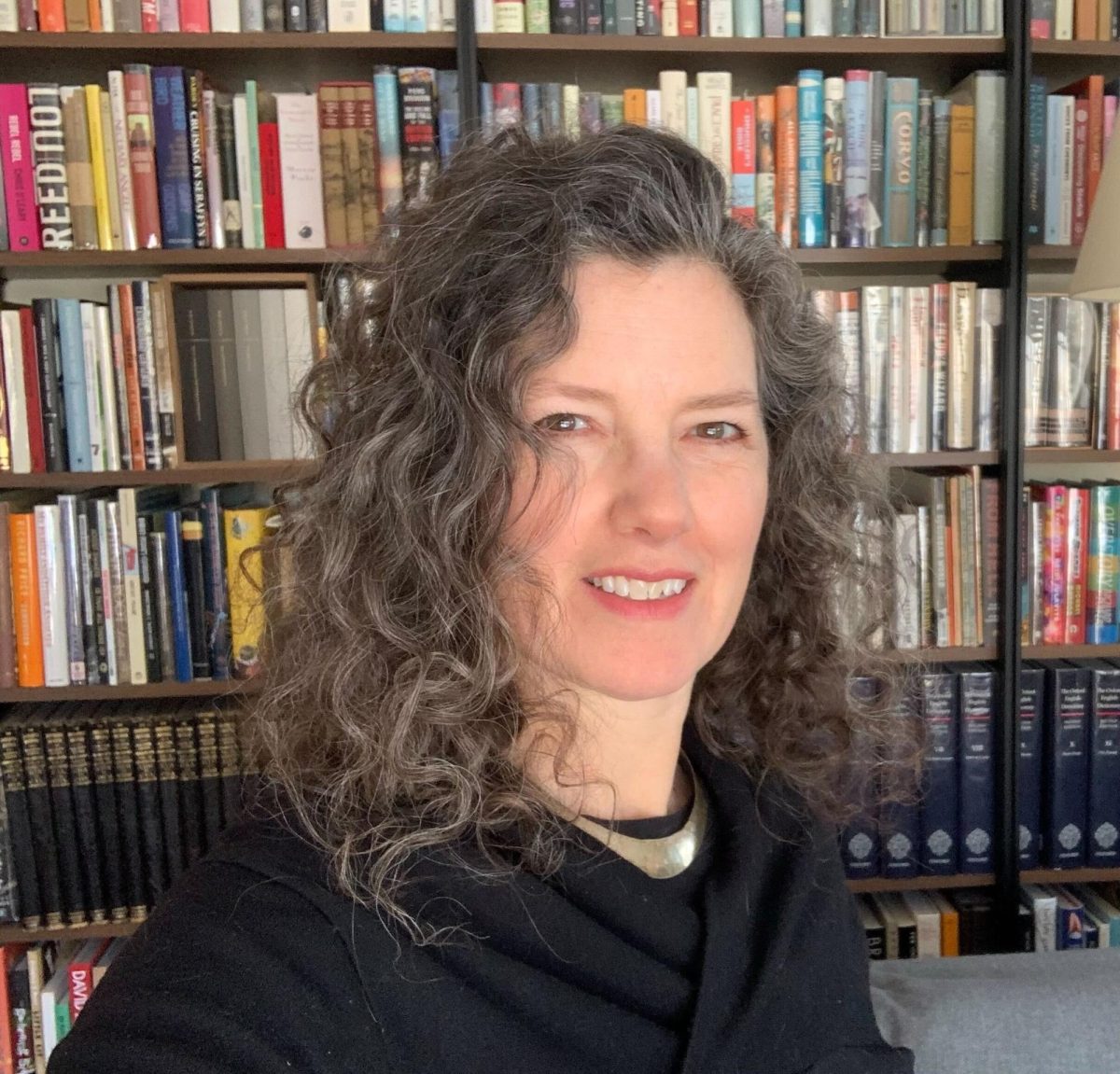


In the back conference room of the Grinnell Historical Museum lay a packed room of people awaiting Dr. Lisa Payne Ossian’s presentation on her research on the Iowa homefront during World War II. Despite heavy rain, hail and an approaching tornado warning, the room remained packed with what museum director Bethany Hewlett described as upwards of 50 people.
“We had to get more chairs at the beginning, and I was really pleased about that because that meant we had a really good crowd,” said Hewlett.
This event was a collaboration with the Grinnell College Center for Prairie Studies, an occurrence that Hewlett says she wants to happen more often.
“As we’ve built this new museum, we are very interested in increasing and partnering with different people, professors, institutions, different programs in Grinnell and Poweshiek County. We want to encourage that sharing of knowledge throughout our community,” said Hewlett.
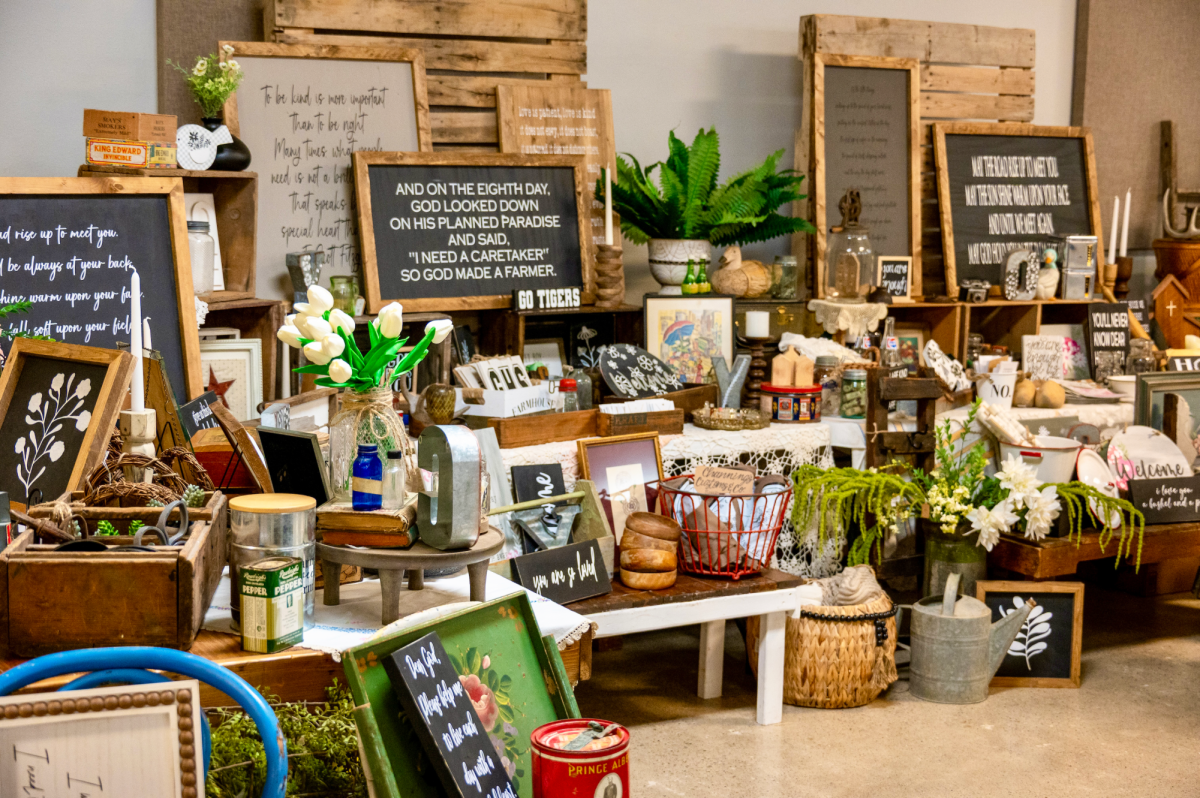
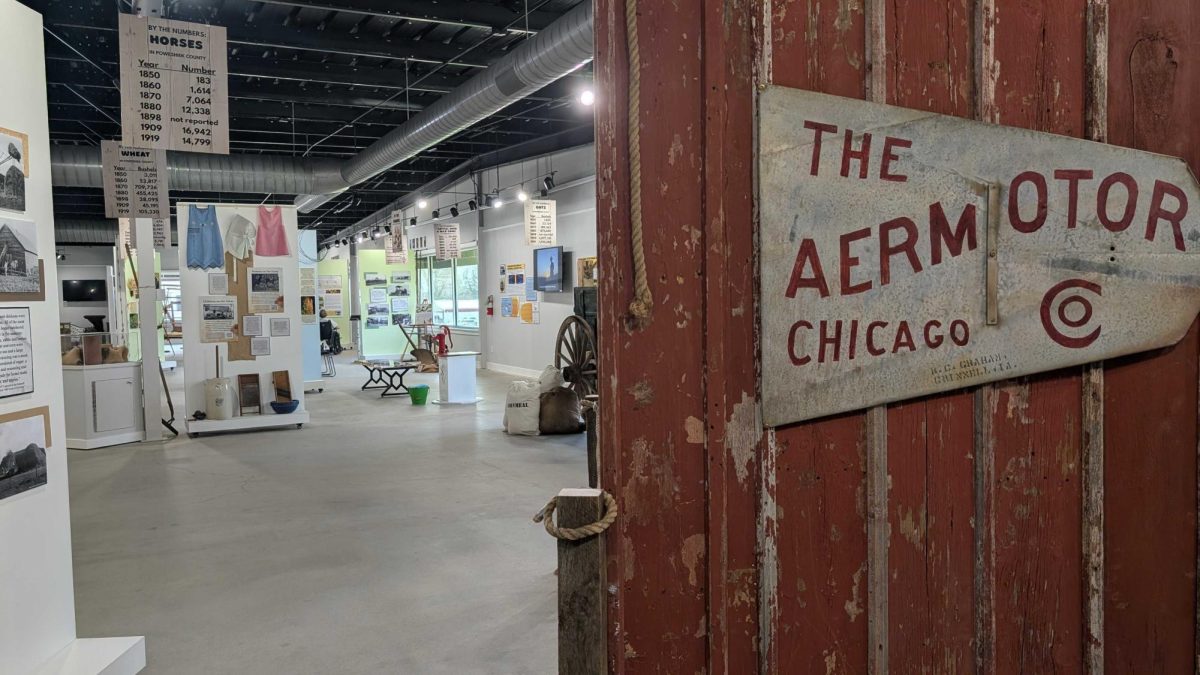
In the hour before the talk began, the museum had been open for an hour of free admission to view the new exhibit, “The Land: A History of Farming in Poweshiek County.”
Bev and Dan Huebner, residents of Grinnell for the last 45 years, enjoyed coming in to see their histories showcased in the new exhibit. Dan Huebner described his family’s and his own experiences with farming over the years by explaining the equipment found in the museum, such as plows and reaper-binders, and how he grew up with very similar equipment.
“I used some of this equipment at my grandpa’s farm,” said Dan Huebner. “I never was behind the plow, but our binder was that concept, but it was much smaller.”
Bev Huebner, also coming from a farming family, said she recently heard about the exhibit and found Dr. Ossian’s upcoming presentation as a good excuse to come to the museum.
“I’ve enjoyed reading in the Grinnell-Herald about the farm exhibit, and I knew the grandparents of the people that donated this scene, so that makes the connection for me too to have that here,” said Bev Huebner.
The exhibit and Dr. Ossian’s talk were meant to be viewed one after the other.
“It was the perfect lead up,” said Hewlett.
The exhibit discussed the history of farming leading up to WWII and included information on white settlement in Iowa, Native American farming history and the introduction of new technologies that transformed the way farming was done. There was even an inclusion of a scene that appears to be an old farm shed.
During Dr. Ossian’s talk, she spoke on the research she had conducted for her book, “The Home Fronts of Iowa, 1939-1945.” She spoke about what she presented as the four different WWII homefronts in Iowa — the farm front, the production front, the community front and the kitchen front. While detailing the different fronts, she made a point of discussing the underrepresented voices in wartime history, specifically, women beyond the Rosie the Riveter context and children.
“This one Iowa factory produced over four-billion 50 caliber machine gun bullets, and 60% of the workers were women and an even greater percentage of the workers were teenagers. This is the group that nobody talked about,” said Dr. Ossian. She presented using a variety of book quotes, news clippings and archival letters from the wartime period to create an emotionally impactful presentation, specifically at the local level.
“When you get into the local stories it keeps you out of some of those cliches,” said Dr. Ossian.
“I really liked the local approach,” said Dr. Ossian. “It just gave it a personality, and what I did mostly is I went to local county museums, introduced myself and I found some of the most wonderful sources and stories and letters and photographs and all that.”
After the talk, it was announced that Dr. Ossian would offer a special deal — her book would be sold in the museum for only 10 dollars to encourage people to delve deeper into the history. Despite the audience generally being older Grinnell residents, attendees of the talk, such as the Huebners, felt that talks like Dr. Ossian’s and the museum’s accessibility were important for all types of people to learn about their history.
“Just to have the history brought to us, I think is important,” said Bev Huebner. “I think that it’s important that kids know everything wasn’t like it was today.”