


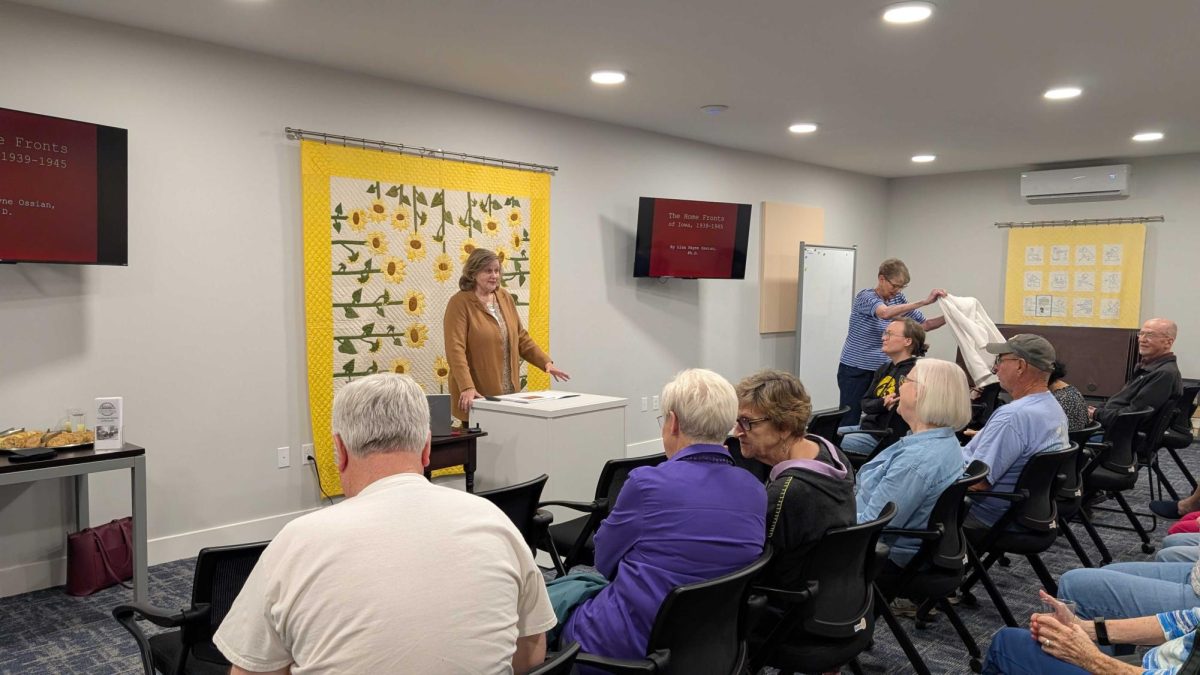

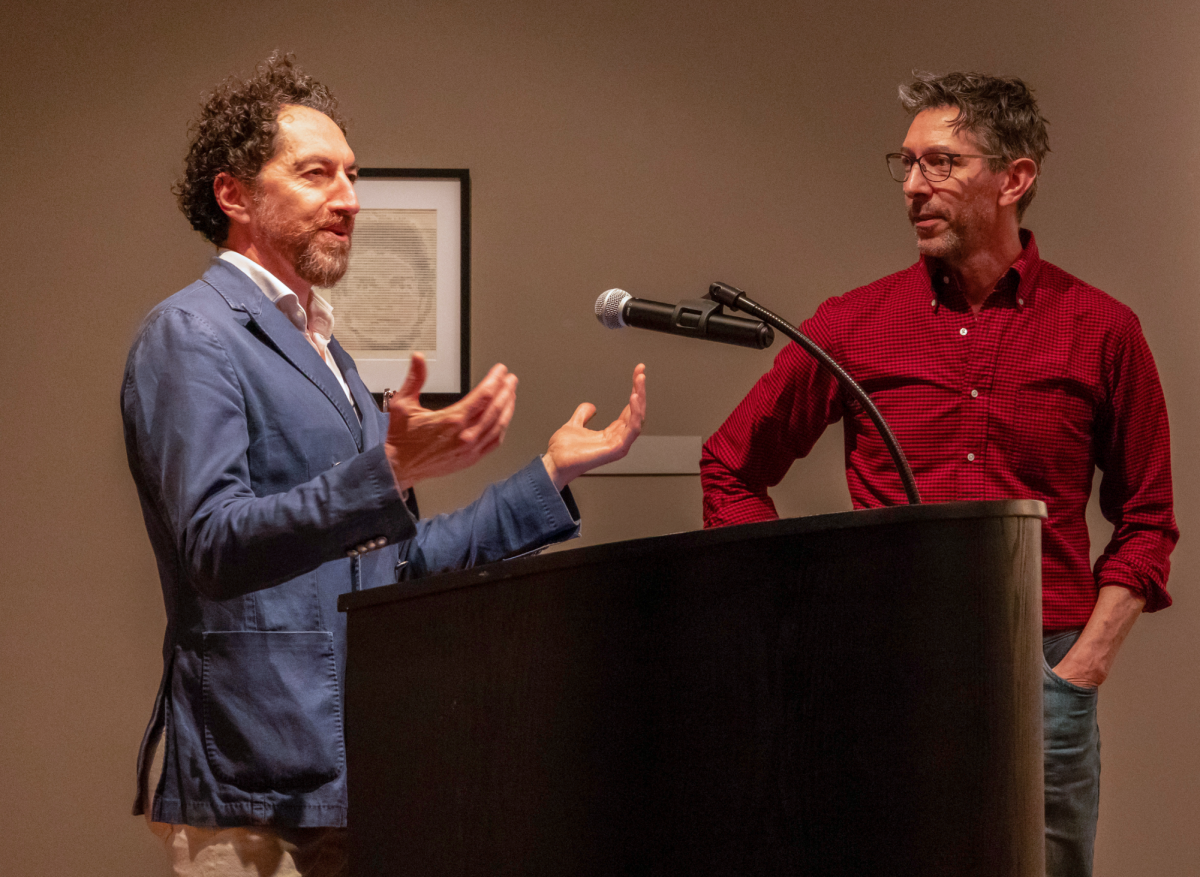








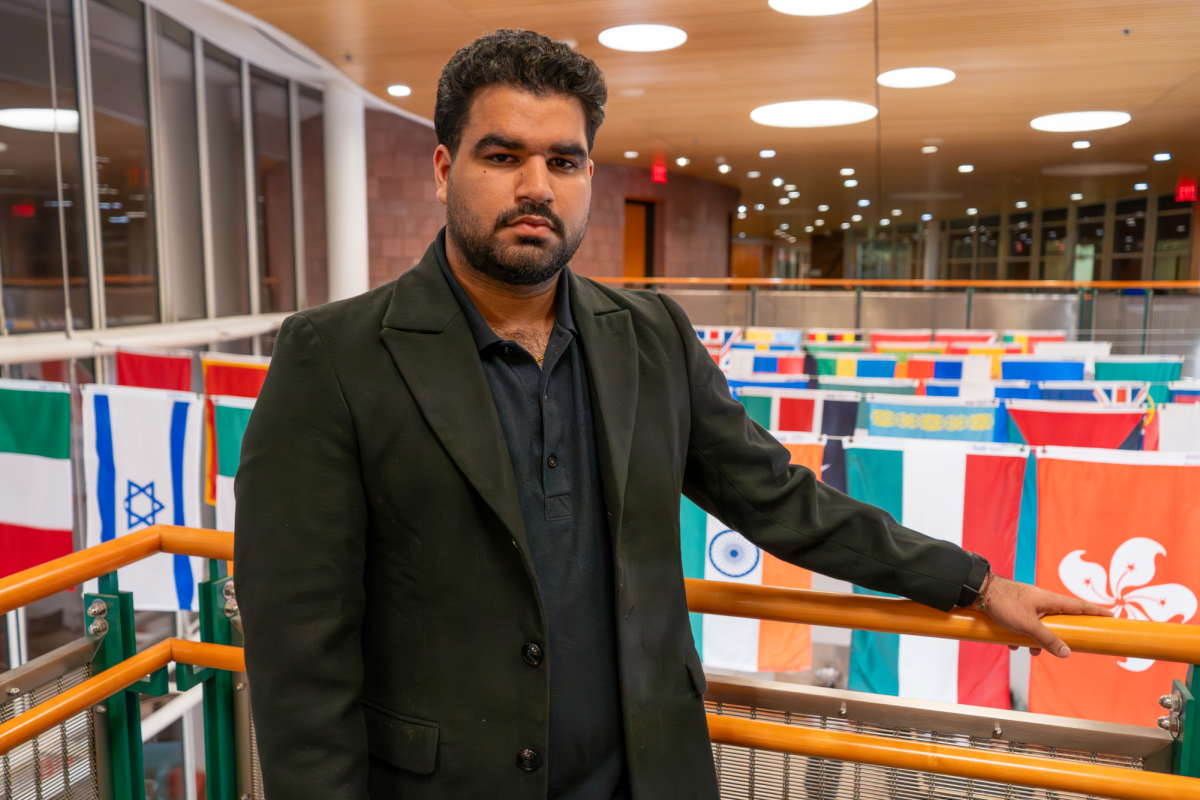

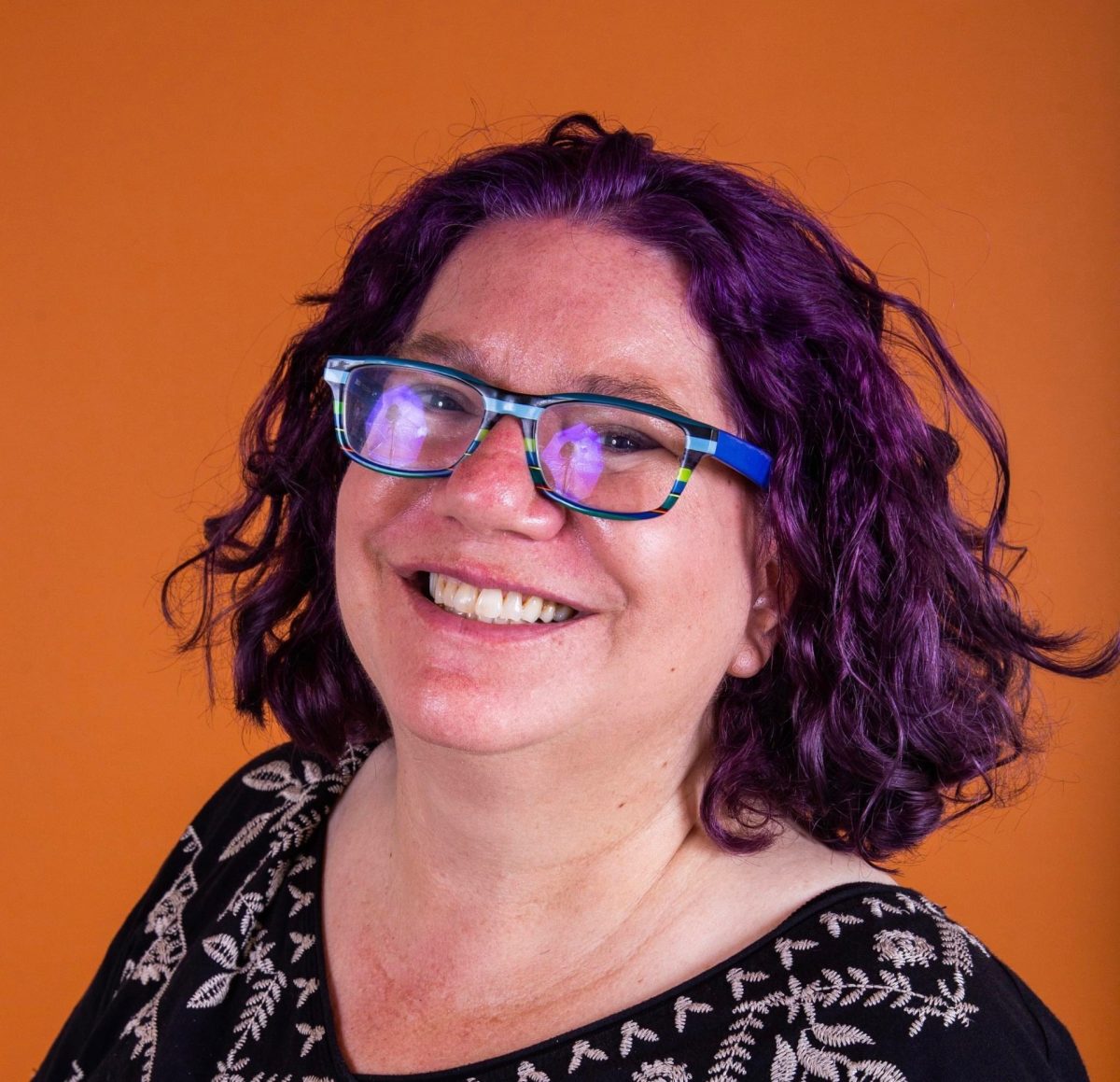
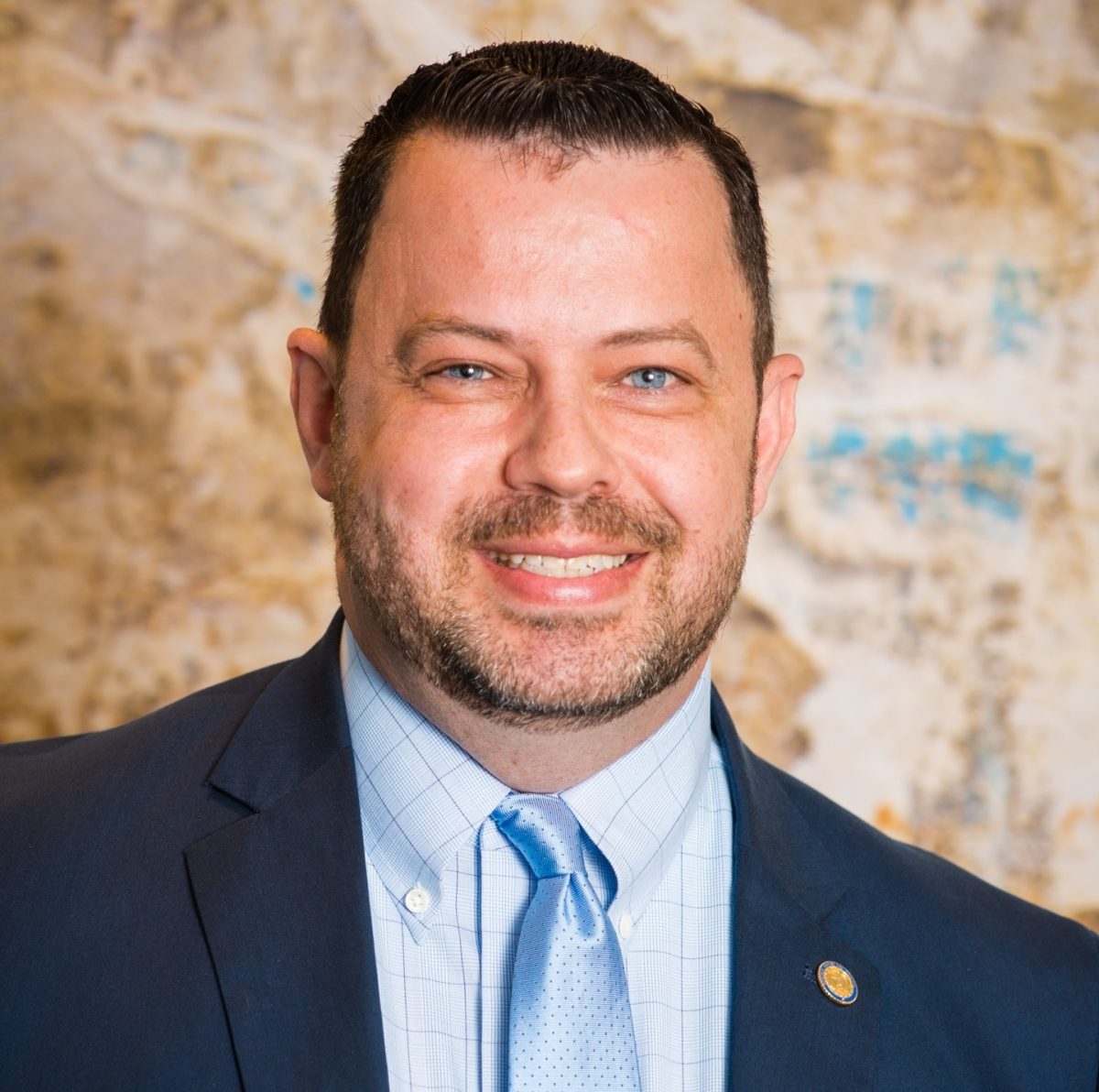
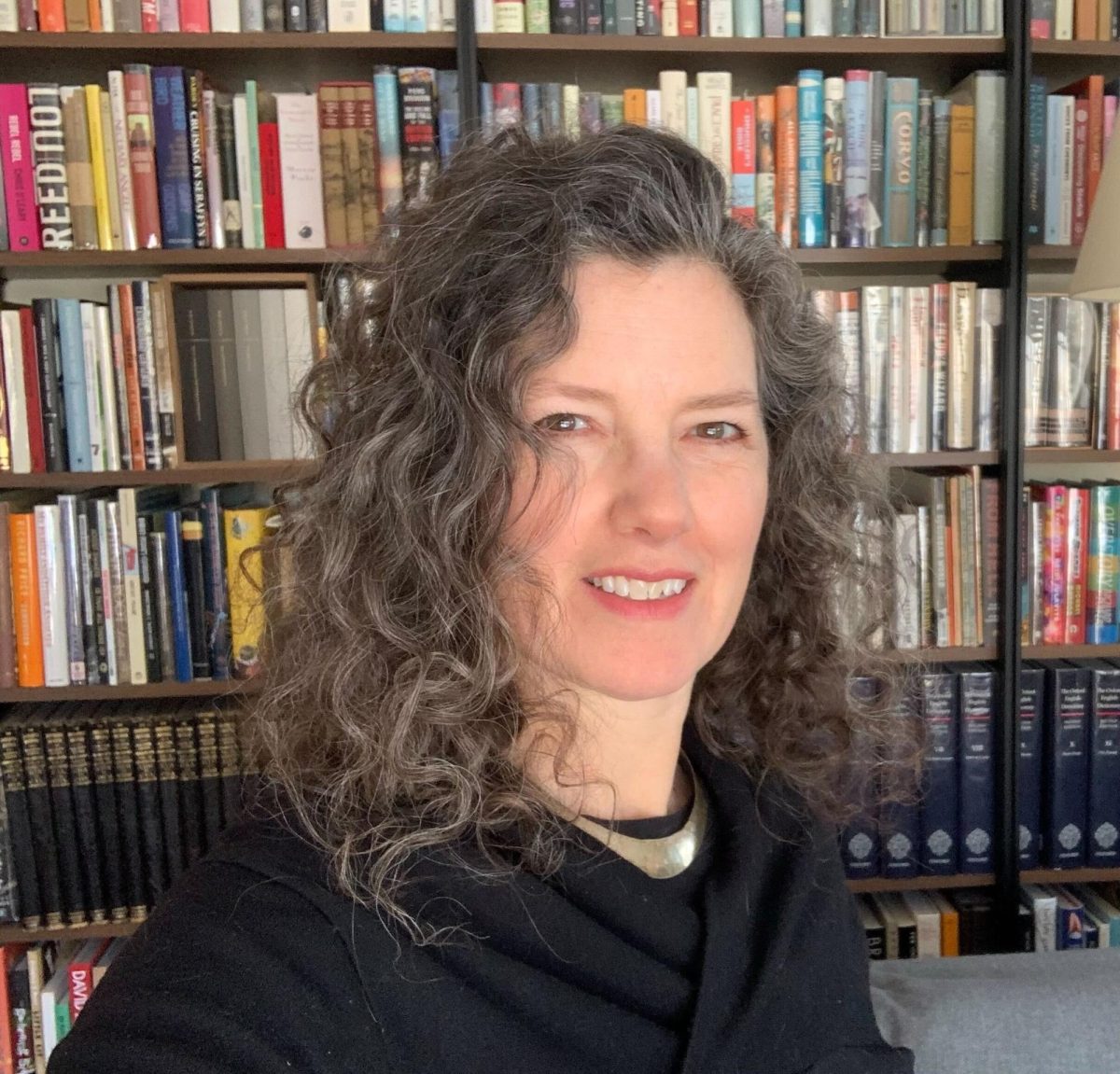






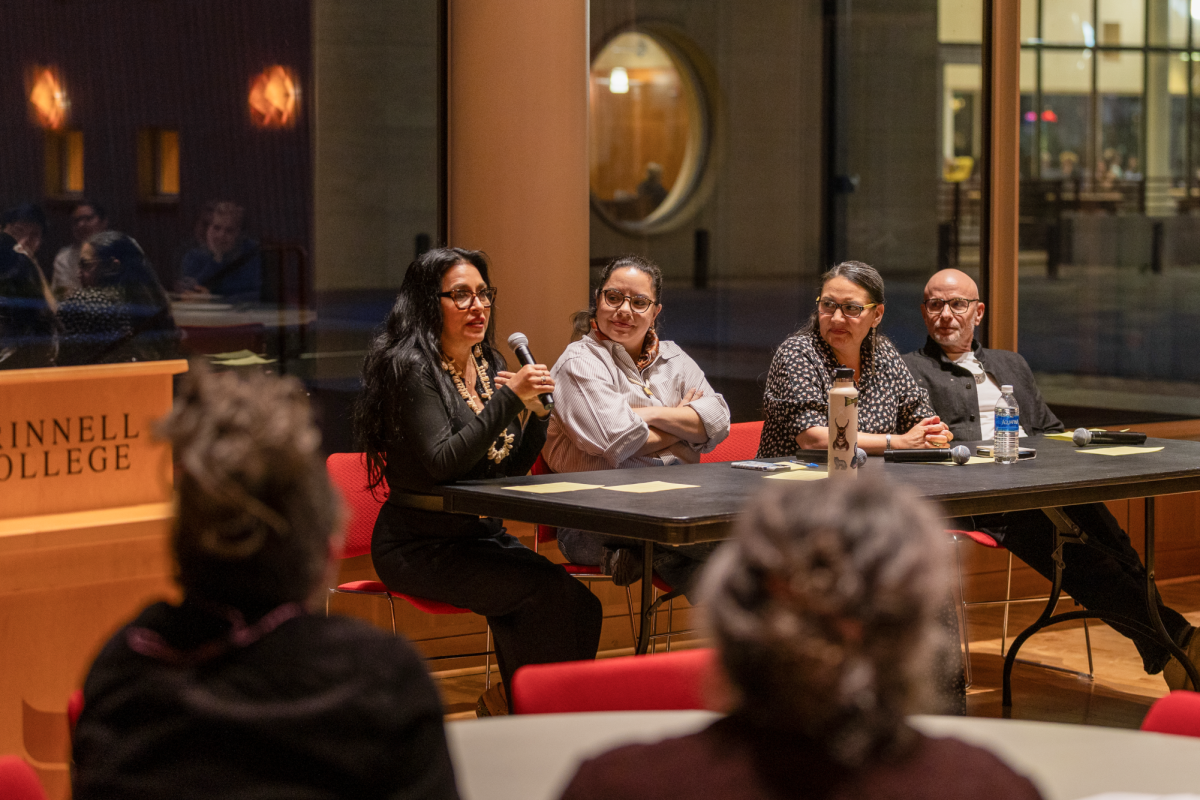
Grinnell’s Humanities Symposium on the topics of climate change, Indigenous knowledge and the liberal arts held its final event on Thursday, March 26 with a panel discussion on the “Pedagogical Value of Indigenous Studies in a Liberal Arts Education.”
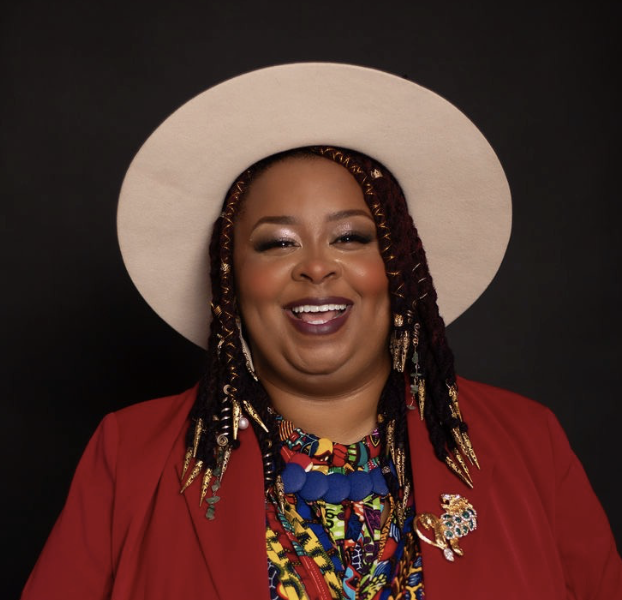
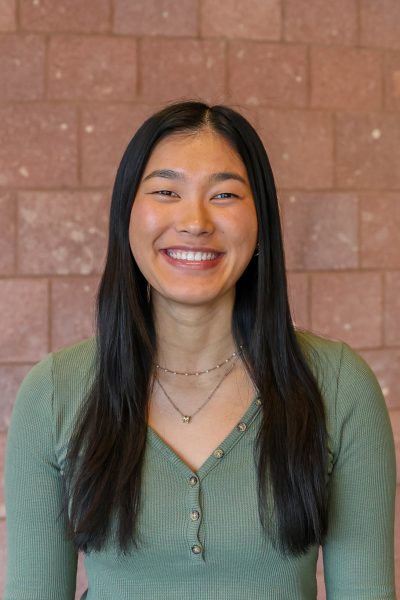
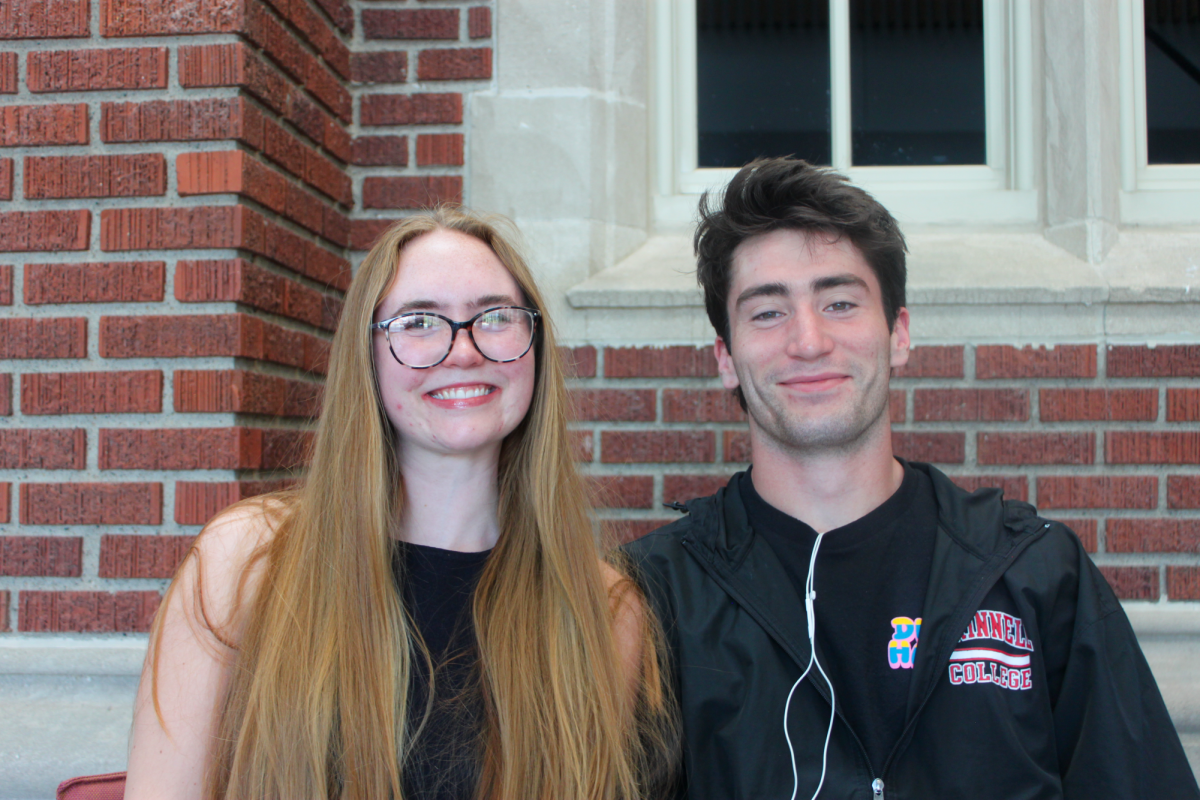
Panelists originated from various Indigenous groups and strides of work. Throughout the week, speakers including Bailey Dann `17, Jhane Myers, David Treuer and Stephanie Badsoldier Snow `03 hosted other events including group discussions on linguistic colonialism and Indigenous language preservation.
Although the topics discussed in each individual event varied, they all tied back to the importance of Indigenous knowledge and its relevance when pursuing a liberal arts education. Each panelist had differing opinions on how this type of knowledge should be accessed and achieved.
Dann said that issues faced by Indigenous people do not stop at the entrance of universities, with Grinnell lacking in Indigenous support. Dann is Shoshone-Bannock and a graduate of Grinnell College who works as a Research and Education Specialist at her Tribes’ Language and Cultural Preservation Department, working in the Office of Original Territories and Historical Research. Dann highlighted the lack of acknowledgement for Indigenous cultures during her time at the College.
“We didn’t talk about Indigeneity at Grinnell,” said Dann. She also described microagressions she faced while attending the College, reporting thoughts like, “I’m not safe here.”
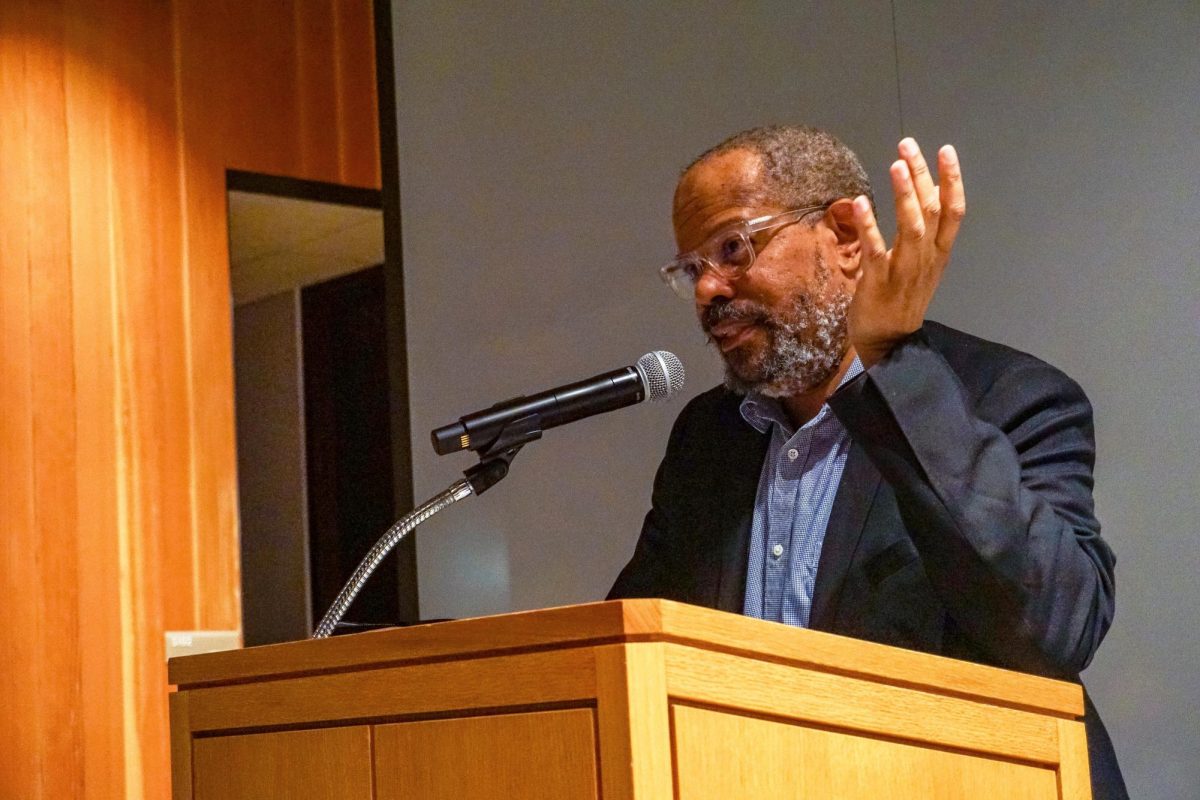
Grinnell’s origins were further discussed by the panelists in regards to why Indigenous knowledge must be included in the College’s pedagogy. One comment was made on the subject by David Treuer, an Ojibwe author who wrote the New York Times Bestselling book, “The Heartbeat of Wounded Knee: Native America from 1890.” To the question of why we should include Indigenous study in our curriculum, Treuer said, “I think a better question is why we should include non-Indigenous studies in our curriculum,” referring to the fact that Grinnell is stationed on land that was taken from Indigenous people.
Dann also discussed how Indigenous knowledge is often treated as a checkpoint in educational settings rather than a source of more complex understanding. She identified Grinnell’s attribution to the land they are on as “acknowledging the wound” of Indigenous origins, but not doing any further work to heal it.
Another panelist was Jhane Myers, who co-produced the Emmy Award-winning film “Prey,” a film about a Comanche warrior who protects her people from various predators. Myers said that Indigenous knowledge builds a well rounded liberal arts education, as “Everything about native people has been romanticized and not created by us.”
The panelists also discussed why conversation is not only important for our education, but also to help us understand the world around us from a perspective outside what we’ve been taught in school.
Snow is a member of the Swan Klan and HoChunk Nation of Wisconsin and was raised with traditional Meskwaki beliefs. She works as an independent scholar and public speaker, serving as an Education Coordinator for the Meskwaki Nation. Snow said that native perspectives help us “to understand the relationship to our mother,” including land and everything on it.
The panelists emphasized that Indigenous knowledge is intertwined with our commonly held “Western” histories, making both our histories and current circumstances interrelated.
The discussion ended with multiple panelists addressing possible deterrents for sharing certain aspects of Indigenous knowledge. “There is a profound reluctance to peel back the buckskin curtain,” Treuer said.