








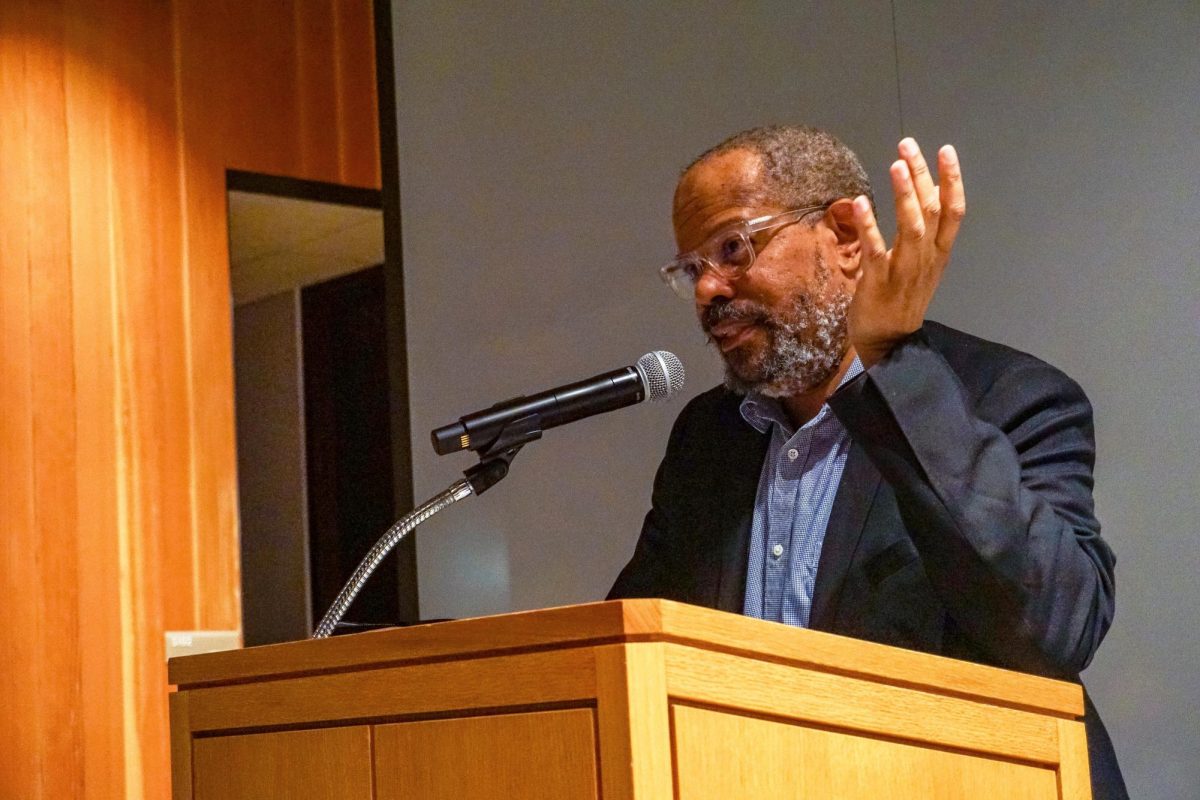













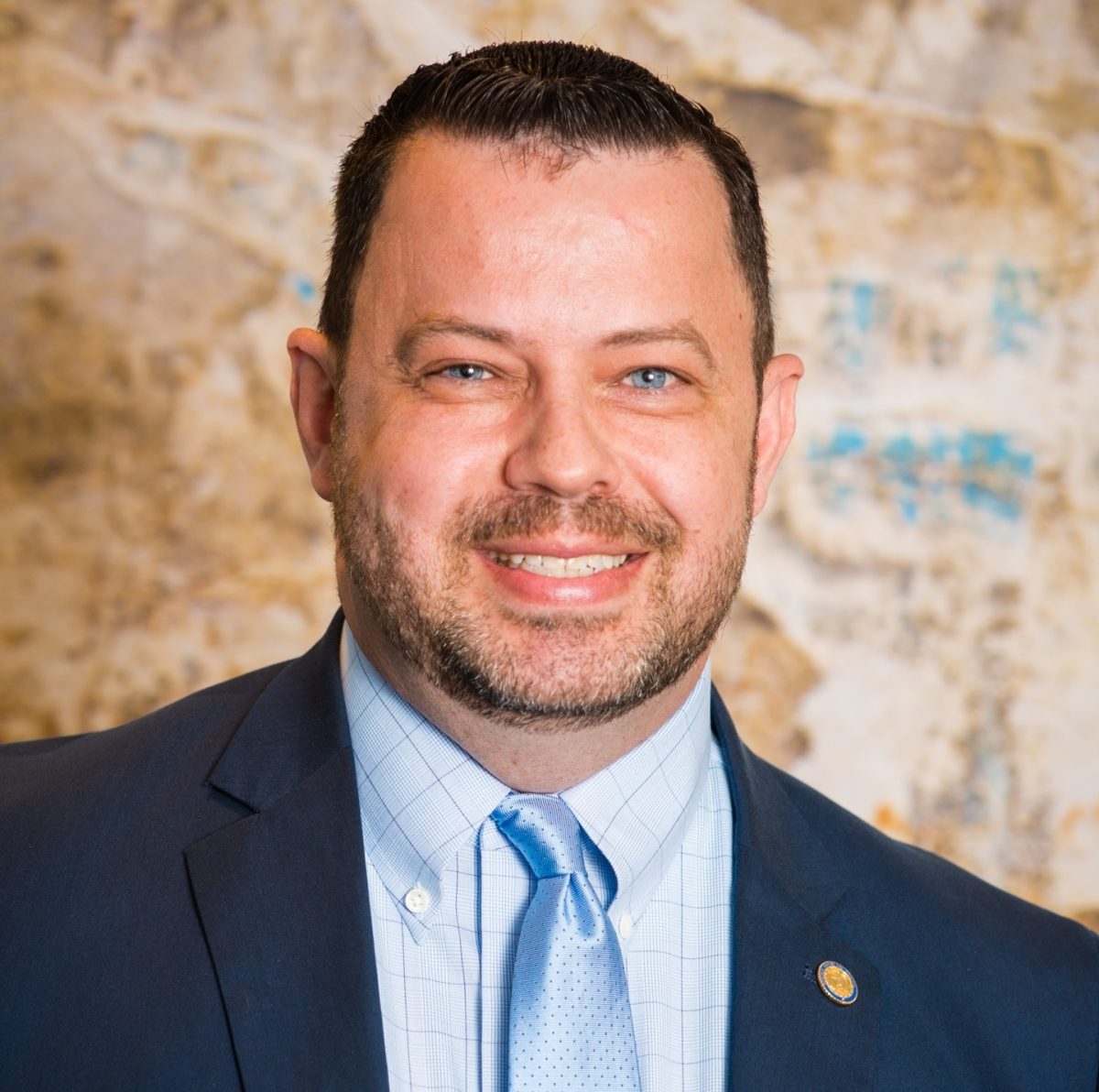














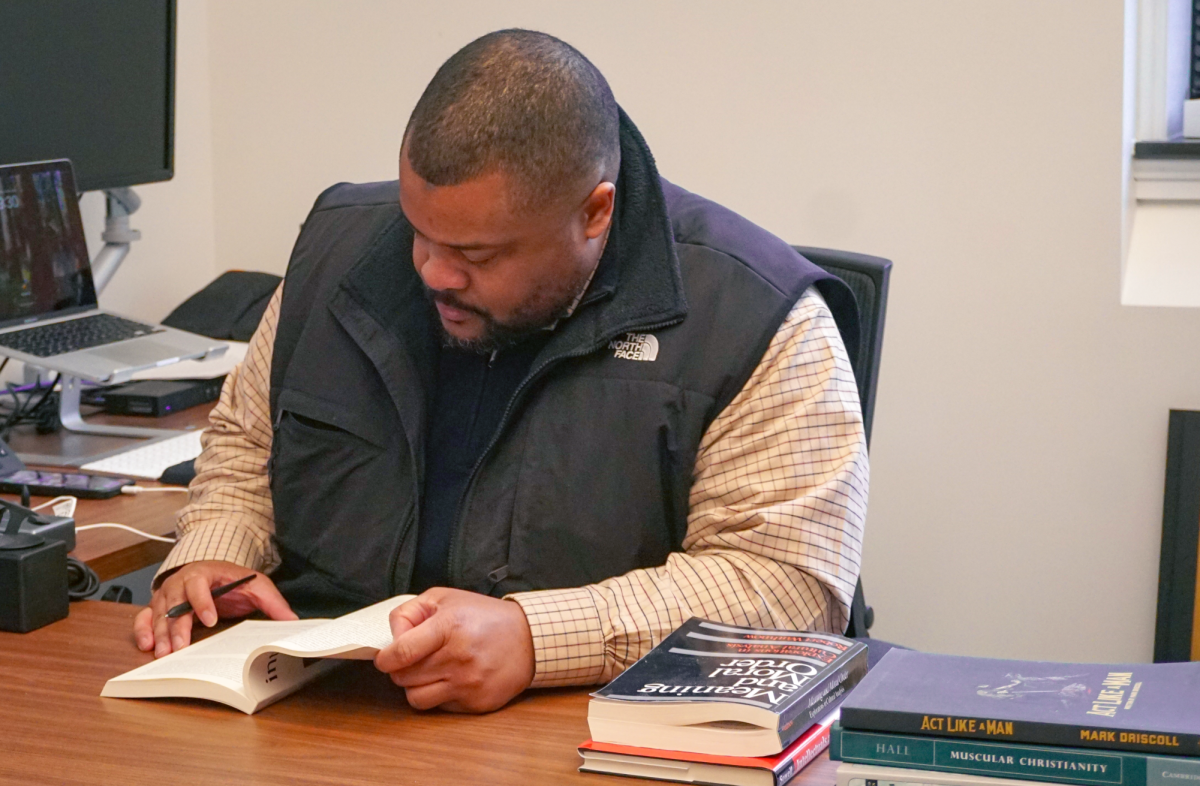
Darrius D. Hills, associate professor of African diaspora studies and religious studies, has been selected as a 2026 Life Worth Living Faculty Course Development Fellow through the Yale Center for Faith and Culture.
The fellowship supports undergraduate faculty in designing courses that ask students to engage with life’s biggest questions.
Hills plans to develop a Womanist Care Ethics and Lives Worth Living course that expands upon his course, REL-295: Womanist Religious Thought.
Hills said that he was aware of the work of the Yale Center for Faith and Culture prior to his interaction with the fellowship program.
“They’ve always done great things in terms of the teaching of religion, specifically with ethical change and transformation, so that’s just always been a source of inspiration for me in terms of my pedagogy and manner of teaching,” he said.
Hills’s work aligns with the major work done by the Center’s mission of helping students understand the place of religion in finding meaning within their lives.
“I want students to know that what we discuss in the study of religion speaks to the innermost parts of what human beings long for in the way of purpose and meaning and significance internally but also externally in the larger world,” Hills said.
More specifically, Hills said that it is important in relation to his developing course to center the voices of Black women, in order to provide insight into the morality and ethics of a life worth living. “That’s something I’m really excited about and that this fellowship will let me do,” he said.
The fellowship award includes a sponsored retreat geared toward exposing fellows to other pedagogical techniques.
It will provide the chance for Hills to converse with other experts in religious studies.
“The cohort will be made of established professors, like myself, who are tenured,” he said.
“There are going to be graduate students there, there’s going to be religious practitioners and maybe clergy also,” Hills said.
“It’s just a way to refine my own knowledge, bouncing ideas and thoughts off of an intellectual community. It will be nice to work with the graduate students there as well, maybe mentor some of their questions,” Hills added.
Hills said he expects the fellowship to help him expand the voice of his class.
He said he hopes to invite guest speakers both in class and on campus.
“It’s one thing for these students to read these people, it’s another thing for students to be able to interact with these scholars in person,” he said.
One major challenge Hills expects to face during the expansion of his new course is garnering excitement and enough student interest.
“What I would like to see is more excitement around the course itself.”
According to Hills, this kind of exposure to scholars in the field is particularly useful for Grinnell students, particularly due to the College’s rural location in Iowa.
“Grinnell students are very earnest, and they bring very earnest questions to the class and to their reading materials,” he said. “I want them to look at the study of religion as [offering] insight into the human quest for meaning and purpose.”
This article has been edited to clarify statements made by Hills regarding the purpose of Black women’s experiences and about the insight that the study of religion provides. Updated 2/16/26.