






















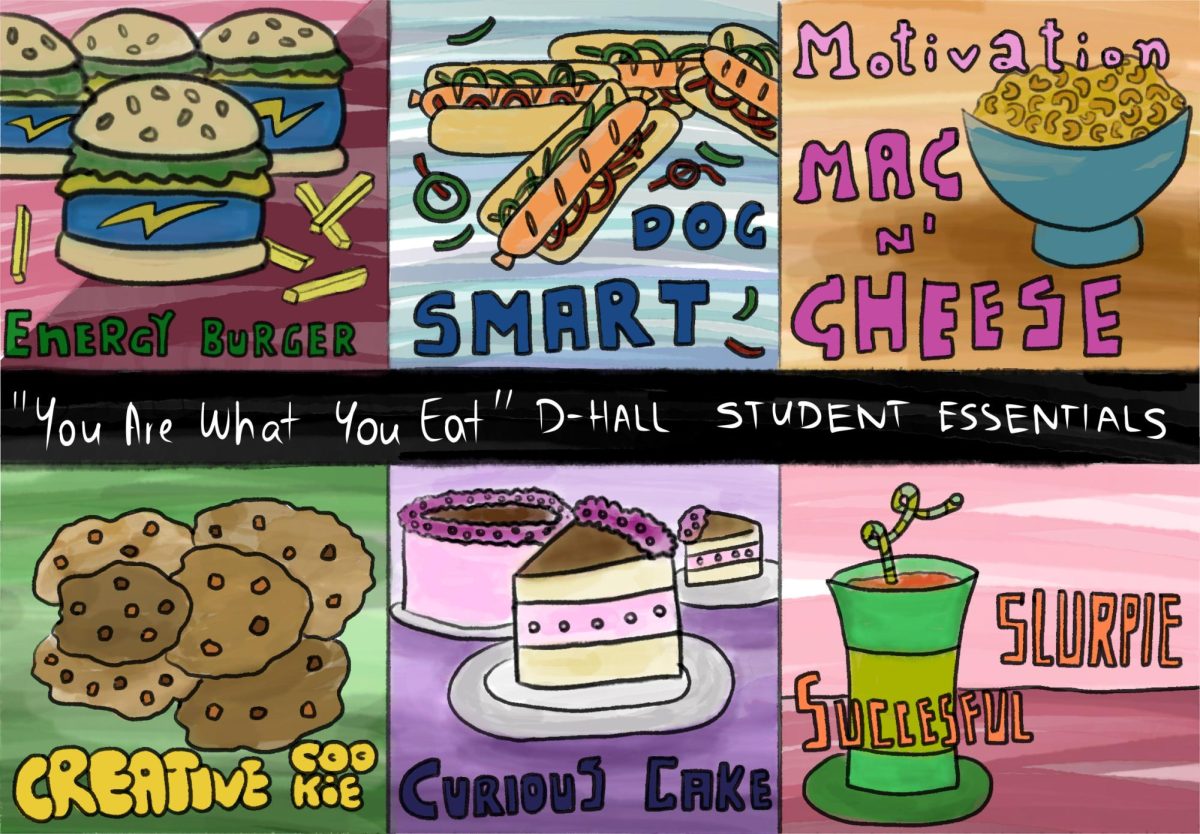









In my first week of college, I fell in love with Grinnell’s Dining Hall. As an avid food consumer, I loved the buffet-style dining. Throughout the next few weeks, though, I noticed that not many people shared this enthusiasm. Hearing these negative thoughts slowly crept into my own perception of the dining hall, and I began to think negatively also. It took me longer than I want to admit before I realized that I had subconsciously joined the groupthink, not considering my own experiences.
My point here isn’t that D-Hall is on par with Michelin-star restaurants. My point is that the negativity with which college-related things are perceived doesn’t always represent what we believe; instead, it becomes a standard that we uncritically follow.
Let’s start off with some of the things that hurt us as Grinnellians — rising cost of tuition, the registration process, shrinking meal portions at Spencer Grill, or Wi-Fi that sometimes malfunctions. These, and more, evoke an emotional response from us, which is a completely natural reaction. After all, as Grinnellians, we’re in high stress most of the time. Sharing things with others is a way to let go of that steam, but at some point it is counterproductive. At such a point we no longer benefit from the sharing but perpetuate some negative ideas that slowly become the way we perceive things around us. And this impacts the way others see them too — for people who have never completed registration, for example, this negative reputation becomes the foundation for how people interact with the process.
This alienates those expressing gratitude for Grinnell. Conforming to the majority’s negative opinions is easier than disagreeing, but this silence creates a false sense that everyone is unhappy at Grinnell. I have seen this firsthand. During an event earlier this year, as an icebreaker, we were asked to share our “hot takes” about campus life. One student hesitantly shared with our group that she doesn’t think that D-Hall is that bad. However, this was clearly not an unpopular opinion, shown by the amount of people who jumped in to agree with her. However, the silence surrounding acknowledging these positive sides created a sense of unpopularity prevalent on campus.
I wonder if everyone acted more transparent in sharing their opinions, we would see more nuance in discussions about Grinnell College.
As Grinnellians, we are instructed to “ask hard questions, question easy answers.” In principle, this is not a bad thing – the world needs people who are willing to question the negative impacts of institutions, especially those which hold more power than us.
However, I worry that Grinnell students’ biggest strength may also be their weakness, and that we have caught ourselves in a negative feedback loop which makes our campus that much more uncomfortable. Not to mention the fact that we’re under constant academic pressure, heightening our stress responses to issues we encounter.
My intent of writing this op-ed isn’t to ask people not to complain, or not to acknowledge problems we face as a campus. Instead, I ask that we think about the impacts of this phenomena on campus culture, and think constructively about how to best channel these concerns. Instead of shouting our problems into the void (or on Yikyak), we should direct our energy toward those who have the power to address our problems. This is certainly easier said than done but it at least gives weight to Grinnellians’ concerns, and gives purpose to our complaints. When we establish negativity as a baseline, and don’t use that energy to organize, our frustrations linger in the air and are passed down to future Grinnellians who enter our campus.
This should be concerning for students and alarming for our administration – for as long as this culture is fostered, Grinnell as an institution will suffer from the impacts. The College’s long term financial security depends on alumni donations and it clearly invests extensive resources in developing that network post graduation. I imagine that it becomes a much bigger challenge to incentivize contributions if a graduate does not have a positive perception of the institution in the first place.
Grinnell students should voice their concerns in productive manners, but Grinnell’s administration should also be willing to respond to feedback they receive.
This culture is something that takes time to foster, and putting effort toward this isn’t always realistic.
But, if I were a first-year student again, I’d like to be given the opportunity to maintain my love for D-Hall, and I hope for that optimism for the future first years. As a community, it is in our best interest to be critical about the way we discuss issues on-campus, for the sake of ourselves and those who come after us.


corinne • Nov 12, 2025 at 7:47 am
I am a Dhall fan too! The Grinnell bubble seems to sometimes lead students to project their frustrations with the world onto Grinnell College as an institution.
Bill Baar '76 • Nov 10, 2025 at 7:40 am
Ms Roznawska wrote a perceptive column here on one of the pitfalls of a Liberal Education. My tutorial advisor freshman year at Grinnell warned me about hiding behind a mask of cynicism with all of my criticism. I ignored him and kept hiding. I made a bad choice.