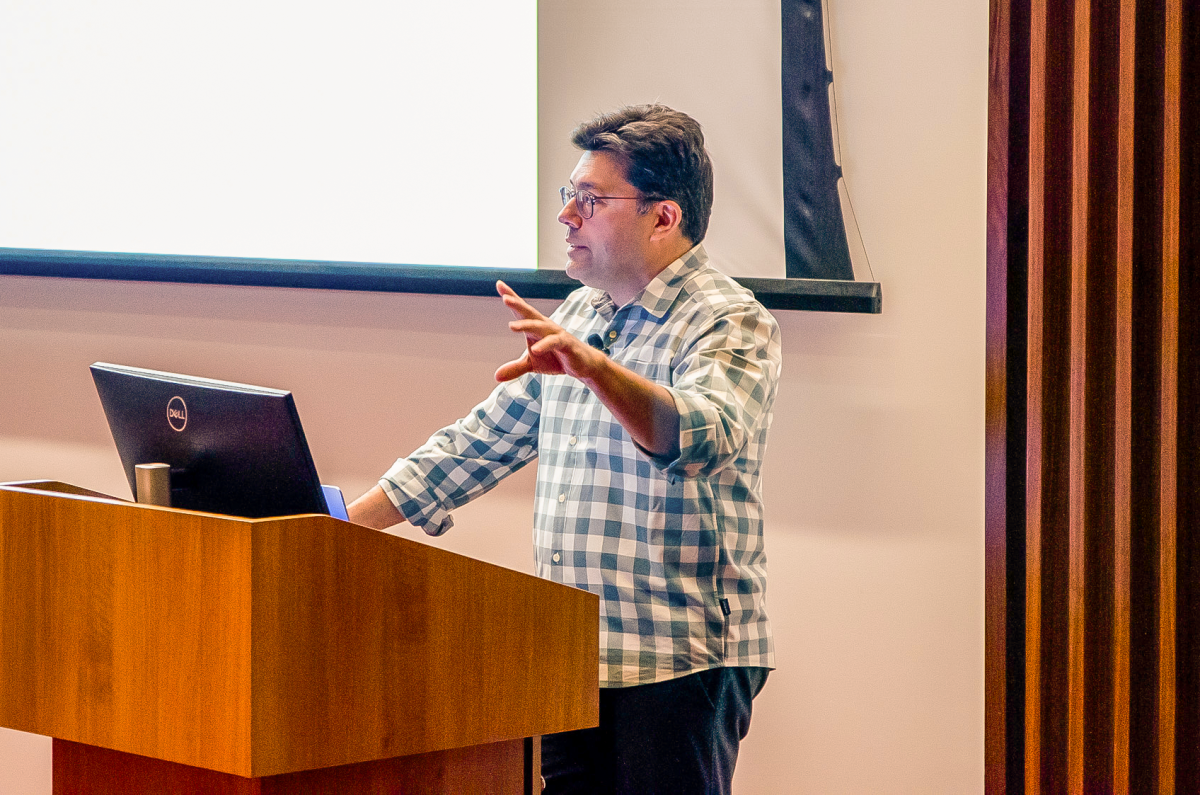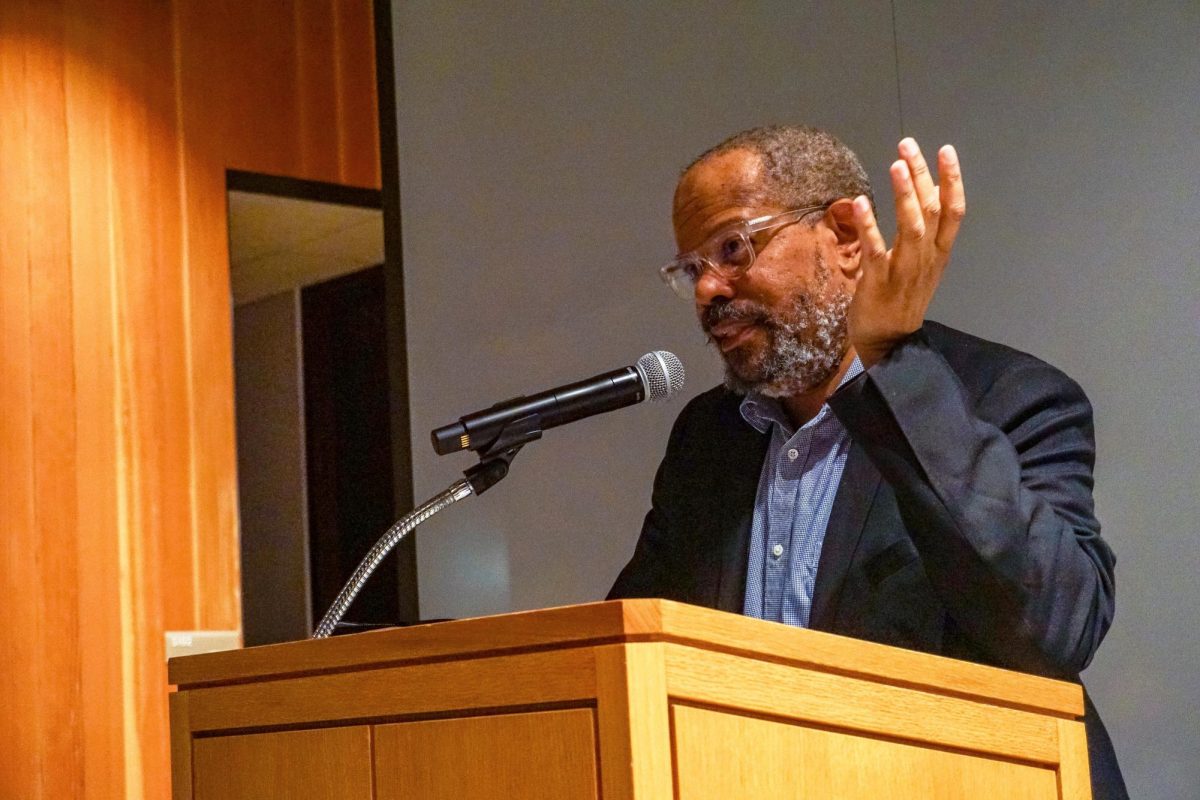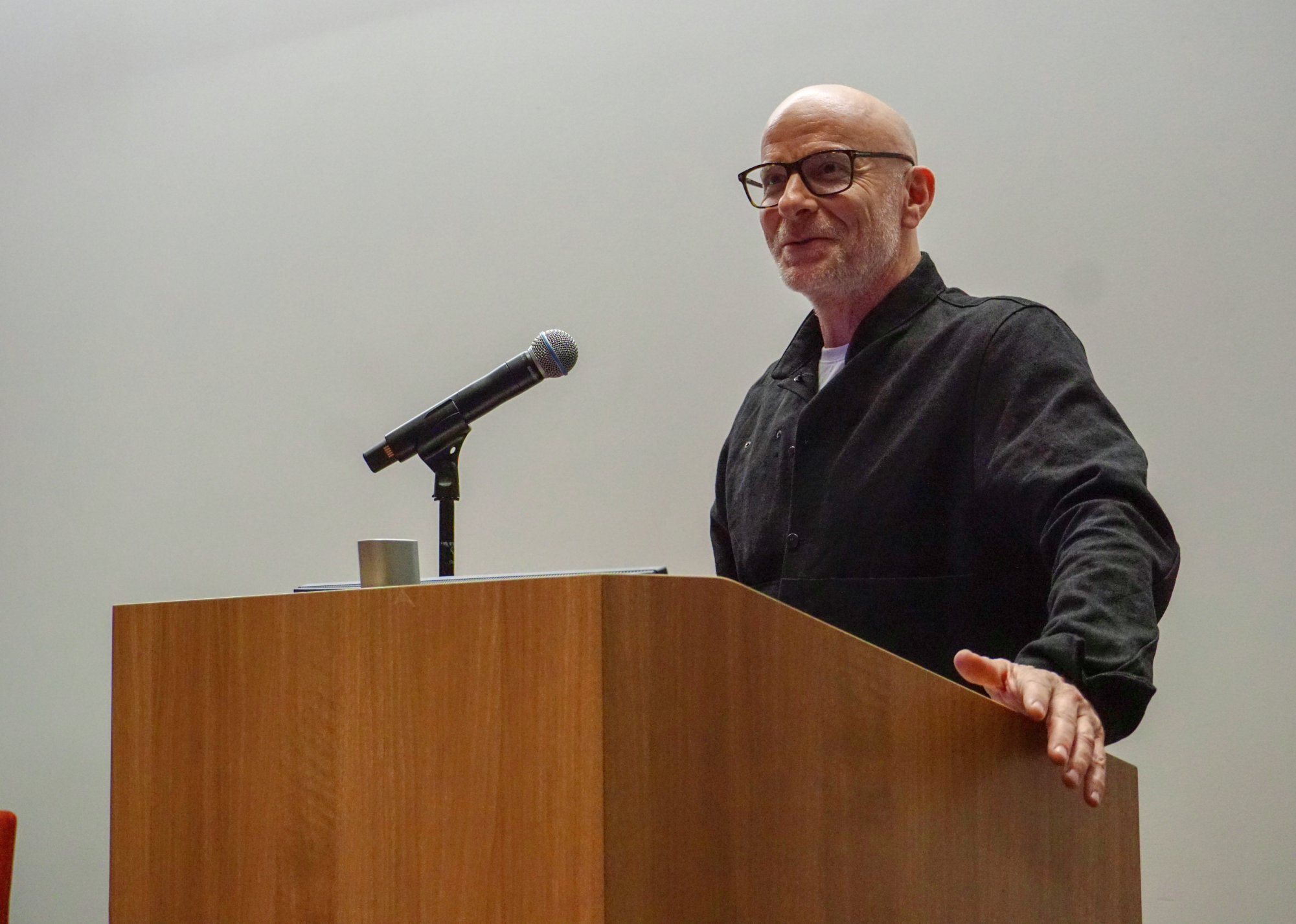
“Native life, broadly, has been construed only through the lens of tragedy,” said Dr. David Treuer during his Scholars’ Convocation talk on Thursday, March 26 about “Imagining Native Futures.”
Treuer, author of “The Heartbeat of Wounded Knee: Native America from 1890 to the Present,” spoke about his journey into non-fiction writing as well as the creative and media landscape that America currently has around Native people and Native life.
Drawing inspiration from his life as a member of the Ojibwe tribe and growing up on the Leech Lake Reservation in Northern Minnesota, Treuer described his journey into writing non-fiction as beginning from a place of misunderstanding.
In 2005, he was approached by a publisher who wanted him to write a book about life on Native reservations. After frustration with news coverage of a school shooting on the Red Lake Reservation in Minnesota, Treuer didn’t want to write about Native life as a tragedy. Despite this, the first iteration of his non-fiction novel “Rez Life,” was a self-described failure.
“It’s not enough to know the story you don’t want to tell,” said Treuer, “That’s a starting point. You have to know the story you want to tell.” After the first failed iteration and the death of his grandfather by suicide, he said he became lost.
The process of writing his grandfather’s eulogy made him reflect on what the purpose of a eulogy was and who it was for. He listed two things that a eulogy must do — be true and be of some use for the living. His grandfather spent nearly all of his life living in his home of Bena within Leech Lake in Minnesota.
This fact was one that some may view as tragic, according to Treuer, but to him this was a point of great plentitude.
“He spent 80 of his 83 years surrounded by the only people that mattered to him and he got to see them every day of his life,” Treuer said.
To Treuer, flipping the vision of his grandfather’s life as sad or isolating to being one of plentitude helped him return to Rez Life and finish it in the way it needed to be written.
“Reservations aren’t places where there’s less of everything. They are places where there’s more of everything. Much more,” said Treuer. “We think of them as places of deficit, but they’re really places of surplus. That was what I was missing when I tried to write the book the first time.”
Treuer said the media landscape around Native narratives could be described as a “narrative scarcity,” or having very little diversity in the types of narratives told.
This was true at the time of Rez Life’s publishing, whereas the modern landscape for Native narratives was described by Treuer as moving into “narrative plentitude.” When questioned further about why this may be, Treuer said it’s a question of representation.
“We’re barely visible in life, but we are hypervisible in the imagination because the fact is, America has been obsessed with us since the beginning,” Treuer said.