With the recent push of anti-LGBTQ+ legislation in Iowa, several students have expressed concerns over safety within the town of Grinnell.
Amidst these legislation pushes, Mayor Sam Cox said she doesn’t anticipate any substantial changes in the way city council runs, and the Grinnell chapter of the LGBTQ+ advocacy group PFLAG aims to establish a more visually welcoming environment for the community.
House Study Bill 664 has recently passed the Iowa House Judiciary Committee, making it eligible for debate on the Iowa House of Representatives floor.
Proposed by Governor Kim Reynolds, the bill would prevent city and local governments from enacting any law or ordinance that goes beyond established state law.
The passage of this bill would remove Grinnell’s ability to locally protect against potential discrimination, as one of 13 cities with current local civil rights protections for gender identity.
Similar bills positioned against gender identity have also recently passed the Iowa House Judiciary Committee, including House Study Bill 669 and House File 2121.
Morgan Smith `26, Trans at Grinnell (TAG) treasurer, said that while they love the state and want to imagine a future here, they find it difficult with the government’s current legislative agenda.
“They seem far more interested in legislating culture war issues that are only harmful to Iowans instead of doing anything to actually legislate or address the issues at hand,” they said.
This bill comes about six months after Senate File 418, which removed gender identity as a class protected against discrimination, took effect.
Nicole Rueda `27, Queer People of Color (QPOC) cabinet member, said a larger push into a more conservative Iowa worries them.
“I know if I were to be a student in the application process all over again, that’s something I would definitely consider is how safe is the state for me and my identity,” they said.
While Smith said they believe the College will maintain a welcoming environment for transgender people, they were unsure about how the environment in the town might shift, referring to reports of students being harassed last semester by individuals in trucks.
“I mean, when I was a first-year, there was never any thought that I’d be called a slur from a car window, but that has happened now to multiple of my friends since then,” Rueda said.
Rueda said that they felt the College has become less supportive and vocal in comparison to the start of Trump’s term about these legislation issues.
They said that initially, the College was more open to answer questions and was fairly responsive.
Rueda said they now feel the College is pulling back and acting like they cannot do anything to show support or clarity for things outside of the campus.
Ellen de Graffenreid, vice president of communications and marketing, wrote in an email to The S&B that the College closely monitors and carefully reads proposed legislation coming out of Des Moines.
She wrote that the College is positioned to identify recourse available to individuals and the institution and connect individuals to information and support.
These resources can be found on the Campus Forums SharePoint site.
“The College’s representatives think very carefully about what public statements add to the conversation and when they might have the most positive impact,” de Graffenreid wrote.
“While there are times that the College may choose to engage directly with lawmakers instead of making a public statement, Grinnell also fully upholds the rights of students, faculty and staff to make their voices heard as private citizens,” wrote de Graffenreid.
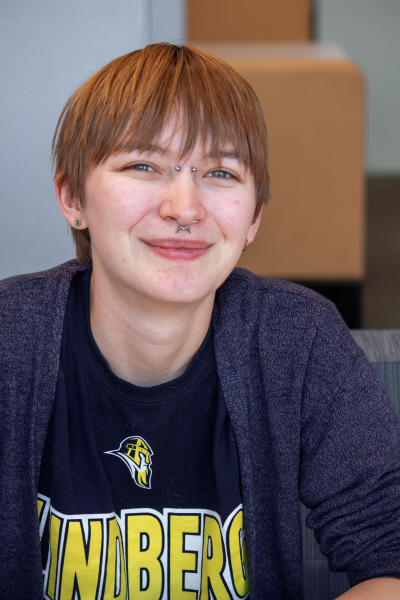
Both Smith and Kiera Rennick `26, TAG co-leader, have speculated that gender presentation relates to how they are treated in town. “The fact that I tend to present as if I could be a man probably helps,” Smith said. While Rennick has never felt uncomfortable walking around in the community, he said occasionally stares and shouts can occur. “Only times that have ever been truly a challenge for me in town is when I look really alternative,” Rennick said.
Students are also concerned about the precedent that the passage of these bills pose in Iowa.
In an email to The S&B, QPOC cabinet member Kenya Taylor `28 wrote, “This will affect everyone, and will be used to deny people their autonomy to their bodies and how their bodies are protected by the government. Because of this, this will also disproportionately affect queer people and people of color as this loss of protection will make queer women of color most vulnerable.”
Amidst the uncertainty of the future, action is happening both on-campus and off-campus.
On campus, Rennick said he hopes to assemble an event in March where students can discuss LGBTQ+ legislation.
He said he is also working on compiling a master list including accessible resources online, on-campus with Student Health and Wellness (SHAW) and the Stonewall Resource Center (SRC), and clinics in the greater Iowa community.
The PFLAG Grinnell/Poweshiek County chapter was established last spring by Monique Shore `90 and several other community members following the passage of Senate File 418.

The group started meeting in September, with the goal of making Grinnell feel safe for everyone.
PFLAG has joined the Grinnell Chamber of Commerce in creating a map of welcoming and supportive businesses, and of places with gender neutral bathrooms.
Shore finds public display of allyship essential after she heard from multiple people that they were nervous to stop to use the bathroom in Iowa while traveling to Grinnell.
“That is not what we want our state to be known as,” she said.
To go along with this initiative, they are working to create a front facing sticker or flag for businesses to show their allyship.
“The idea being, anybody coming, whether it’s a student, whether it’s a prospective student, whether it’s a new resident, they would be able to find that, okay, this actually is a place where the individual businesses on their private property that the state can’t do anything about. I’m going to feel safe there,” Shore said.
While the city legislation in the future might change, Cox said she felt that the support for the LGBTQ+ community wouldn’t shift over the removal of anything written.
“I feel strongly about the fact that the support is here, even if it’s not something that’s written in black and white, even if it’s not something that the state of Iowa is saying is no longer a protected area. I think we are still going to do our utmost to be supportive in any and every way,” Cox said.
Cox said that concerned students should communicate needs to the local council.
“I think we love everybody and we’re accepting of everybody and we want to be there for everybody,” she said. “So I just think if you have any problems or issues, I think you definitely just need to reach out.”