

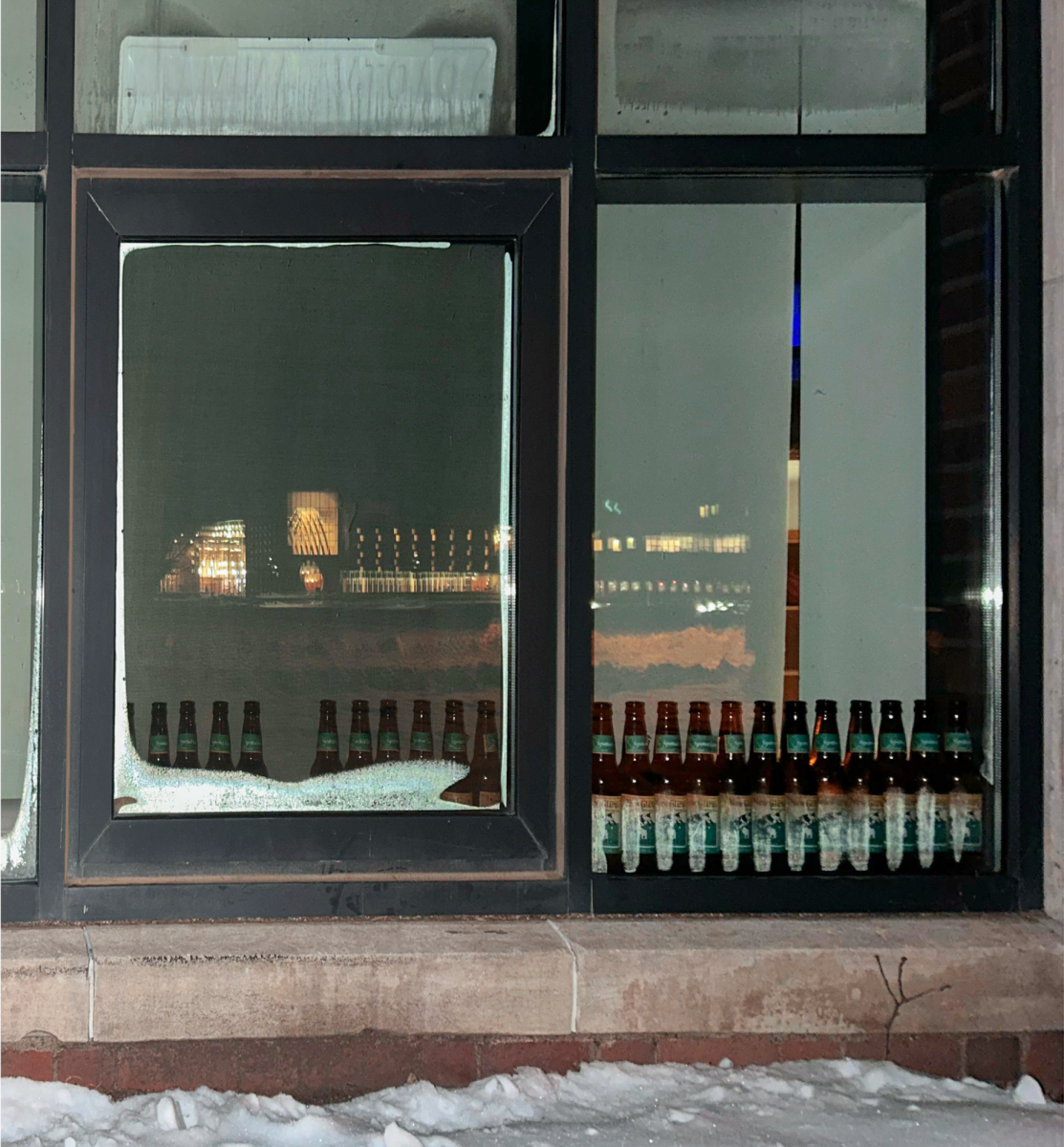
The S&B conducted an informal poll asking students, “Does Grinnell handle substance use culture well?” Of 87 students polled, 20 said yes, 61 said no, and six responded “I don’t know.”
Grinnell College currently relies on unpaid student volunteers, community advisors (CAs) and off-campus house residents to act as intermediaries between students and the administration to enforce harm reduction around substance use. This strategy has led to a variety of concerns about the role the College and its students play in self-governance.
Jadyn Al-Fatah `27, who served as a Community Advisor of Younker Hall’s basement floor in the 2024-25 academic year, said he was not trained at all as a CA to deal with emergencies surrounding substance and alcohol use.
In the case of emergencies in on-campus dorms, CAs can often be the first to respond.
In spring 2025, a resident on Al-Fatah’s floor died in his room on a Saturday evening when Al-Fatah was not on campus. This student’s cause of death has not been released publicly.
Al-Fatah said he was first informed of this student’s passing only after he had returned later that evening — by fellow students.
“I’m gonna say that there’s always room for improvement,” said Al-Fatah. “Not necessarily that [administration is] doing a bad job, but not to say that it’s the best job either, because we saw what happened recently, with [the student] passing away in my hall, and there not being any resources around campus to actually stop those kinds of things from happening.”
James Shropshire, director of the Department of Campus Safety, echoed a different sentiment.
“My impression of our crisis communications and our communication with the students is we do a very good job,” he said. “I’ve worked at other institutions in comparison … and I think that the systems that we have set up to support the students are very good and very thoughtful, with a focus on well being and on harm reduction.”
A vibrant social scene requires supportive measures
The College is known for its “work hard, play hard” mentality. The August 2025 of The Princeton Review’s “The Best 391 Colleges” ranks Grinnell College ninth out of the top 25 colleges for hard liquor consumption. This ranking was based on students’ answers to a Likert scale survey question, “How widely is hard liquor used at your school?”
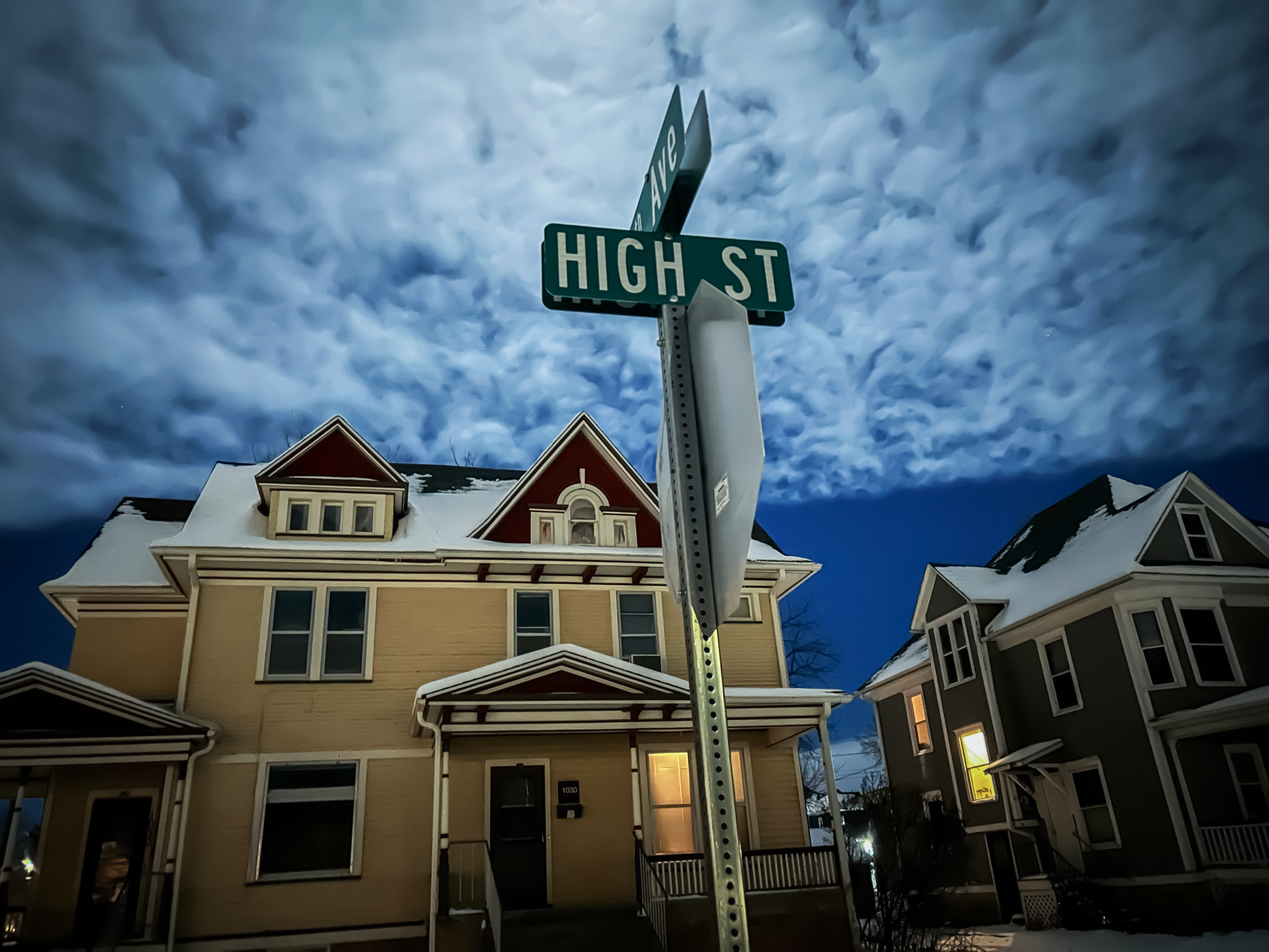
Some of Grinnell’s key traditions include 10/10, where students drink and party, traveling from house to house on High Street during a weekend in October, Relays, a spring festivity where students form teams to play lawn games and Block Party, where High Street is closed off on the last day of the spring semester and there are games, music, beer and food trucks.
It is currently illegal in Iowa to possess controlled substances like methamphetamine and cocaine, as well as recreational marijuana. On most weekends, when events occur at the Harris Center or Gardner Lounge in Main Hall, the pungent smell of marijuana wafts through the loggias and the shouts of intoxicated students slinging bottles of clear, metallic-smelling alcohol echo.
For her first two years at Grinnell, Grace Cuddihy `26 served on the Student Government Association (SGA) as the Vice President of Academic Affairs. She discovered from the Office of Analytics and Institutional Research’s 2019 Thriving Report that a sense of belonging and community is the most reliable predictor of someone being happy at Grinnell.
From 2008 to 2019, Jen Jacobsen `95 co-chaired the Harm Reduction Committee as the College’s first wellness coordinator, following College President Russell Osgood’s initiation of a task force on alcohol and other drugs. The committee was comprised of students, faculty and staff dedicated to making recommendations to the President’s Office surrounding substance use policies.
Andi Tracy `99, associate dean of the College and associate professor of psychology, served on the committee for 10 years. Tracy said that while the framework of harm reduction originated at the University of Washington, Grinnell’s approach remained unique, as other institutions usually file these issues under Alcohol and Other Drugs Prevention Programs.
“We don’t want students who choose not to drink alcohol for whatever reason to feel excluded from any number of campus events, but we also want to empower students with the knowledge, skills and environment to make the decisions they want to make, and not feel pressured to follow a script of how college students drink, how college students socialize, how college students party,” Jacobsen said.
Jacobsen began holding sessions for off-campus party hosts on creating environments that reduce risk.
“The layers of community care on campus are different than the layers of community care off campus,” Jacobsen said. “For the life of me, I can’t believe Grinnell has never had a student get hit by a car crossing Sixth [Avenue]. It is a highway, and when I think about drunk students crossing the highway to come back to campus, that just feels so dangerous.”
There was a four year gap between Jacobsen’s departure in 2019 and the arrival of Tim Hammond, who previously held the positions of associate dean of Health and Wellness and director of Student Health Promotion, but left his position at the college on Nov. 19. During this time, the harm reduction committee ceased activities — a vacuum in which, Tracy said, shifts in campus culture were left unaddressed.
For instance, during the COVID-19 lockdowns, the campus became entirely substance-free, said Maure Smith-Benanti, assistant vice president of Student Affairs and dean of Inclusive Initiatives. Once students returned, there was a notable decrease in demand for parties and for alcohol in common and event spaces. There was less pressure on students to monitor each other’s behavior.
10/10 moved off campus nearly ten years ago, aftermath still felt by students
In 2016, a decision was made by College President Raynard Kington that 10/10, which traditionally saw students move from lounge to lounge of campus dorms, had to be moved off campus.
President Kington implemented the Alcohol Agreement. Students had to request to serve alcohol at campus events, provide wristbands identifying students aged 21 and above and have a trained server measure and pour out alcoholic drinks in front of students.
When 10/10 was moved off campus in 2016, students protested by holding a mock-funeral for self-gov. Despite the criticisms surrounding Kington’s decision, students have continued to organize 10/10 over the years. Cuddihy has organized 10/10 for the past two years, alongside Hayden Suarez-Davis `25, Graham Ward `25 and Conrad Dahm `26.
Cuddihy said that for many college students, events like 10/10 are their first real experience with binge drinking, and are “therefore rife with a lot of difficulty and unsafety.”
The 10/10 safety dogs, student volunteers who sit at the street crossing between Mears Cottage and High Street, have proven integral in ensuring the safety of partygoers. They pass out water, pizza and medical supplies into the early hours of the morning.
Ben Newhouse, associate vice president of student affairs and dean of students, said the College had been responsible for purchasing the safety dogs’ supplies. In an email to The S&B, Newhouse wrote that in recognition of student efforts, $20,000 in institutional funds were allocated this past budget cycle to harm reduction efforts across multiple events.
“It’s a very easy place for me to put financial resources in support of things that will help people drink less … and hopefully mitigate some of the high risk behavior,” said Newhouse, who added that it was a moral responsibility for him to support off-campus events, despite there being no legal imperative for College administrators to do so.
In fall 2024, Cuddihy said that only one person was hospitalized at 10/10. The Department of Campus Safety praised organizers for one of the most efficient 10/10 events in the past decade. This fall, Dahm said there were 0 hospitalizations and an expanded safety dog force that included a tent outside Mears with food and water all day.
Dahm said that he was grateful for the College’s efforts in supporting such events. However, he said, “There also is, at times, a feeling that you’re relying upon students, where there might not always be somebody.”
This issue is not confined to off-campus parties. On campus, Cuddihy said that responsibility falls on the shoulders of student organizations who organize Harrises and Gardners.
“We’ve had multiple incidents where people have been assaulted. Extreme vandalism has happened, and it has been very difficult,” Cuddihy said, referring to the destruction of Main Hall’s laundry room during Birding Club’s Lingerie Ball in Spring 2024.
Additionally, if an emergency occurs at an off-campus party, 911 will have to be called.
James Shropshire, director of Campus Safety, said that while it was their “obligation to respond to a call for help,” they could not respond to off-campus emergencies as a proprietary security department. Campus Safety officers are first-aid trained, but they are unsworn and do not possess law enforcement authority.
“We are not outfitted, nor is it our mandate to be,” Shropshire said. “We’re not a police department. We’re not a fire unit. We’re not an ambulance unit … There are certain things that we’re equipped to deal with, and others that we are not equipped to deal with.”
Dahm, however, said that the financial and legal repercussions of calling 911, in contrast to Campus Safety, may make students hesitant to seek help.
“You’re always going to have students that are going to drink too much, and they don’t know their limits,” he said. “By making it so hard to have these events … you’re almost, in a way, making these events unsafe.”
Under the Alcohol and Other Drugs Policy, a medical amnesty clause protects students from facing disciplinary action by the College if they call for help while under the influence. Shropshire said that by calling Campus Safety, the department could contact the appropriate agency to respond to the emergency. He maintained that if calling 911 was a barrier, 911 can also be texted in all 99 counties in Iowa.
Harm reduction, not harm elimination
The College’s Annual Security and Fire Safety Report presents trends from the past three years on criminal offences, arrests and disciplinary referrals that Campus Safety have responded to. The numbers are compiled from reports made directly to Campus Safety and include cases that have not officially been reported to police.
Based on the 2025 report, on campus property, Campus Safety has only seen one arrest for drug abuse violations between 2022 and 2024. They responded to six disciplinary referrals for such violations in 2022, three in 2023 and four in 2024. As for liquor law violations, Campus Safety did not respond to any arrests on campus property from 2022 to 2024. However, there is an upwards trend in involvement in disciplinary referrals for such violations from 14 in 2022 to 33 in 2023 and 32 in 2024.
In February 2024, Grinnell College participated in the National College Health Assessment. The spring 2024 summary by the American College Health Association reported that 76.6 percent of students surveyed nationwide reported consuming four or more alcoholic drinks in a social setting.
Dean for Health and Wellness Beth Perlman said that Grinnell-specific results were not publicly available. Overall, the American College Health Association reported that less than 18 percent of participants displayed a moderate risk use of tobacco, nicotine products and cannabis, and 9.4 percent of participants displayed moderate risk for alcohol use. Roughly one percent displayed high risk use for the aforementioned substances.
“Grinnell lines up with the national data,” said Hammond, who was interviewed by The S&B before his departure from the College. “The one place that we do stand out slightly, for the most part, is there is a higher use of drugs at Grinnell than the national average.”
Most of the cases in the Annual Security and Fire Safety Report had taken place at on-campus student housing. In 2024, three of the four drug abuse violation referrals and 30 of the 32 liquor law violation referrals arose from on-campus housing.
When Hammond took over from Jacobsen, he said he wanted to ensure students had access to accurate information and wellbeing tools. He pointed to Cannabis eCHECKUP TO GO, an interactive online tool used by many colleges. It claims to provide “accurate and personalized” feedback about students’ individual cannabis and alcohol use and suggests local resources.
Newhouse said the College does acknowledge that “for some of our students, alcohol and or other drugs may be a part of their experience,” and that their goal was to collaborate with student leaders to minimize the negative impacts of these substances.
“I’m not there at 3 a.m. on a Saturday morning, students are, and so they’re shapers of the culture,” he said. “I would say the easy route is to say we’re not a part of it and put our head in the sand. And that doesn’t feel right to me.”
For Hammond, the priority is to make better use of already-available tools.
“If we change community behavior, that’s going to be our greatest impact, as opposed to trying to convince individuals to change behavior on their own,” said Hammond. “I think there are plenty of students who aren’t aware of the resources that they have related to these issues.”
In an email to The S&B, Perlman said that following Hammond’s departure, SHAW was “currently exploring various structural options for Health Promotion that are aligned with SHAW’s current and evolving vision of community care and healing.”
The dissolution of ACESS
All Campus Events Student Safety (ACESS) was a peer-led frontline of safety organized through SGA that staffed all Harris and Gardner parties and concerts that started in 2007. In fall 2022, ACESS was dissolved after the predominantly student-of-color staff cited equity and ethics concerns that made them unable to participate in Harris and Gardner events.
“I don’t think that ACESS is a perfect system,” Cuddihy said. “But at the same time, having people who are paid to be there, and having people who have gone through a more robust training than volunteers have, would be more successful.”
“The lesser of all evils is a role like ACESS, where you have students who other students are familiar with and probably trust more than a third party or Campus Safety, who are given good training and given good supervision, and feel empowered to help out their fellow students,” Suarez-Davis said. “ACESS essentially allowed [hosts] to focus on the hosting aspect of it and not spend their time worrying about the safety of students.”
Students respond to College’s approach
Smith-Benanti suggested that harm reduction could be as simple as encouraging each other to drink water between alcoholic drinks or providing trash bags at party houses for people to vomit in.
Dahm also voiced support for a similar harm reduction model centering active bystanderism. Yet, he said, the expectations for students to take charge of their peers’ health is a weaponization of self-governance — an effort by college administrators to “absolve themselves of any liability.”
“It’s self-gov when it’s convenient for the College, but it’s not self-gov when it’s not convenient for them,” said Dahm. “Self-gov is not a group of students who have to take care of somebody who’s having alcohol poisoning, and having to call the ambulance and wait for them there when Campus Safety is so close … but they can’t drive those five seconds to pick that person up.
“Are we that obsessed with the rules and the procedures that if [Campus Safety] can see somebody having an emergency, where they can help, they can’t drive to come get them?” he added.
Parikshit Roychowdhury `26 is in favor of moving 10/10 back on campus. “Campus Safety could literally be there in the moment,” he said. “You could have RLCs involved. You could have CAs working that are paid for that and are trained who can be on call and present.”
Like Newhouse, he pointed to the structure of Block Party as a model. “There is alcohol available that everybody is aware of … That’s the set up we need, even for traditions,” Roychowdhury said.
Dahm said that even after being certified in first aid and cardiopulmonary resuscitation, there had still been many occasions where he did not know how to fully respond to an emergency.
“Part of paying the extraordinary tuition fees that Grinnell charges is that you receive services, and it seems like at times, we’re not receiving those services,” said Dahm. “I don’t think it’s that much to ask to have some paid sober volunteers at a Harris or a Gardner or at events like this, so you can ensure that the students who are doing this work are fairly compensated.”
“Whenever any paraphernalia is involved, it really shouldn’t be anything you’re dealing with as students, especially if police or very severe health conditions are involved,” said Al-Fatah.
Campus culture going forward
Al-Fatah is studying abroad this semester. He will be returning to campus in the spring, where he will once again be a CA, on Younker Hall’s first floor. This time, he said, he wants to be prepared with resources to keep his residents safe.
“If it needs to start somewhere, it can start with the students, if the admin doesn’t really want to put their foot down,” said Al-Fatah.
Newhouse said that he is already in conversations with students about the possibility of bringing back on-campus events serving alcohol.
Amidst a current administrative shift away from off-campus living, Cuddihy said, “This is a reality that’s going to need to be confronted.”
“Campus culture is only as strong as we make it,” said Dahm. “It takes all of us, it takes everybody in the Grinnell community — students, administrators, everybody.”
Maure Smith-Benanti is the supervisor of The S&B. Smith-Benanti is not involved in the writing or editing of any articles of The S&B.
Editor’s note: This article previously named the student who died on campus during the spring 2025 semester. The intent of including this example was to demonstrate how CAs, who are often the first to respond in emergency situations, are affected by situations like these. However, including the name of this student had the unintentional effect of centering the story around this student’s specific experience, instead of the broader experience of CAs. As a result, The S&B has decided to remove the name of the student from the article. Updated 12/9/25.