During the week of Oct. 6, Maria Pinto, who writes and educates about mycology, taught Grinnell how to myceliate — a way of writing and living offered by the mycophile, on how we might braid ourselves into the world, how to speculate and how to try.
Pinto’s debut book of lyric essays “Fearless, Sleepless, Deathless: What Fungi Taught Me about Nourishment, Poison, Ecology, Hidden Histories, Zombies, and Black Survival” was published on Oct. 28 through the University of North Carolina Press. These essays about fungi imitate the speculative nature of mycelium, the threads of fungi, according to the introduction. Pinto writes, “To essay — literally, ‘to try’ — is, in other words, to myceliate.”
She was the inaugural Conard Environmental Research Area (CERA) writer-in-residence. For the week, Pinto lived in the recently renovated two-bedroom apartment above Graham Lab, the aquatic geochemistry lab in CERA.
From 1982 to 2018, a CERA caretaker occupied the residence, but this residence had been largely unoccupied since then. Her residence was sponsored by Writers@Grinnell (W@G), the environmental studies concentration, the Center for Prairie Studies and CERA.
On Wed., Oct. 8, she ran a creative workshop entitled “The Climate Collagist: Writing Hybrid Work to Meet Our Times” in the Joe Rosenfield `25 Center (JRC) room 209 in the afternoon. On Thurs., Oct. 9, she did a W@G reading in JRC room 101. On Fri., Oct. 10, she led around 50 people for a fall mushroom walk around the south side of CERA. Those on the walk also went birding with Hai-Dang Phan, director of W@G and associate professor of English, and collected native prairie seed at sunset with Jake Hill, CERA horticulturalist.
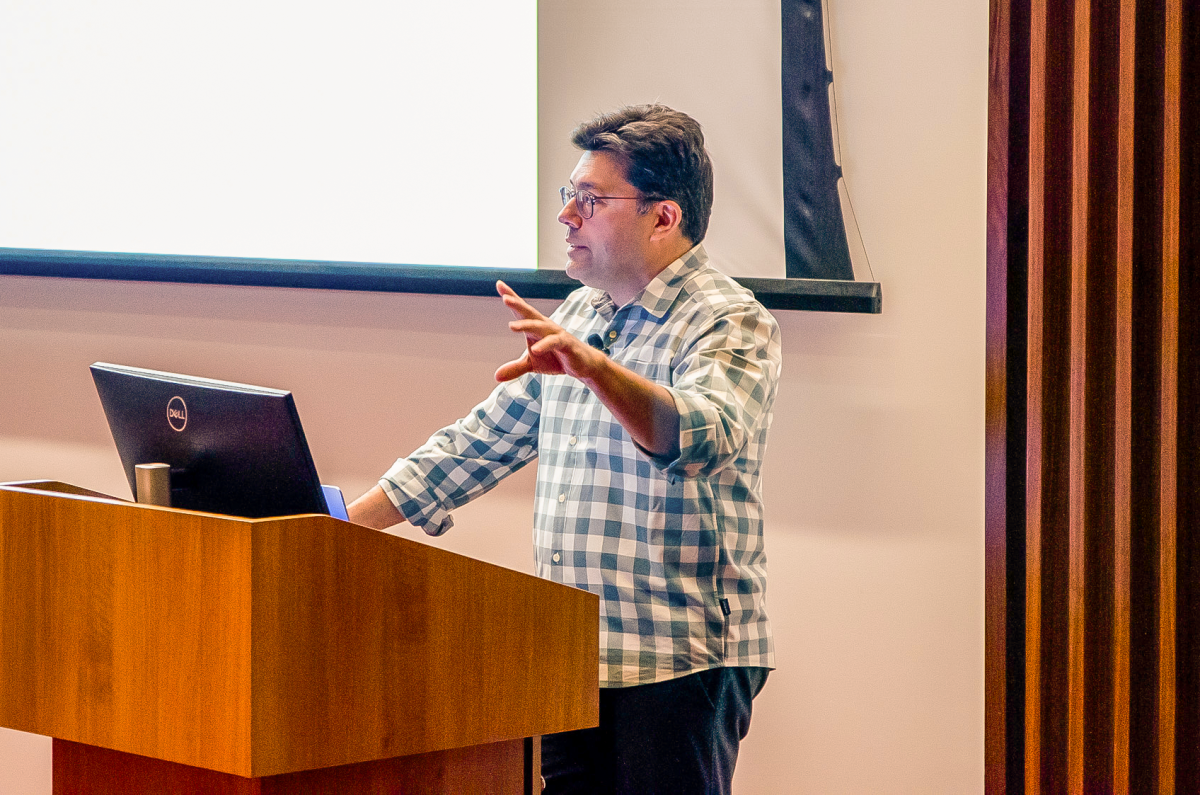
In Pinto’s creative workshop about hybrid writing forms — lyric essay, prose poetry, erasure poetry etc. — on Wednesday, she used mycelium to metaphorize how writers might write during unprecedented times.
She said, “Mycelium is also a living weave, pulling together that which at first glance, appears disparate.”
Pinto said that she comes back to this last line of a journal article on the evolutionary biology of lichen symbiosis — “What is the reciprocity that stabilizes it?”
Pinto said that she wrote it over and over again. This is a question that a scientist has posed, but Pinto said she thinks writers may want to ask themselves as well in terms of bringing in new elements to a work in progress, like integrating poetry into prose.
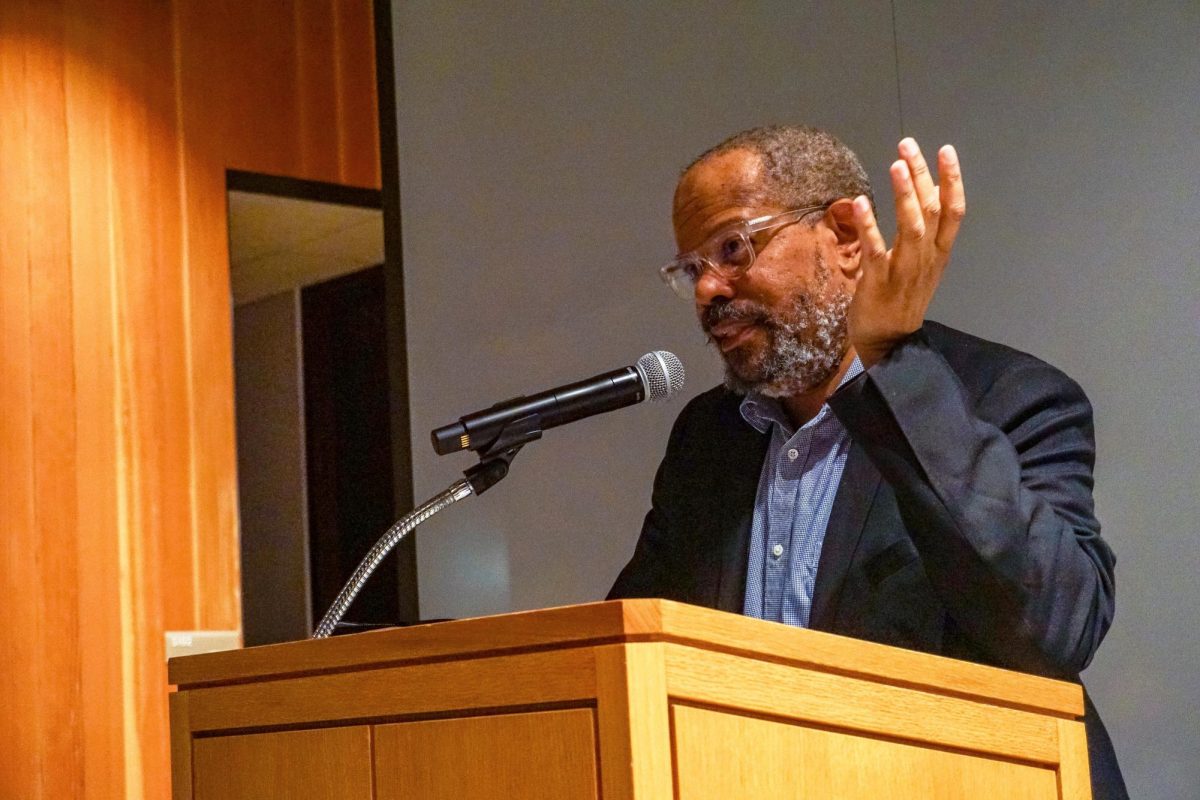
At the Thursday W@G evening reading, Pinto shared three excerpts from her book. The first excerpt, for example, discussed Pinto’s hunt for junjo, a Jamaican Patwah word for mushroom, and her attempt to connect her mycophilia to her Jamaican American ancestry.
Phan teased the joint birding and mushroom walk with the jingle “looking up, looking down, looking all around.” Likewise, in an S&B article published Oct. 8, Pinto said about looking for mushrooms, “You can look down. You can look at eye level because they grow on tree bark. You can look up at the canopies sometimes. You can really look anywhere.”