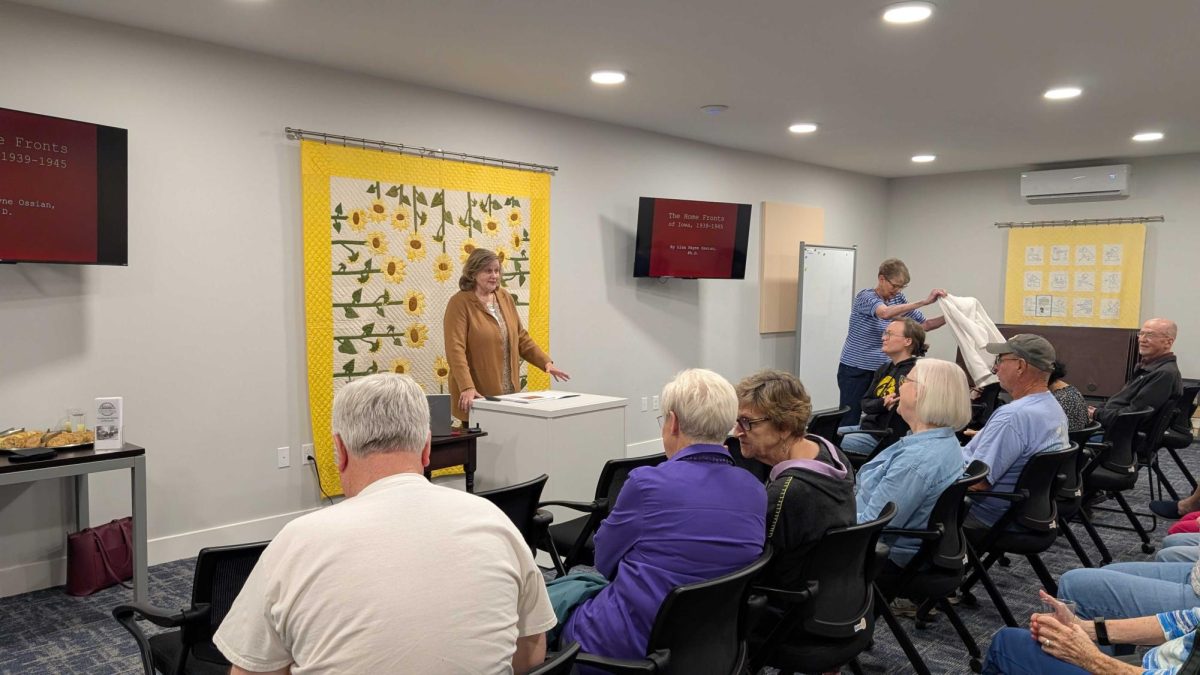
In honor of Indigenous Peoples Day, on-campus representatives tabled on Indigenous-focused initiatives available to students and faculty. The teach-in event focused on many aspects of Indigenous culture and community on Grinnell College’s campus.
There were a total of about 20 participants, half of which were students. Each table spotlighted various programs and courses available to those interested in gaining knowledge about the Indigenous history, culture and people in Grinnell and surrounding areas. These tables included the Center for Humanities Indigenous Knowledge and Climate Change, the American Studies curriculum as Indigenous Studies and the Ecological Restoration and Indigenous Ecological Knowledge, just to name a few.
One table also had books that either looked into Indigenous culture, people or studies, or were written by Indigenous authors. Most attendees participated in a raffle through the event and over eight people received a book.
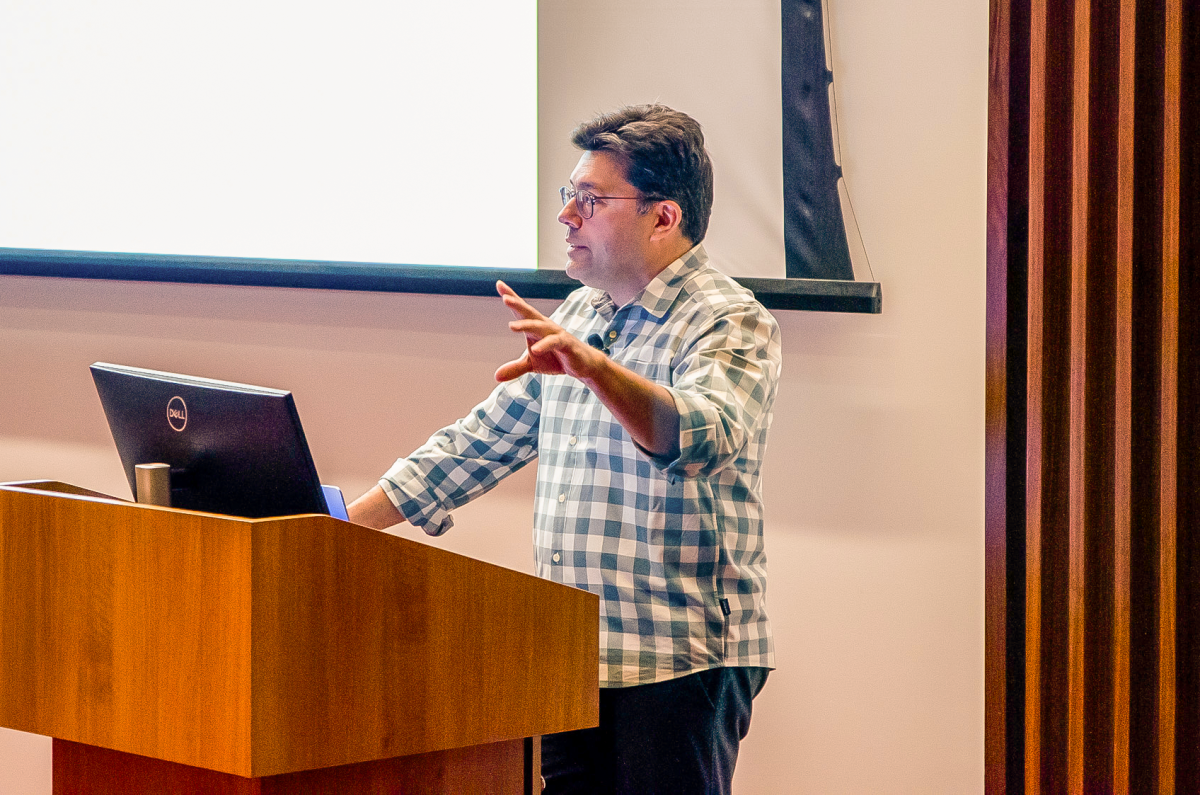
Before the table walk started, Tony Perman, professor of music, said that he had dinner with four Indigenous scholars last year. “They were all just sharing their own perspective on indigenous wisdom with their own communities,” he said. “I think there was this deeper shared truth that they could all identify … and then none of it was present at Grinnell College, except in these corners and nooks and crannies that are really well represented in this room. I think everybody in this room is trying to bring those corners and nooks and crannies to the center of what we’re doing.”
Indigenous People, Knowledge and Studies was the term identified and used in reference to the programs and courses featured. “You might not know Indigenous knowledge, or Indigenous peoples, or Indigenous studies, and it doesn’t really matter,” Perman said. “You should ask, but maybe don’t worry about the answer. I think the most important part is to listen to other people, how they think about it, if you’re not sure where to start.”
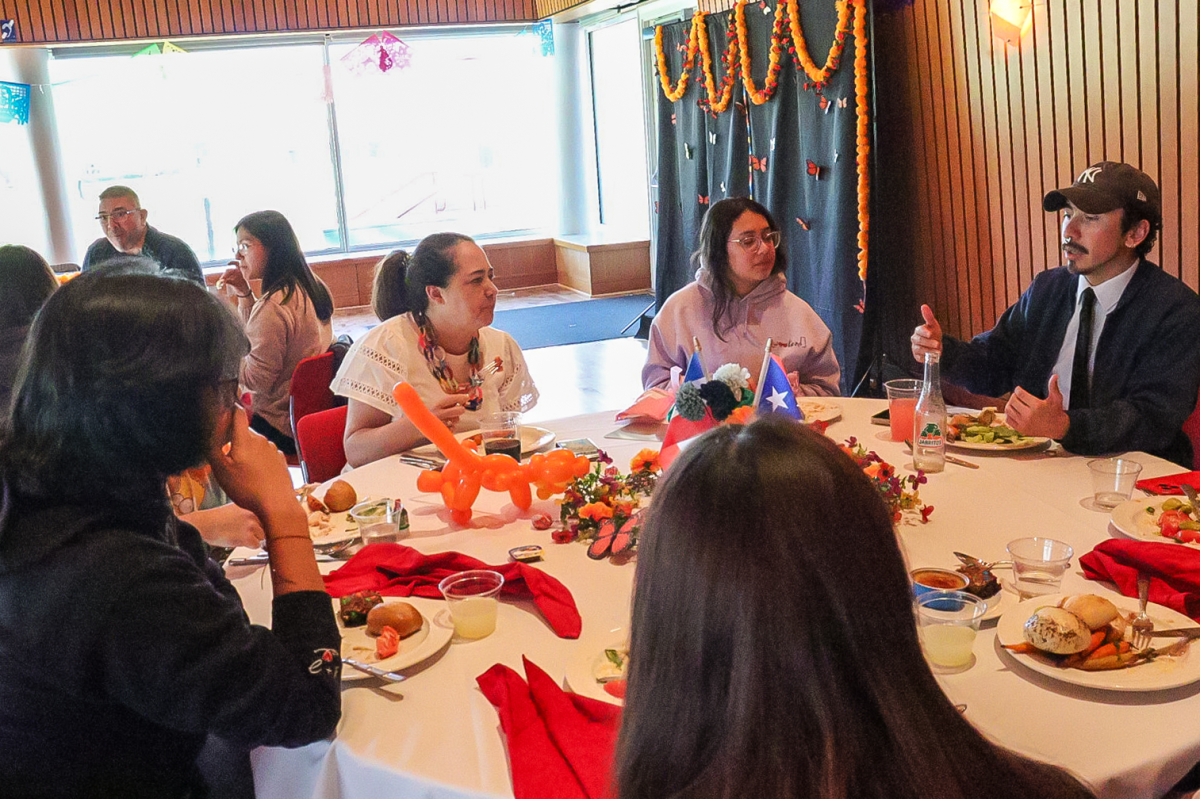
With many infographics of Indigenous programs on campus and posters of indigenous events, the room was filled with discussion and laughter. Event participants engaged in discussion about various places, courses and programs in Grinnell and how they connect to Indigenous people.
One of the tables focused on the Indigenous connections involved with the Center for Prairie Studies, represented by Cori Jakubiak, Director of the Center for Prairie Studies. Associate Dean & Director of Civic Education and Innovation Susan Sanning, who also came to this table, said that when it comes to exploring Indigenous culture and learning about it, growth is more important than hurrying through the information.
She said that the idea of hurrying, in her opinion, is an important variable to keep in mind when being challenged while learning Indigenous culture. “It’s very intentional, not worried about competing with someone, not worried about being intimidated or even scared.”

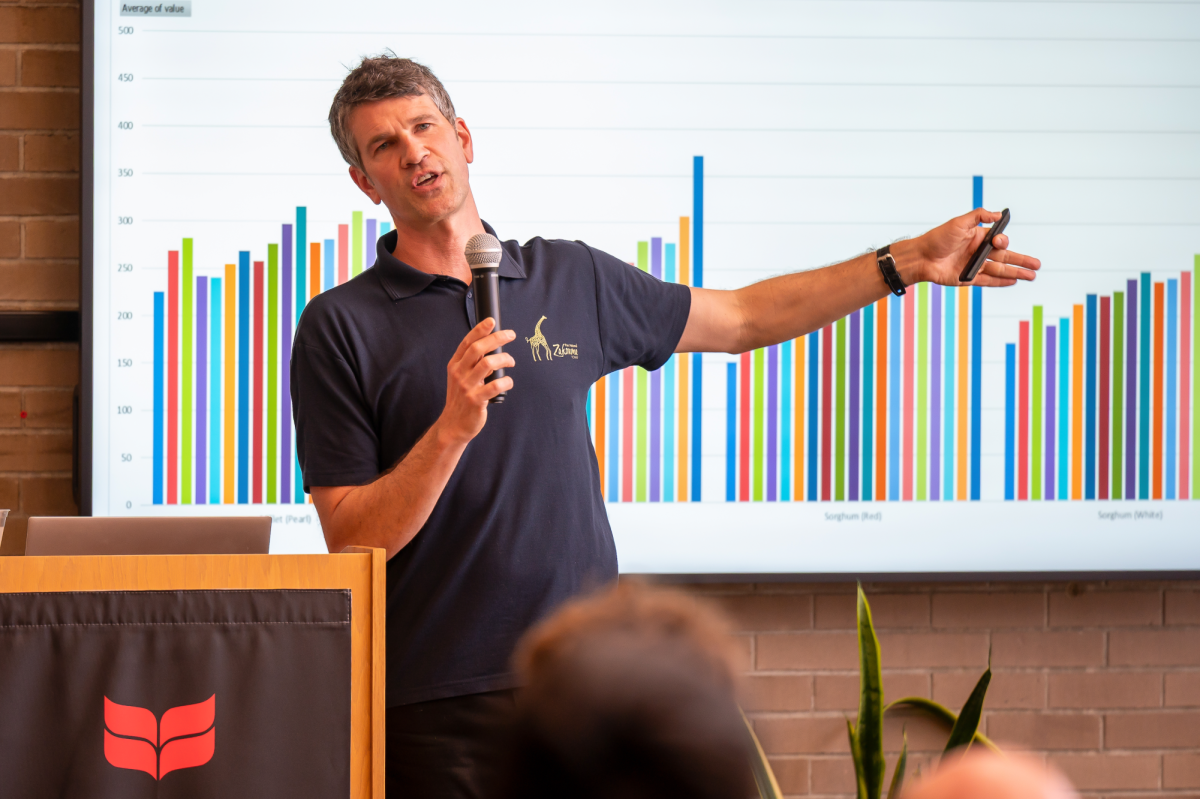
At a table on ecological restoration, Vincent Eckhart, professor of biology said, “One of the things that biologists do is try to restore ecological communities. The historical state or sustainable condition [for ecosystems] — that’s a place where there’s a lot to be learned from people who live for a long time in this place.”
“There is a movement in conservation biology that has to do with navigating the nexus between global scale supposedly ‘applicable anywhere’ western science on the local level,” he said.
Eckhart said that in his work, he studies geographic contributions. He said that Indigenous knowledge from an ecosystem’s history is a necessary component in understanding the ecosystem.
At one table, photo historian and assistant professor of American Studies Jordan Reznick pitched his new class for the spring, The Native Lens, a cross-listed class centered on analyzing both black and white and color photography that focuses on the Indigenous and Native American peoples pictured in them. Reznick said, “Native people use photography, cinema, television, as a way to fight colonization, fight colonial stereotypes, to make lots of jokes and to represent themselves as a form of Indigenous self-expression.”
The table displayed a series of photographs by notable Indigenous and Native American artists expressing their culture through various visual art techniques like color, background distortion and clothing.
As Eckhart said, “The inherent value here is diversity, and I don’t mean just human diversity, or biodiversity, I mean lots of different ways of thinking. And I feel like … in science, good ideas replace bad ones but the bad ones shouldn’t ruin the professions. They’re part of our history.”