“There’s a diversity of voices in Grinnell, and we all bring something to the conversation,” said Professor of Spanish Mirzam Cristina Pérez. Her statement captures the spirit of Mainframe’s new special exhibition, which aims to showcase art by rural Iowa artists, actively working to bridge the rural-urban cultural divide.
Driving along Keosauqua Way in Des Moines, IA, it’s hard to miss the brightly colorful building of Mainframe Studio. According to Mainframe Studio’s website, the studio’s mission “is to provide arts affordable workspace and foster creative communities in central Iowa.” Each month, the studio curates a gallery of works from contributing artists that spans all floors of the building. In addition to this main exhibition, however, Mainframe Studio also partnered with the Grinnell Area Arts Council for the month of October to feature the works of 16 artists from Grinnell across a variety of mediums.
“There’s a lot of people who are doing really great work out in rural Iowa, and this was a perfect opportunity to be able to show that off in the big city,” said Monica St. Angelo, executive director of the Grinnell Area Arts Council. This special section on the studio’s third floor aims to allow rural creativity to reach a city audience and to better connect rural artists with the broader Iowan art scene. On Oct. 3, opening night, Mainframe Studio drew in around 1,600 visitors. “More people go through Mainframe Studios on a First Friday than might visit our gallery in a whole year,” said St. Angelo.
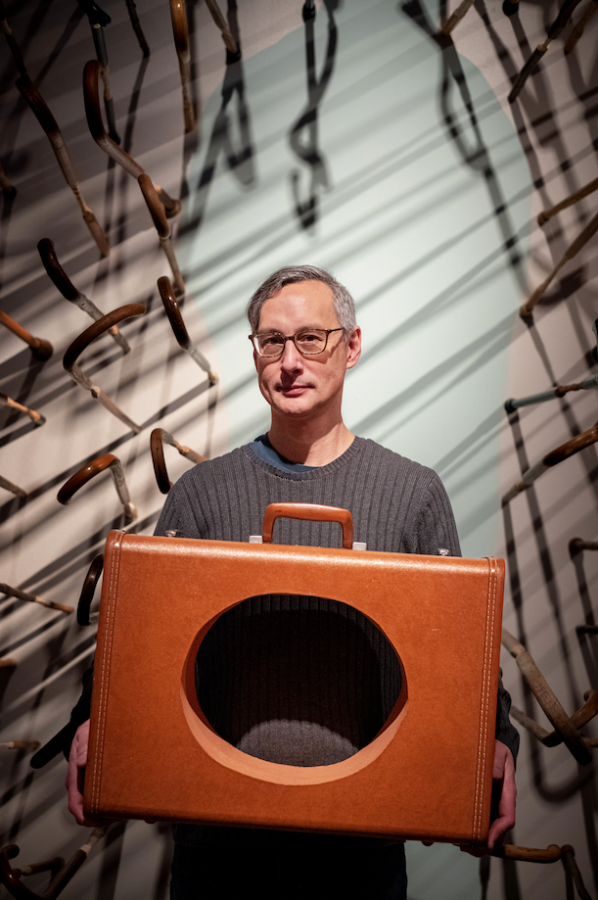
Erik Simpson, professor of English, displayed his book art titled “Two Books.” He described his work as “books that are conceptually about the form of the book.” Although Simpson has shown his work in smaller community spaces prior, he said this was a different experience.
“Part of what’s just so wonderful about the art center in Grinnell, the Makerspace and the Mainframe Studio is that they give enough space for art of different kinds to work,” he said.
Many of the artists from Grinnell balance artmaking while maintaining their full-time professions, such as teaching, researching and community work. One of those artists is Pérez. For her, art began as a personal practice, but it gradually grew into a central part of her life.
“For many years, I had them very separate. I had my art practice, which was kind of like my private life, and then I had my teaching of Spanish literature.” Pérez said. “But in the last two or three years … I am moving them together because it just seems like the natural thing to do.”
“For example, I taught a class in the Spanish apartment a year ago on environmental art in Latin America and Latino communities, in which the students were making art as part of their assignments,” she said. “So, I am finally able to join these two passions together.”
Her displayed work at the museum is titled “Queens,” which she describes as “formless forms” — a sculpture created by hardening fabric into a flowy shape that balances structure and playfulness.
While Pérez had taken several years to understand how to blend her artistic passion with her professional work, Professor Pascal Lafontant of biology and biological chemistry, another featured artist in the gallery, has a slightly different take on his artistic practice.
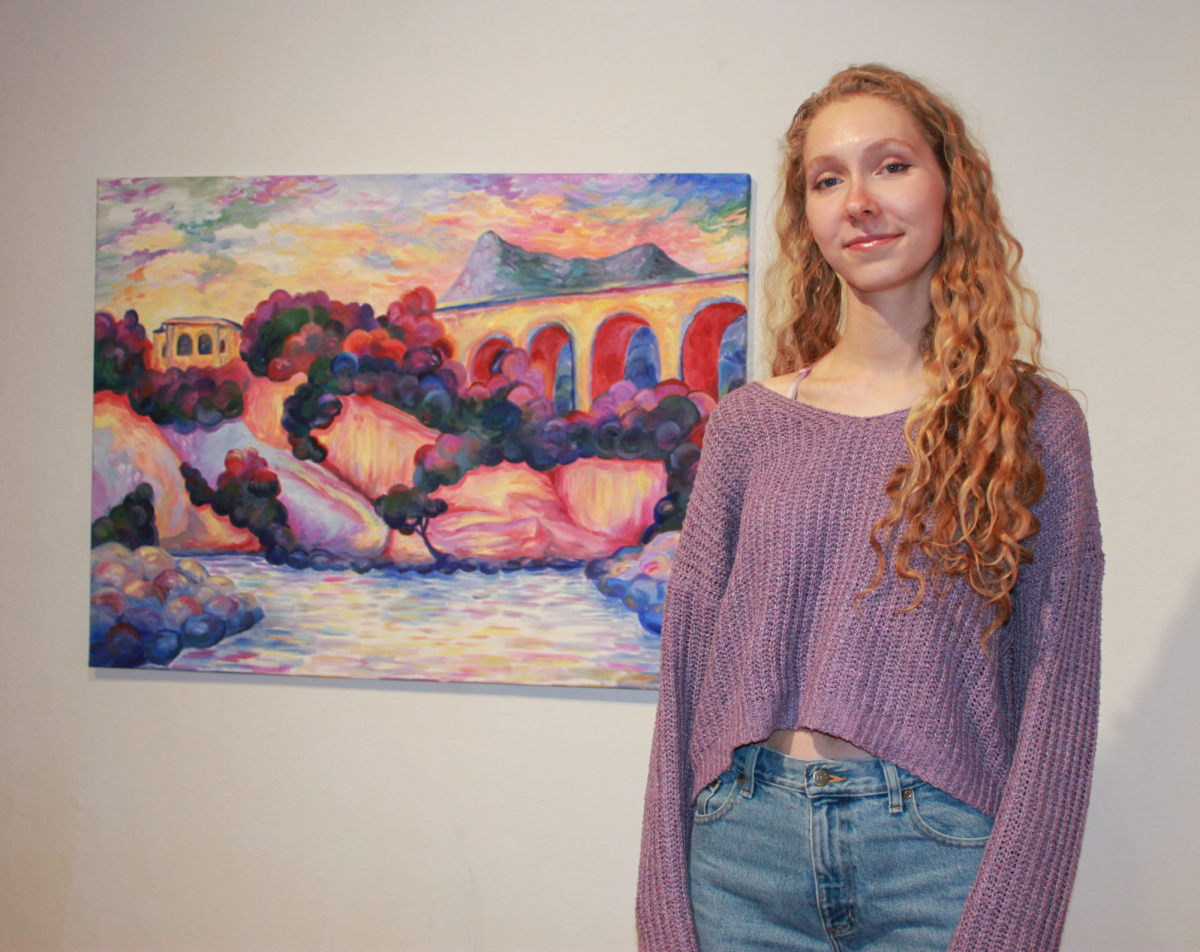
“I don’t know if that blends completely, but I think probably everybody has a bit of scientist and a bit of artist in themselves,” he said. “Even though I spent most of my career in science, art has always been important to me.” Lafontant displayed an acrylic painting titled “Primavera,” in which he drew heavy inspiration from his time in Sri Lanka.
People and their relationships with places have always been a source of inspiration for Lafontant. As an artist, he draws from settings of urban and rural life as well as his own identity as a Black person who has lived in a range of places where Black people are considered minorities.
“My work has more to do with diaspora, with Black bodies in places that are often not present or not welcome, and the idea of Black bodies in the Midwest started to be of interest to me, and I wanted to explore that also in the context of being an immigrant,” he said. “Being in Iowa itself, … as a person of color, it’s kind of an experience in itself. Not necessarily bad, but not necessarily simple either.”
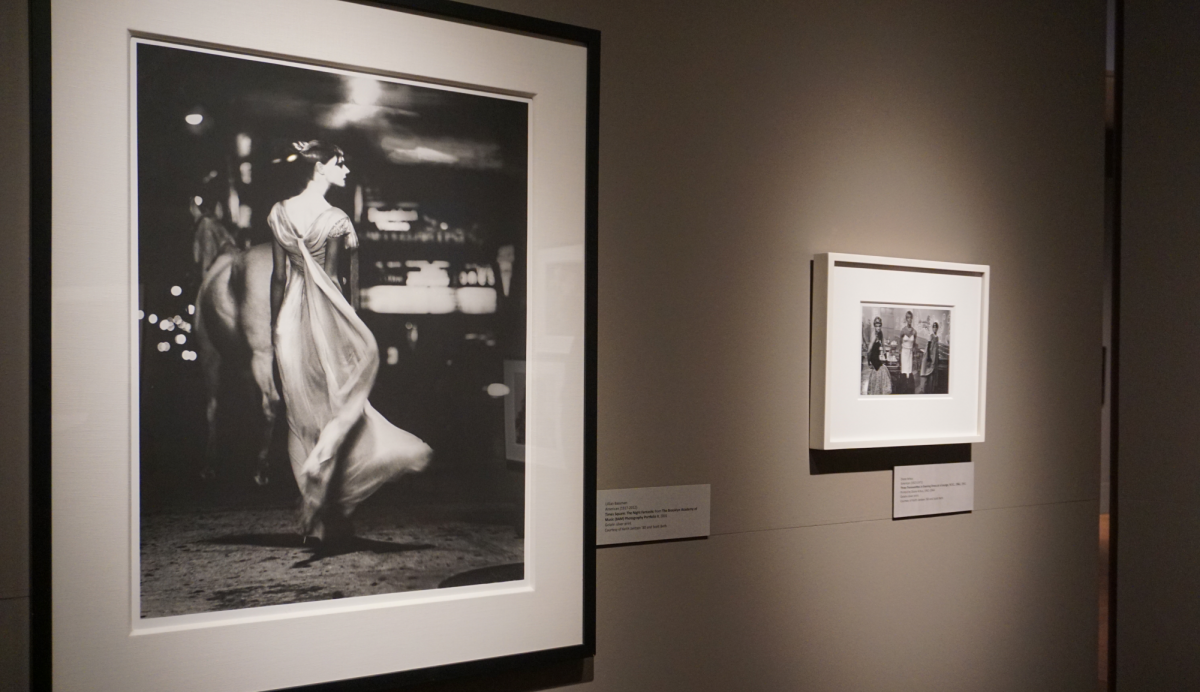
As visitors walk through the exhibit, they encounter various artworks that reflect personal expression and storytelling. “Giving the space for the works themselves to be shown and for people to gather around them and talk and share their ideas is so helpful and so important,” said Simpson.