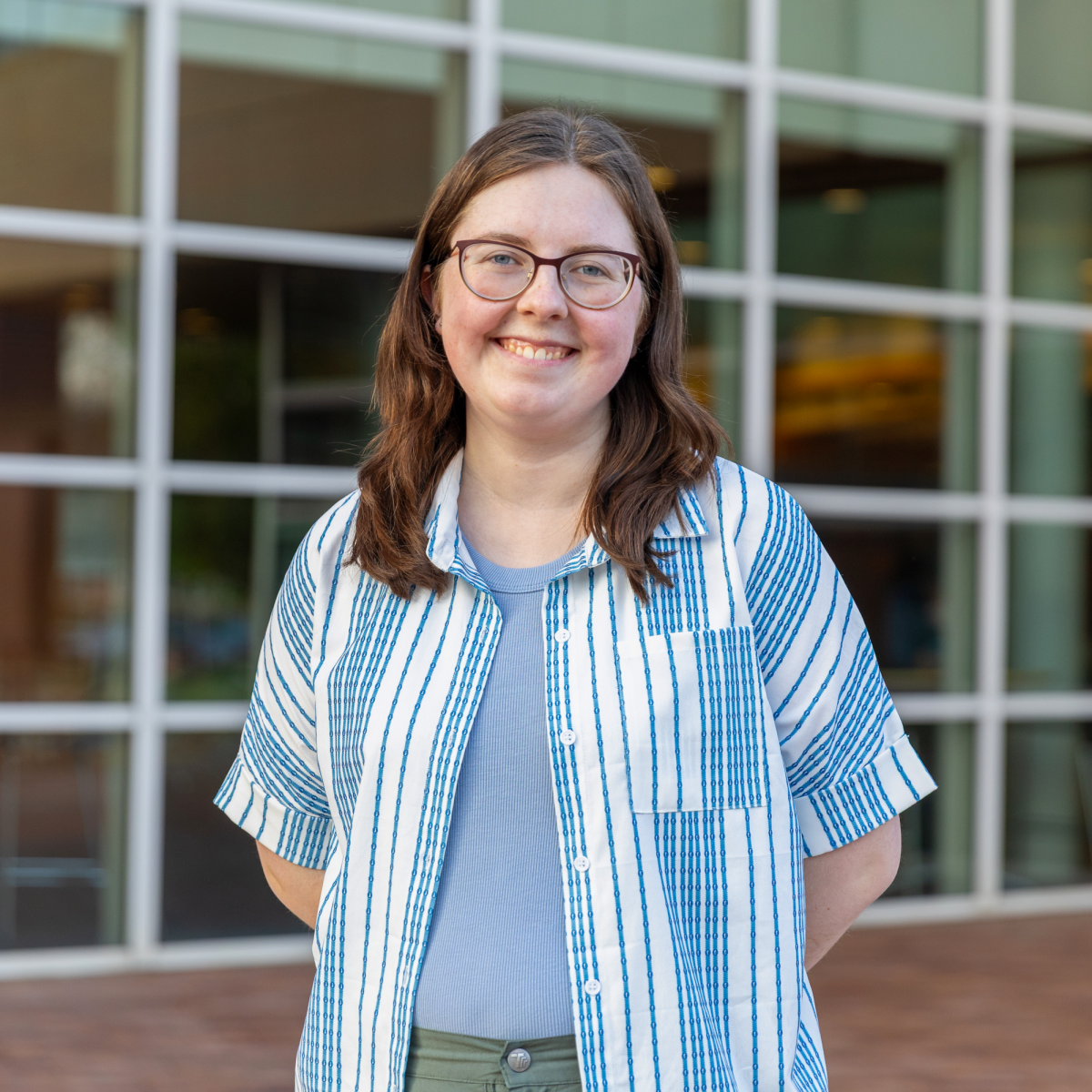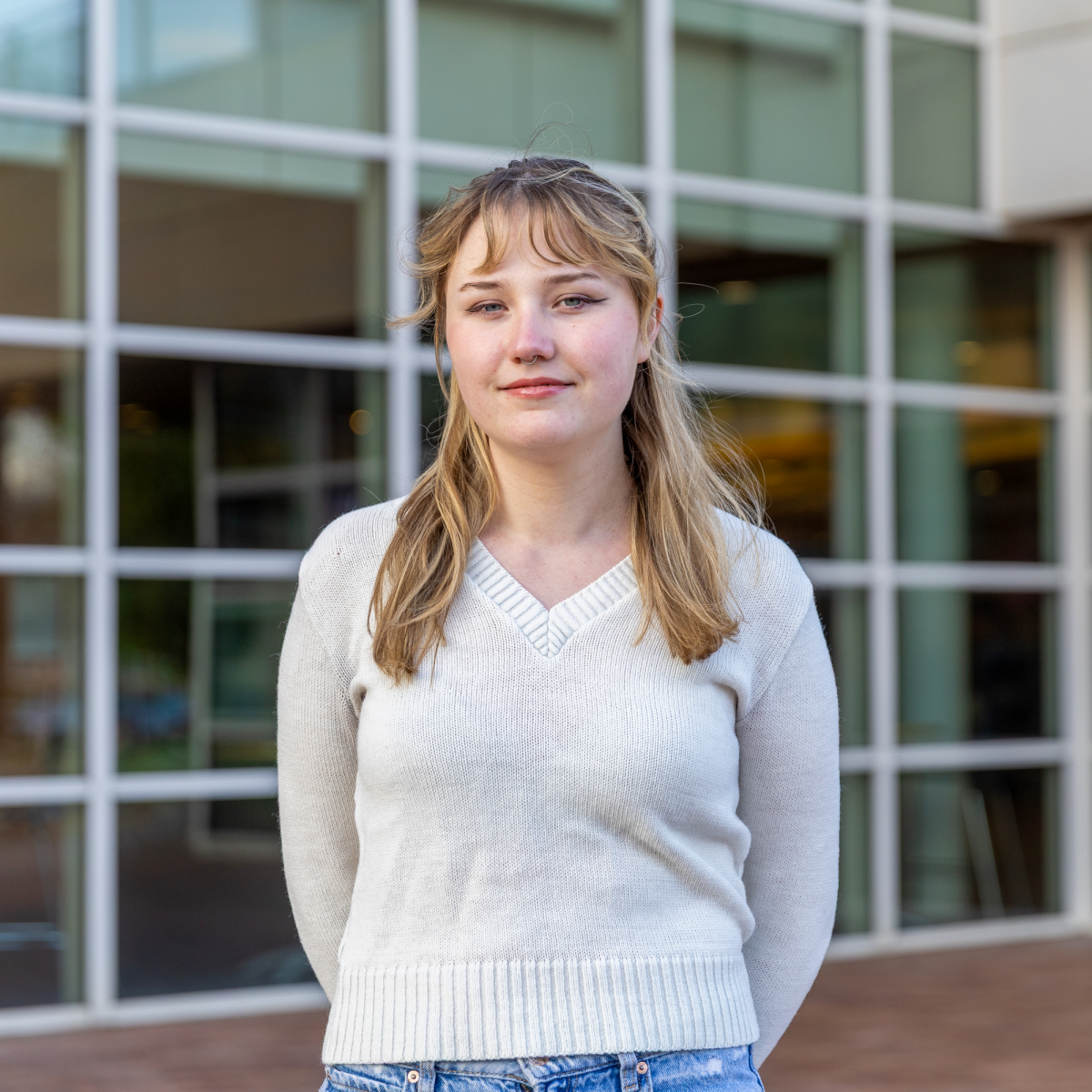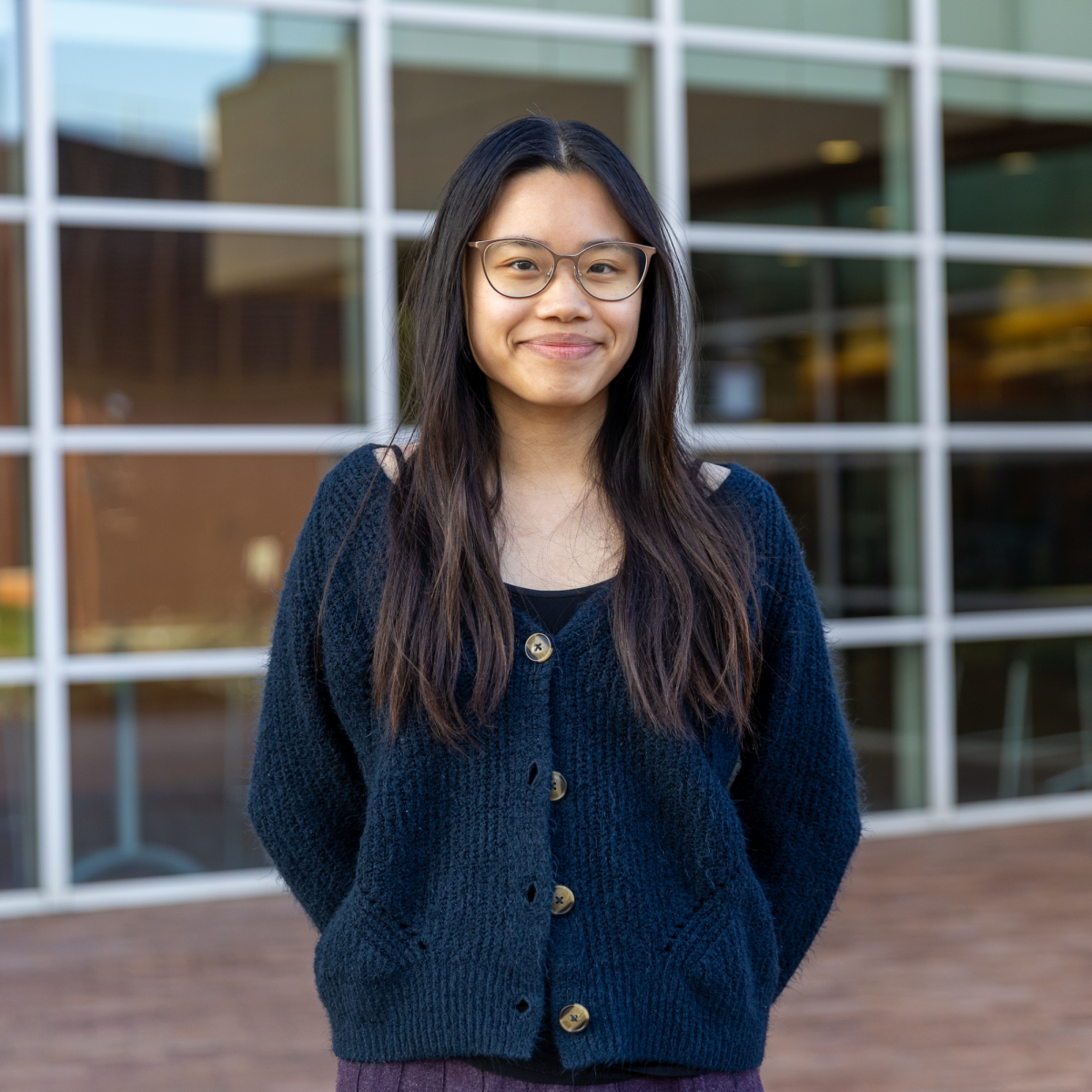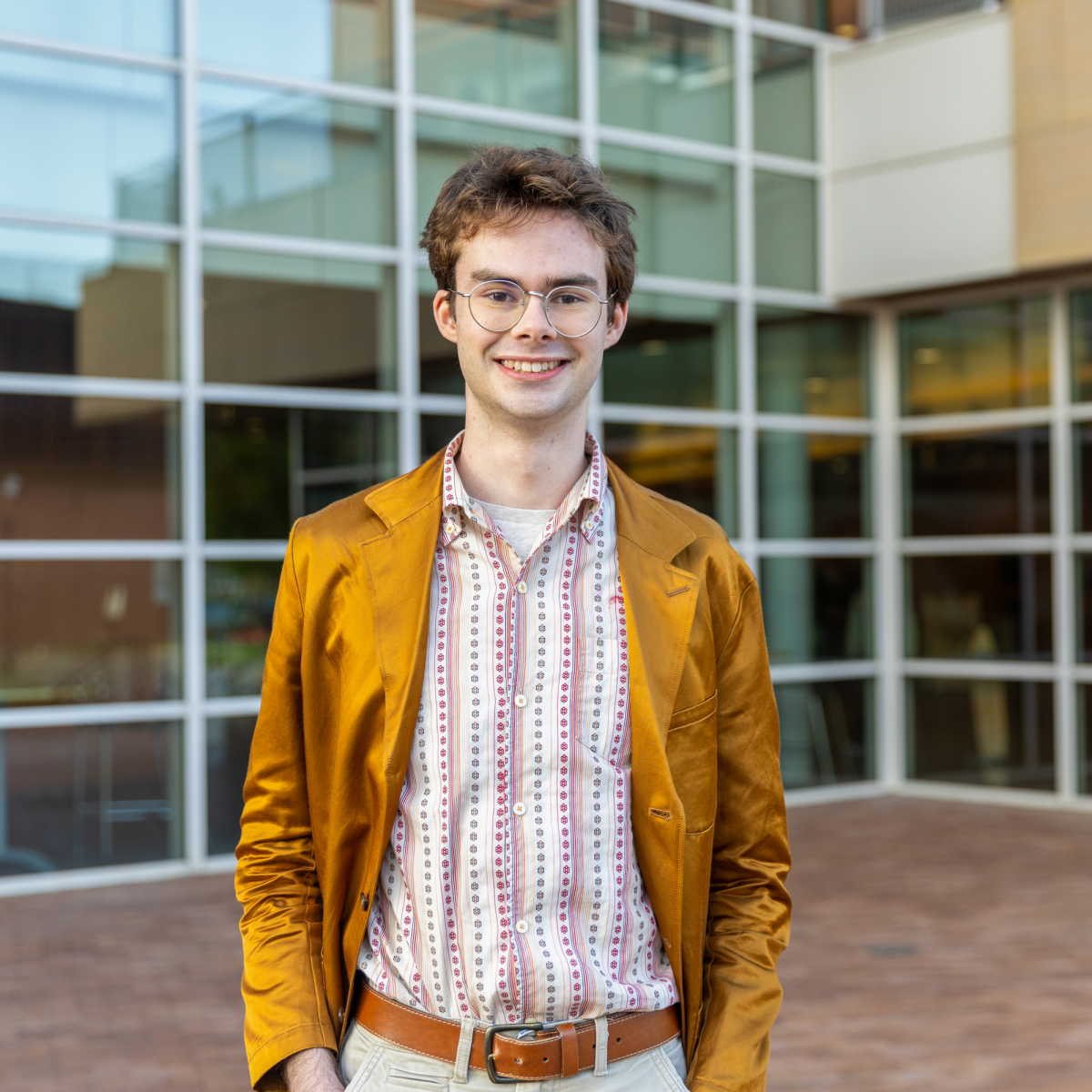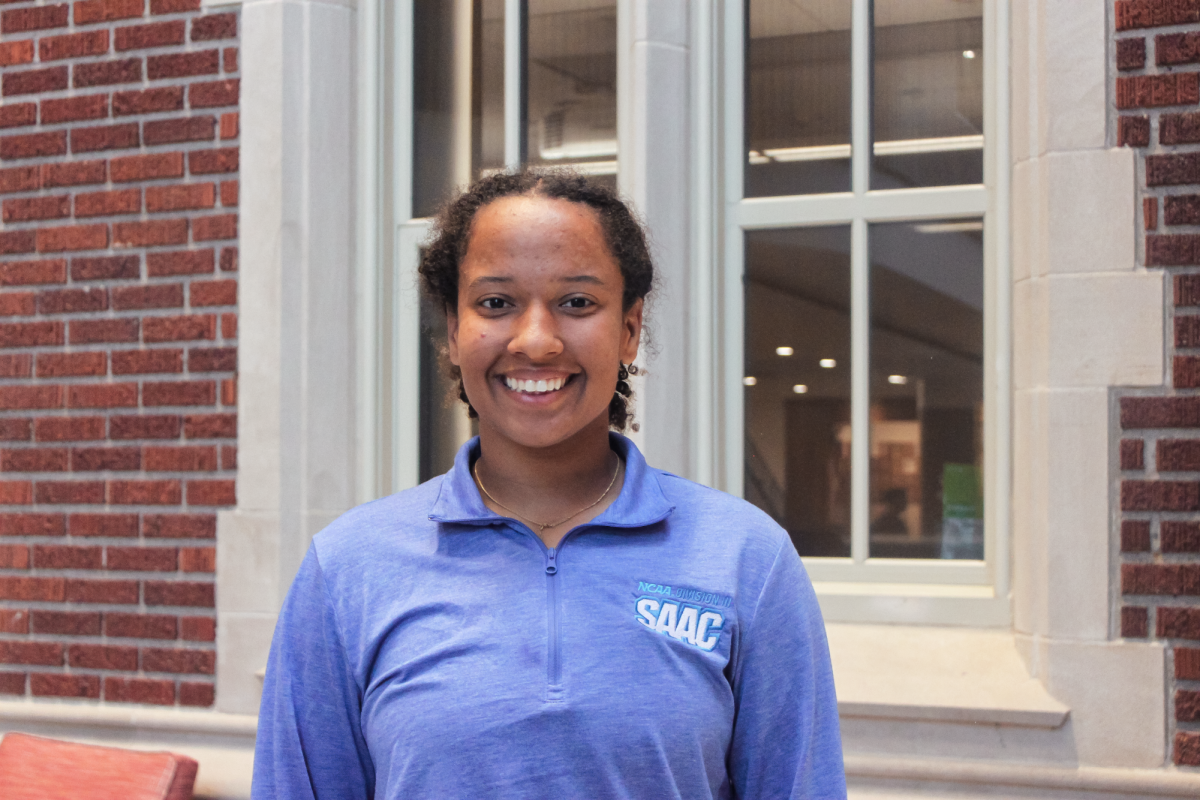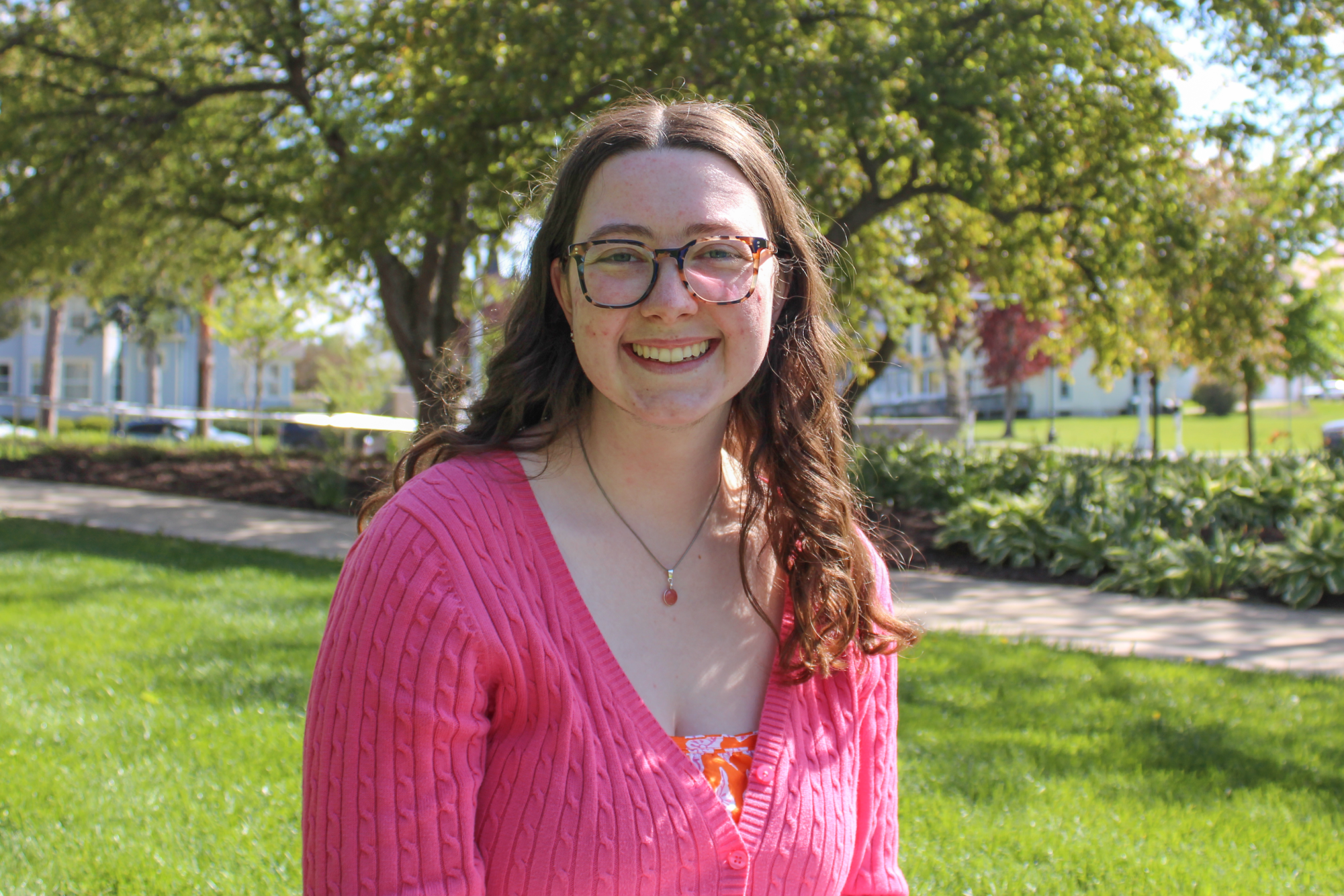

From serving on the Math Student Educational Policy Committee (SEPC) to performing with the Latin American Ensemble and protesting on the streets of Buenos Aires, Argentina, Sasha Laugen `26 has spent her four years engaging both with the campus community and the wider world.
Growing up in a family that values education, Laugen always envisioned attending a school with small class sizes and a tight-knit community. Her introduction to Grinnell, however, was anything but typical. She first encountered the college through the Netflix film, “The Half of It,” where the lead character ultimately enrolls at Grinnell.
“I was like, what is this school? I googled it, and I was like, wow, this is kind of a lot of things I wanted,” Laugen said.
Upon arriving on campus, Laugen embraced the flexibility of the open curriculum. Though she initially intended to major in music and biology, she ultimately declared a double major in mathematics and anthropology, along with a concentration in Latin American studies.
Her first glimpse into the possibilities of anthropology came during her first-year Global Learning Program (GLP) to Japan and Ecuador, an experience she describes as transformative.
After that experience, she knew anthropology was the path she wanted to pursue.
Laugen’s time at Grinnell extended well beyond the classroom. She participated in the Latin American Ensemble for five semesters, continuing a lifelong passion for music that began with violin, choir and musical theater in high school. Initially hesitant, she was encouraged by friends to audition.
“You know, I can barely speak Spanish. Never sang Spanish in my life. What even is Portuguese?” she said.
Despite her doubts, she approached the director, auditioned and secured her place in the ensemble.
“It is a very special place. You know, it’s jazz-influenced, of course. People don’t realize that Latin American genres, there’s over 50 genres in one country, there’s everything,” she said.
Beyond the music itself, it was the diversity of the group that made the experience especially meaningful, Laugen said.
“We have students who are native speakers of those languages, students who don’t speak at all [and] students who speak some [that] aren’t native. So everyone has such different backgrounds, and I think that group has really pushed me as a performer, and it was such a special community of people,” she said.
Another defining chapter of Laugen’s college experience was her time studying abroad in Buenos Aires in the fall semester of her third year.Inspired by her brother’s exchange program in Paraguay, she looked for a program that provides an immersive experience, allowing her to deeply engage with a local community. After careful thought, she decided to attend the University of Buenos Aires, a public institution with over 320,000 students.
“The institution is free for everyone, and it has historically had a huge societal importance, specifically during the dictatorship.”
However, she said she quickly observed the effects of underfunding on the education system.
“It’s nothing like here, like there’s never soap, you’re lucky if there’s toilet paper. They’re not clean, like they don’t have money. For that one time I was in class, all the lights turned off. They can’t afford the electricity bill,” she said.
While abroad, she also volunteered at a public hospital, organizing educational activities for children who missed school due to medical needs. She introduced a game called Mad Libs, a popular, fill-in-the-blank word game that teaches parts of speech in a story creation format.
“Professors and children loved it. They thought it was the greatest thing ever. But it was still very nerve wracking because my Spanish was not very good, “ she said.
These experiences ultimately shaped her senior Mentored Advanced Project (MAP), where she studied student movements during Argentina’s dictatorship at the University of Buenos Aires, the very institution she attended. During that period, large numbers of students were kidnapped and killed, leaving behind a lasting legacy of resistance that continues today.
Her research involved extensive reading, archival work and a return trip to Buenos Aires to conduct semi-structured interviews.
Looking ahead, Laugen is considering graduate school, though she plans to first spend a year in Ecuador working with a nonprofit organization in a rural Amazonian community. There, she hopes to contribute to efforts in health, education and women’s empowerment.
She believes her exposure to diverse educational systems will inform her work.
“I think every form of education has taught me something, and it was really in Argentina that I started to realize that I would love to work more in education. I think it’s so cool to be able to empower youth, to empower communities to figure out how to better support themselves,” she said.
Laugen encourages fellow students to engage more deeply with the broader community.
“I think many of us have misconceptions about our community,” she said. “We forget that, we live here too, right? I think it sadly took me until, like, really, this year, to comprehend that, like, I can go to local restaurants and talk to them, go to church here or go to the hardware store.”
“I love this place, and I’m so grateful to have such a strong community of students, professors and community members,” Laugen said.