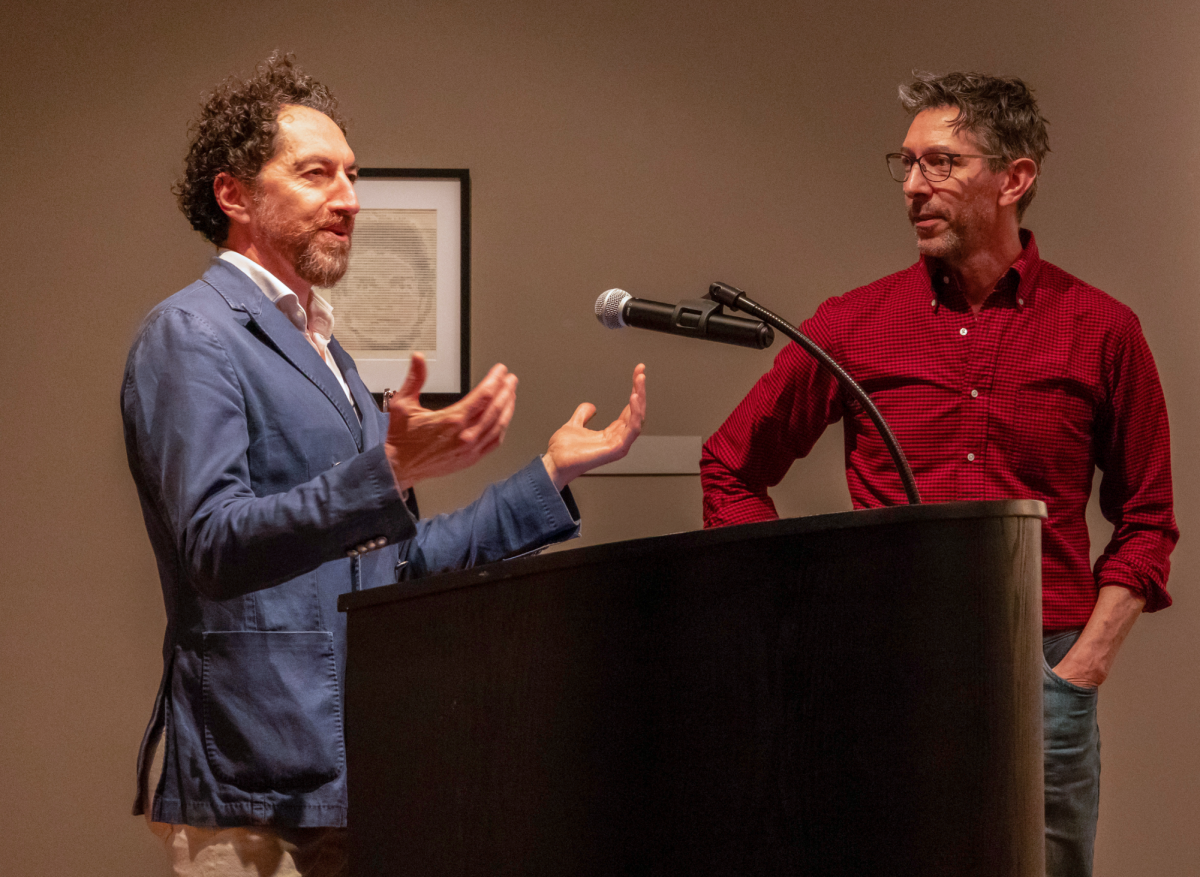
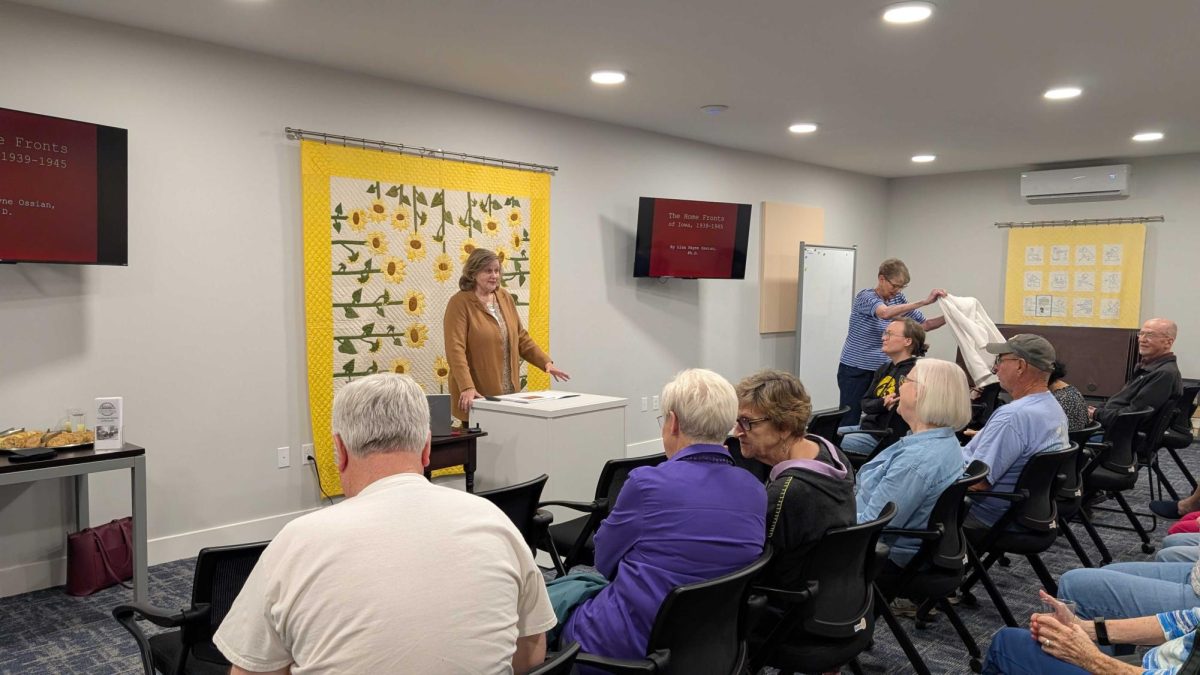
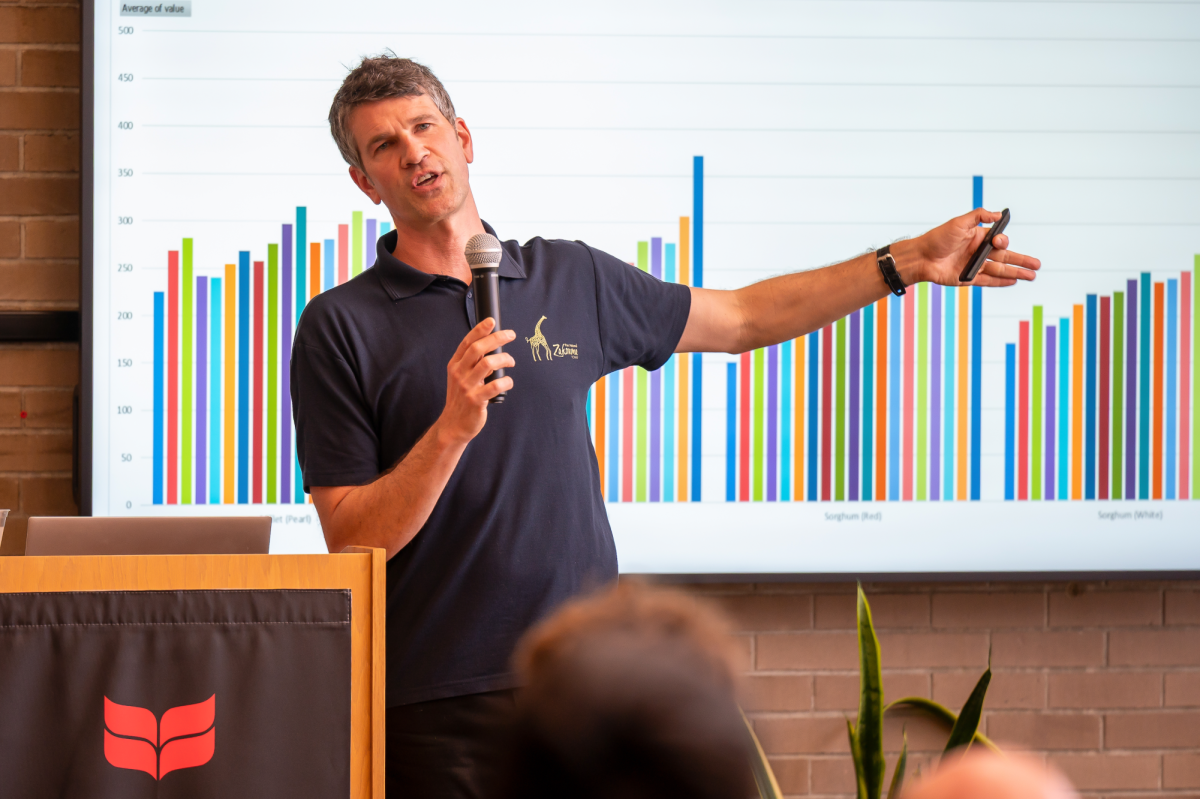
Natan Last began his talk on Tuesday evening by offering up a clue — “It turns into a different story.” The answer, he said, is a two-word phrase, consisting of six and nine letters respectively.
After a brief silence, an audience member proposed a solution — “spiral staircase?”
“That’s it,” Last confirmed. “A perfect example of what makes clues so devilish — the way turn and story have suddenly become literal architectural terms, but it’s also a perfect metaphor for what’s happening with the crossword itself right now… The crossword itself is turning into a different story.”
Over the next hour, Last, a researcher, policy analyst and crossword constructor for The New Yorker and The New York Times, made the argument to an audience of about fifty people that the literary, the technological and the political all intersect within the history of the crossword.
“For decades, the crossword had a particular aesthetic,” Last said. “Highbrow, East Coast, educated, white, straight and male. Opera and ballet were fair game. Hip-hop was seen as obscure.”
That began to change in the 1980s and 1990s when technological advancements allowed for the process of filling a crossword grid to be mechanized, making the crossword a more accessible medium.
“This technological shift fundamentally changed what was possible,” Last said, making “it easier for newcomers to enter the field, and that democratization has had profound effects. Suddenly, people who had never seen themselves reflected in crosswords — women, people of color, queer folks, younger constructors — could make their own puzzles, like their language, their references, into the grid.”
To illustrate this, Last told the story of Mangesh Ghogre, the first Indian crossword constructor to publish in major outlets like the Los Angeles Times and the Wall Street Journal. Ghogre initially became interested in crosswords as a tool to study for the Graduate Management Admission Test (GMAT) and attend graduate school in the United States.
“He became so skilled that he started constructing his own puzzles and eventually published in major venues, including the Times,” Last said of Ghogre. “Ghogre’s puzzles, like many people I’ve mentioned, intervened in this existing discourse. They included Indian cultural references, Hindi words that entered English, South Asian names and places, but he did so not as exotic curiosities, but as ordinary crossword fill, as natural as any other vocabulary.”
The crossword, according to Last, shapes the way that people think and interact with the world. “It’s a massive cultural institution masquerading as a game,” he said. “And like any institution, it’s subject to economic pressures … there’s a semi-serious joke at the Times that they are a gaming company that just happens to also publish news.”
Last cited statistics indicating that global time spent on the NYT Games app was greater than that of the NYT News app in 2023. The Times reported that subscriptions for non-news products surpassed those for the core news offering in early 2024, and revenue jumped by 9.7% in mid-2025 due to subscriptions and advertisements.
“Crossword is increasingly subject to a market logic, to metrics and retention rates and subscriber growth,” Last said. “There’s pressure to make puzzles that are broadly appealing, that don’t alienate anyone.”
But Last, contrary to some editors who advocate for an apolitical crossword, argued that the crossword has always been political in nature. “As recently as 2012, one could find the word ‘illegal’ clued as one caught by Border Patrol,” he said. In 2019, the Times published a puzzle containing a racial slur against Latine people.
“The outcry was immediate and fierce. Prominent constructors threatened to withhold their submissions,” Last said. “I was part of a group that organized an open letter signed by nearly 2,000 subscribers and puzzle lovers, calling on the Times to address its editorial practices.”
In the end, according to Last, the pressure worked. “The Times brought in more diverse constructors. They added an editorial director whose main job was thinking through the public’s relationship with the puzzle,” he said. “The puzzle is no longer gatekept by a handful of editors. It’s a living, evolving medium shaped by thousands of people in real time.”
Last concluded by placing the crossword within its historical context, noting how the puzzle has consistently provided solace during periods of crisis.
“It was born in the gauzy aftermath of World War I, acquiesced to by The Times in World War II and exploded again in popularity during COVID-19,” he said.
In today’s landscape of uncertainty, the crossword serves a particular function. “It’s a test of correctness in an era of mis- and over-information,” Last said. “At times when language can seem to fail to adequately represent the madness of life, the crossword de-familiarizes language in the grid. We solve words, build up words, letter by letter, as though making language anew.”