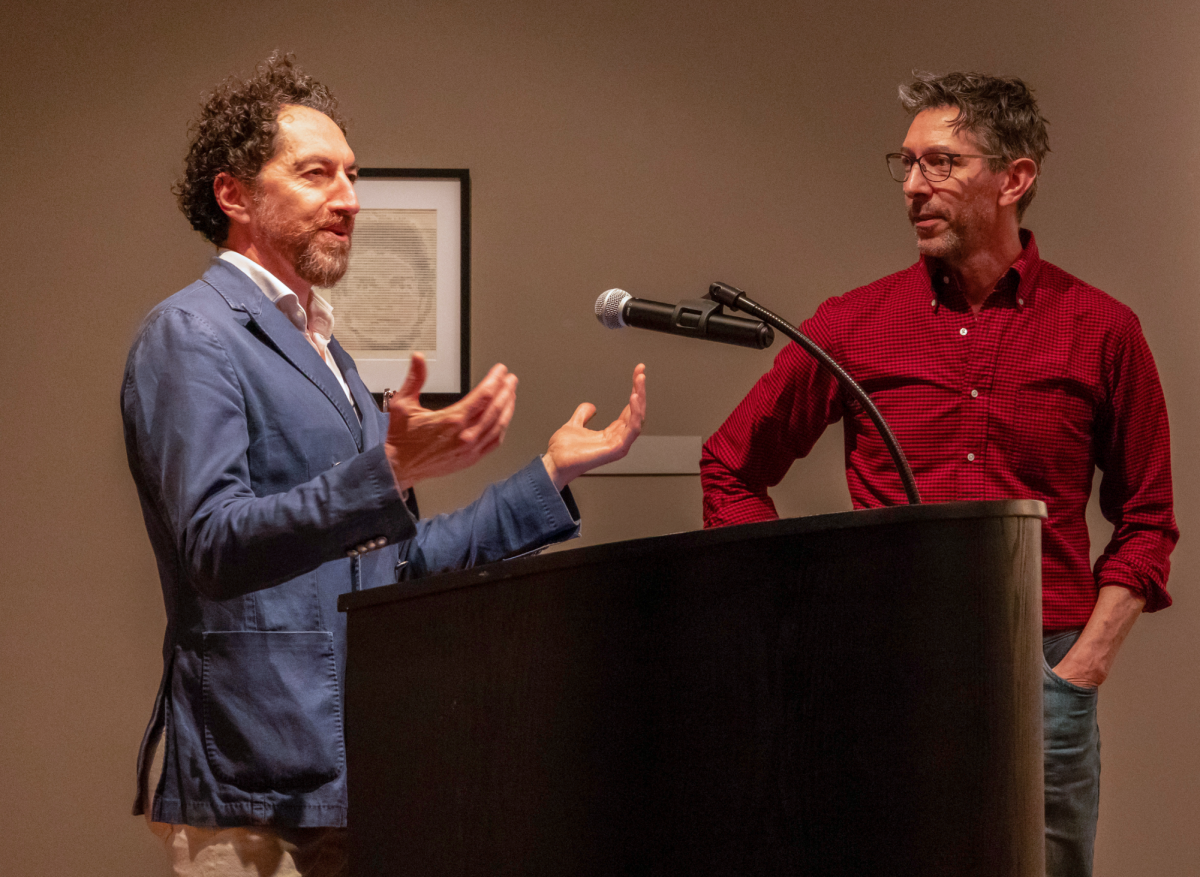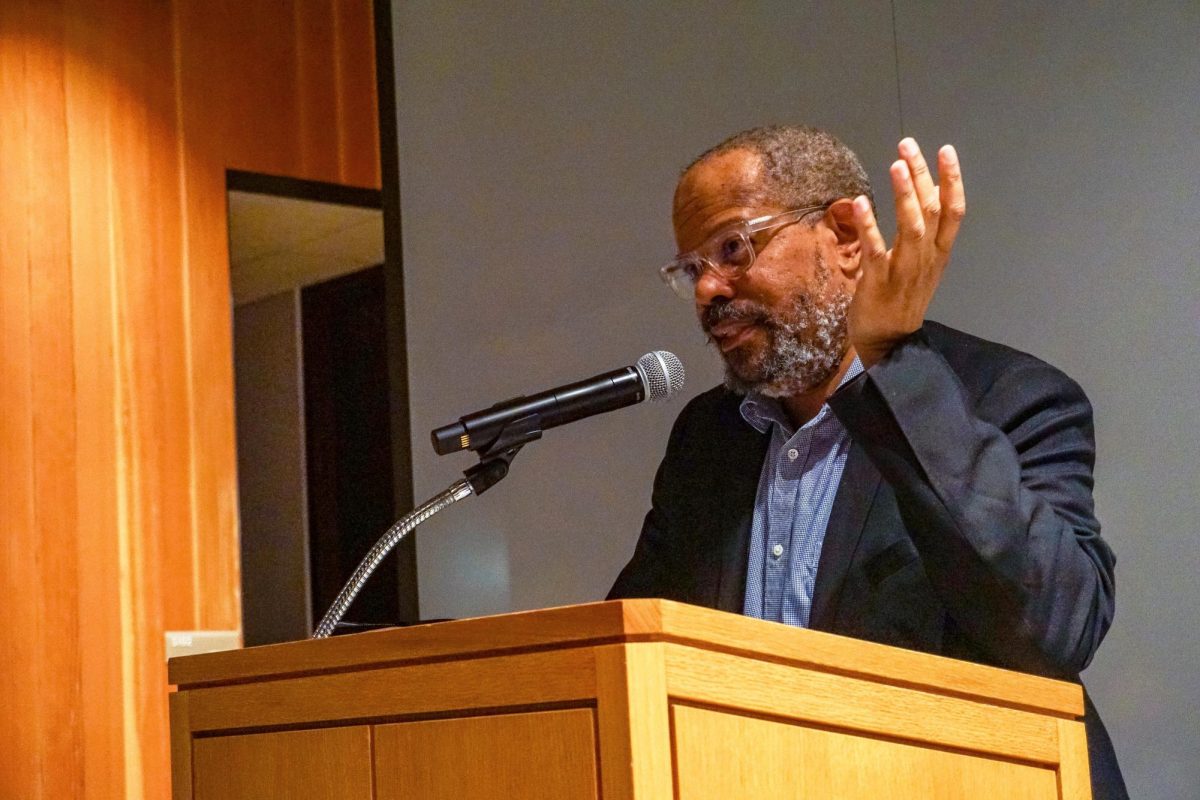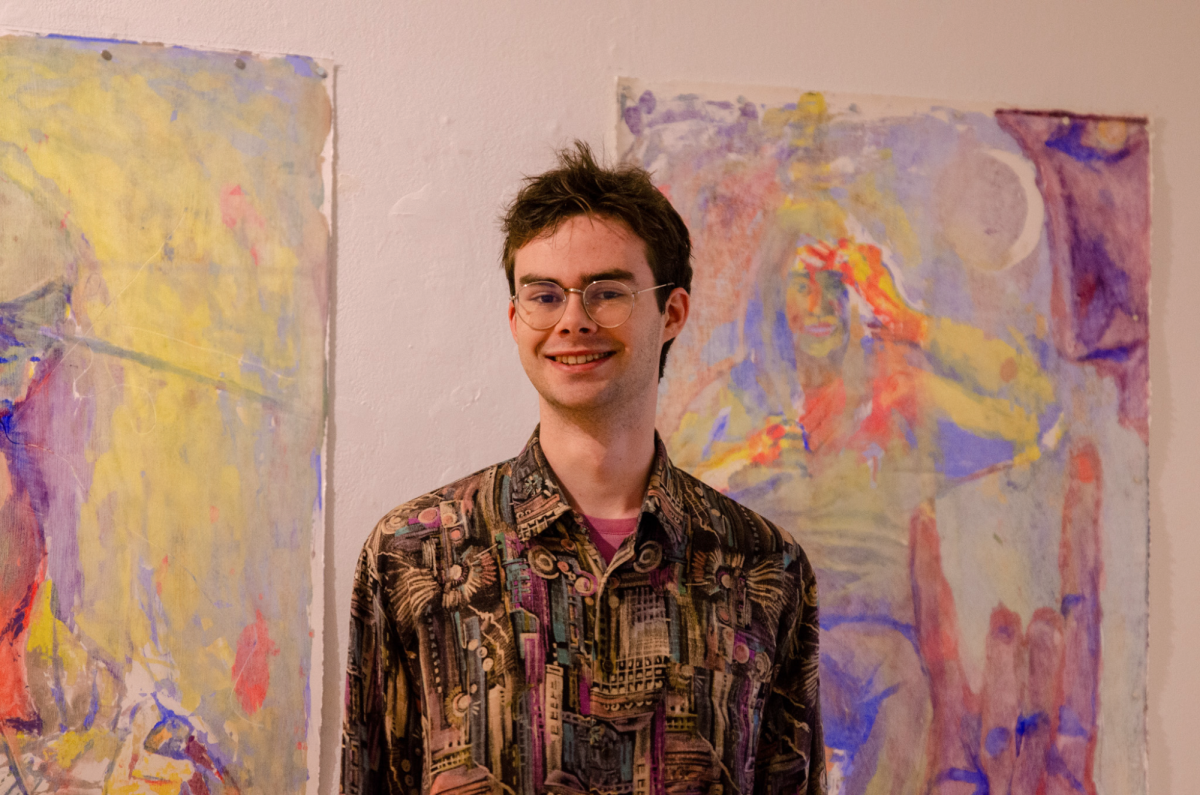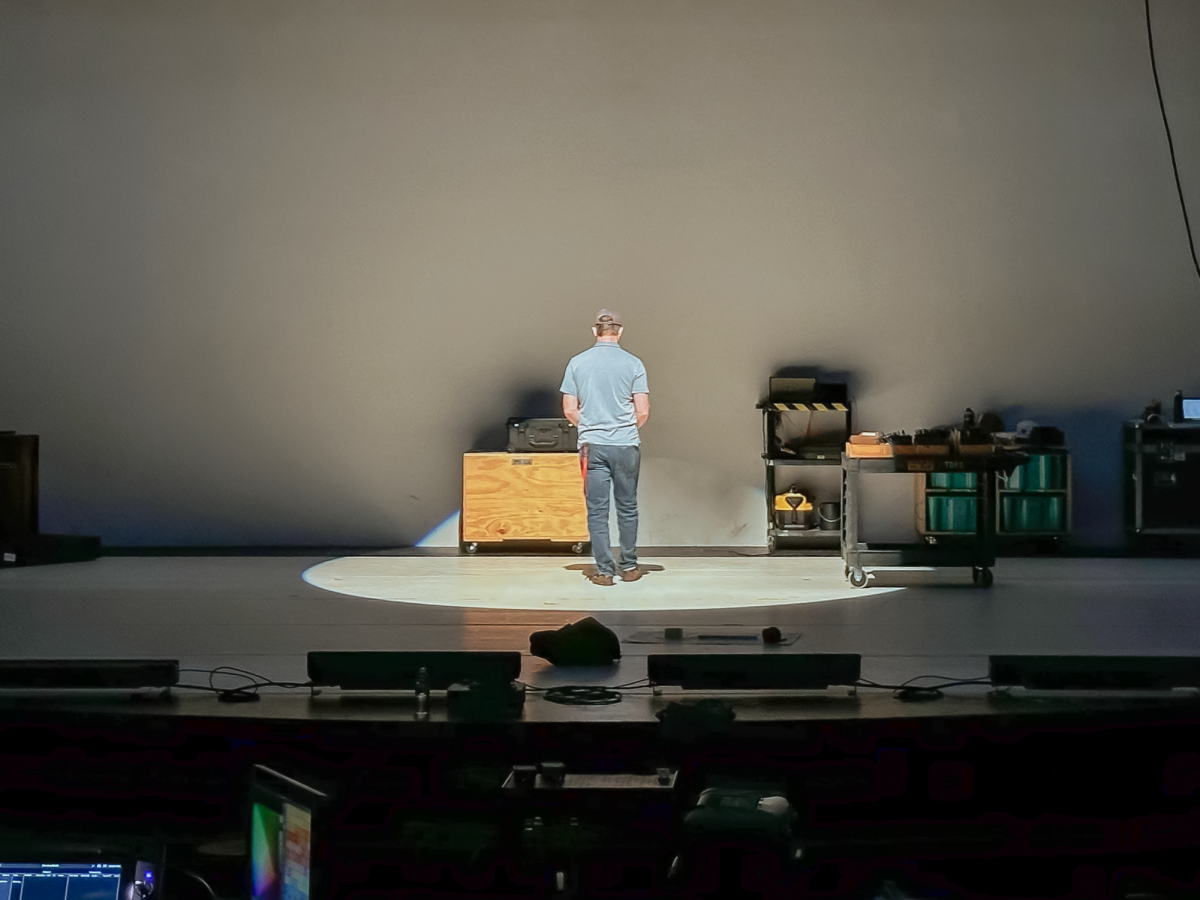

Grinnell College faculty Dewa Ayu Eka Putri and Putu Tangkas Adi Hiranmayena want audiences to sit with the uncomfortable reality of environmental destruction in Bali — and to channel feminine rage as a force for rebuilding. Their performance “Ngeruak: A Plea to Build” confronts how neo-colonial development has displaced indigenous communities from their ancestral lands, using slow, meditative movement to resist the world’s frantic pace of consumption and destruction.
The couple, performing as ghOstMiSt, brought this message to Grinnell on Sept. 18 at Grin Cupola, a renovated barn gallery on a working farm just outside the college. Putri, lecturer in theater dance and performance studies, and Hiranmayena, assistant professor of music, marked their first official performance as ghOstMiSt in Grinnell with a piece that asks the fundamental questions — how do we build from ruins? What does it mean to ask permission from the land before construction?
“Ngeruak” refers to a Balinese ceremony where permission is asked from the land before building structures or communities on it — a practice that takes on urgent meaning as Bali faces flooding from overdevelopment of villas.
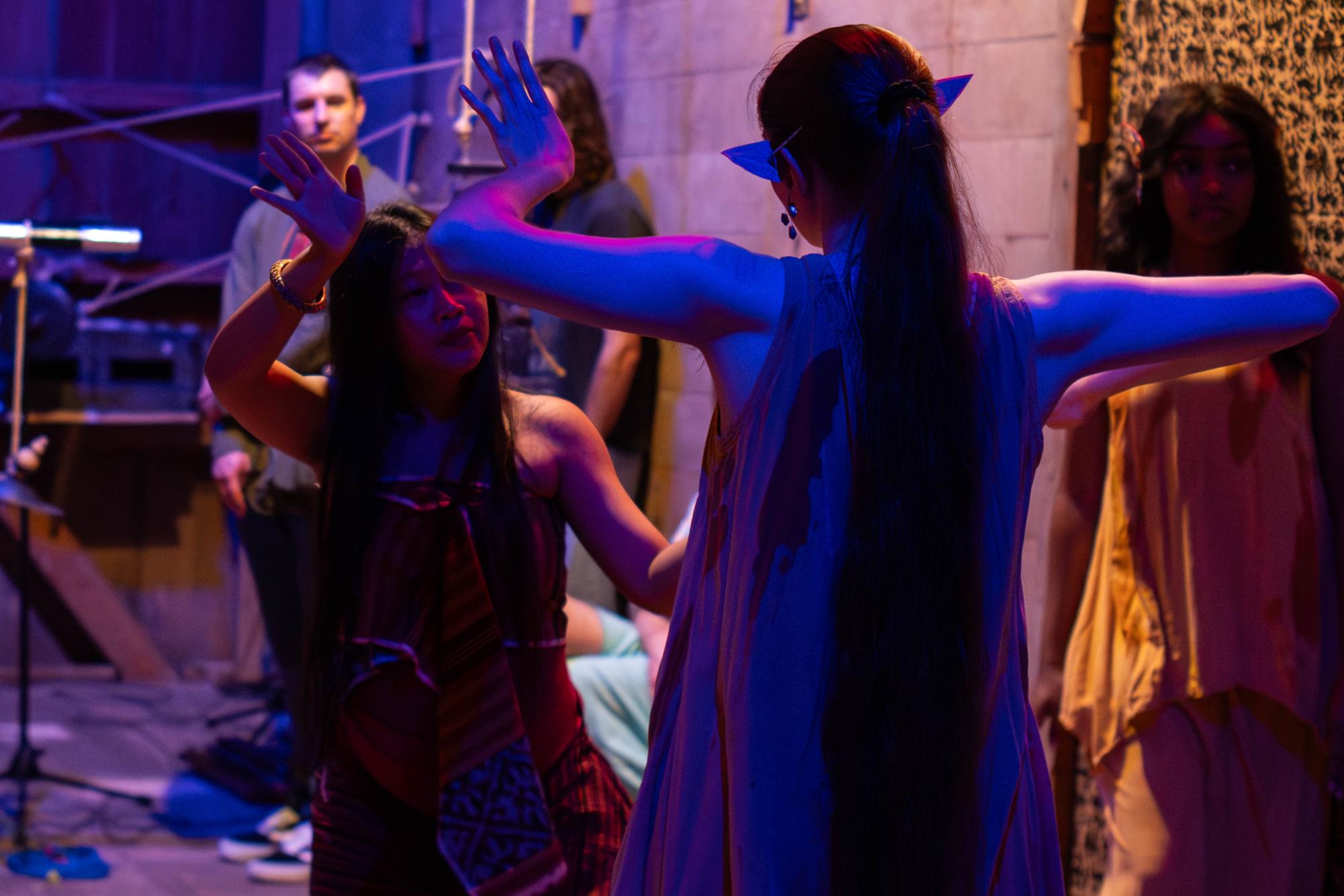
The performance unfolded in Grin Cupola, a gallery and renovated barn owned by Joe Tuggle Lacina, where audience members climbed the stairwell to encounter a dismembered gamelan installation deliberately scattered throughout the space. Bonang hung from rafters, connected by rope like a nervous system stretched across the barn. At the center hung a Rangda costume, representing Mother Earth in Balinese tradition, its fierce expression and wild hair appearing simultaneously frightening and beautiful to different viewers.
A sign in the installation directly addressed the environmental crisis — “Bali is currently experiencing flooding due to overdevelopment of villas and neo-colonial communes. How would you feel if the farmland that provided your communities with food were overtaken by concrete for hotels?”
“In Bali too, there’s all these neo-colonial communities coming in creating spaces under the guise of, ‘Southeast Asian places need more places to be creative,’” Hiranmayena said. “It’s like, no, we were creative simply by being on land, in the rice fields or on the farm.”
Three pairs of Grinnell student dancers who had performed with Putri before moved through slow, repetitive formations. Some pairs faced each other in mirror movements — when one dancer raised their right hand, their partner raised their left, creating apparent symmetry through opposite actions. Other pairs faced outward, performing different movements while moving in the same direction.
Between dance sequences, performers shared poetry about femininity, motherhood and sisterhood. Eustina Bvunyenge `27 sang a motherly lullaby, while Audra Dooley `26, Karima Rostom `26 and Chloe Alger `28 recited original poems. Hiranmayena provided musical accompaniment throughout the performance. Near the end, he repeatedly shouted “WATER, WATER, WATER,” breaking the meditative silence. The performance lasted approximately 45 minutes.
“We want to give the audience an uncomfortable feeling, but at the same time also a soothing feeling,” Putri said after the performance. The deliberately slow pace forced viewers to sit with discomfort, to resist the urge for immediate gratification or resolution. She explained that the slow pace was intentional. “The world is moving really fast, so we told our students to move as slow as you can.”
Central to ghOstMiSt’s Ngeruak is the concept of feminine anger as a generative force. “Women need deeply consistent anger, to rebuild the strong foundation of a generation,” Putri said, emphasizing that this rage is not destructive, but constructive — a deliberate channeling of emotion toward building better futures. “We are here to bask in schismogenic feminism and elevate the presence of forgotten women,” the duo wrote in their program notes.
“By requesting specifically women dancers and poets, and by centering stories about their sister, about themselves, [we are] elevating the presence of forgotten women,” said Hiranmayena. The slow, repetitive movements were not meant to soothe this anger away, but to give it sustainable form.
“In Bali, I believe in one body. It’s not just masculine or not just feminine, but both of those energies always exist together,” Putri said. From the performers’ perspective, this philosophy shaped their approach to reenacting gender — not as binary opposition but as integrated forces in the process of consistent, productive rage against displacement and destruction. They emphasized that the feminine anger they channeled was intrinsic to love and peace, not separate from it.
For Putri, currently pregnant with the couple’s first child, the performance carried additional weight. Her changing body became part of the choreography, the literal heaviness informing her movement vocabulary. “To bring new life, regeneration, is a lot of pain,” she said, “but at the same time it’s also giving you hope and fear but also braveness.”
“To make change, there will be pain. There’s no comfortable way, mostly uncomfortable, especially with things that people already believe. But if you don’t experience that pain, you don’t understand the complication,” she said.
“It’s symbolically about the diaspora,” Hiranmayena said after the performance. “It’s about how people are away from their homes whether physically or ideologically or mentally, but we’re attempting to maintain that there’s still a network.”
“We now live here and we’re not looking to live anywhere else at the moment,” Hiranmayena said. “This is the home we’re choosing to build relationships in — with our students, colleagues, and the community outside the institution.”
Ngeruak: A Plea to Build is on view Sept. 20 to Oct. 20, by appointment only. Contact [email protected] to schedule a visit. Grin Cupola is located at 3635 Hwy 146.